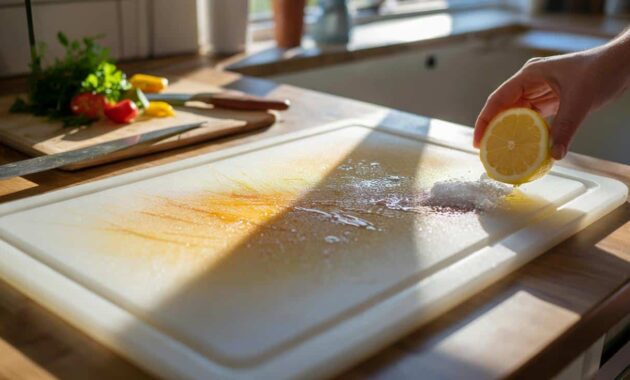
The cutting board was older than the kitchen. At least that’s what it looked like one gray Tuesday morning, when the sun finally slipped across the counter and exposed the whole sad truth: a once-clear plastic board, now cloudy, stained and faintly greasy, even right after washing. The kind of milky veil that makes fresh tomatoes look tired and raw chicken feel like a bad idea.
I’d scrubbed, soaked, dishwashed. Nothing. Then a friend casually sliced a lemon in half, rubbed it across the surface, and walked away like that was normal behavior. Ten minutes later, the haze had shifted, the board catching the light again in a way I hadn’t seen for months.
That slightly magical “before/after” moment has a very down-to-earth explanation.
What’s really behind that cloudy cutting board?
If you’ve ever pulled a “clean” cutting board from the drying rack and still felt a tiny wave of disgust, you’re not alone. That cloudy film is sneaky. It doesn’t show up all at once. It builds up slowly, like a fog on a bathroom mirror.
Day after day, your board collects knife marks, chicken juices, olive oil, tomato seeds, coffee drips, and soap residue. Some of it washes away. Some of it clings. The result is that strange whitish cast that no amount of quick scrubbing seems to shift. The board feels clean, but it doesn’t look clean, and that’s enough to bother you every time you cook.
I once watched a home cook lay out beautiful ingredients for a photo-ready dinner: fresh herbs, bright peppers, a perfect salmon fillet. Then she froze. The cutting board in front of her was dull and ghostly, peppered with yellow onion stains and faint red scars from beets. She actually flipped it over for the photo, using the “less ugly” side, which still wasn’t great.
Later, she posted a short video: half the board rubbed with lemon and salt, half untouched. Under the camera’s eye, the difference was brutal. One side looked revived, almost new. The other stayed cloudy and tired, even though both sides had been washed the same way. That split-screen effect is exactly what convinces people to reach for a lemon next time.
So what’s going on at a microscopic level? Plastic and wood boards aren’t flat, no matter how they look. Every knife stroke digs tiny grooves where fat, pigment, and food acids get trapped. Dish soap can’t always break down those layers, especially older, oxidized oils that have settled into the scars.
Lemon juice brings two things: acid and a bit of natural solvent power. Its citric acid helps loosen mineral deposits and soap film, and it can “cut through” light grease that clings stubbornly to the surface. When you rub it in, especially with a bit of salt for abrasion, you’re targeting exactly what causes that haze: buildup, not dirt. The brightness is less magic, more chemistry.
How to use lemon juice to brighten a cloudy board
The basic method takes less time than unloading the dishwasher. Start with a dry cutting board so the lemon juice doesn’t get instantly diluted. Cut a fresh lemon in half. Squeeze the juice directly onto the cloudy areas, letting it pool a little rather than just drip away.
➡️ This quick kitchen habit reduces cleanup after meals
➡️ The surprising trick of freezing lemon juice in ice trays for quick cooking
➡️ No extract, no tonka bean: this natural, low‑cost ingredient is a brilliant vanilla substitute
➡️ Supermarkets : what’s behind the constant reshuffling of the aisles ?
➡️ Legendary rock band retires after 50 years “the hit everyone knows”
➡️ Forget vinegar and wax: the simple home trick that makes hardwood floors shine and look like new
➡️ Fed up with serving the same quiche? This carrot and ham spiral tart changes everything
Now, use the cut side of the lemon as a scrubber. Press and rub in circles, pushing the juice into the knife grooves. For plastic or very scratched boards, sprinkle coarse salt first and use the lemon to grind it gently into the surface. Leave the juice sitting there for 5–10 minutes, then rinse with warm water and a quick swipe with a clean sponge.
A lot of people try this once, do a two-second swipe with a lemon wedge, and decide it “doesn’t work”. That’s like wiping a dirty oven door with a damp paper towel and giving up. The juice needs contact time. Let the acid have its moment.
Another common mistake is working on a still-greasy board. If you’ve just chopped oily foods, do a fast wash with hot water and soap first, then dry it before the lemon treatment. And don’t expect one session to erase ten years of scratches and turmeric stains. Those deep yellow ghosts from curry night are stubborn. The goal is not perfection. It’s visible, honest improvement that makes you want to use your board again.
“Once I started treating my cutting board like a tool worth maintaining, not just a plate to rinse, my whole kitchen felt calmer,” a cooking instructor told me. “It sounds dramatic, but that smooth, bright surface changes how you prep food.”
- Dry board first – So the lemon juice stays concentrated and actually clings.
- Use coarse salt – Acts as a gentle scrub on cloudy plastic and deeply scored wood.
- Give it time – 5–10 minutes of rest lets the citric acid loosen buildup.
- Rinse and air-dry upright – Standing the board helps water drain out of grooves.
- Finish with a light oil (for wood) – A thin coat of food-safe oil helps prevent future haze.
Why this small ritual feels bigger than it looks
There’s something quietly satisfying about standing at the sink with half a lemon in your hand, watching dull plastic catch the light again. It’s such a small ritual, almost old-fashioned, and yet it nudges the whole kitchen in a different direction. You start noticing other things: the way stainless steel brightens with a wipe of vinegar, the way cast iron deepens after oiling.
Let’s be honest: nobody really does this every single day. Life gets in the way. Dishes pile, boards get thrown into the dishwasher, and that’s fine. But once you’ve seen the “before” and “after” of a single lemon on a cloudy board, it’s hard to unsee it. *You realize that a lot of what feels “worn out” is just neglected, and that’s a different story entirely.*
| Key point | Detail | Value for the reader |
|---|---|---|
| Lemon targets buildup, not just dirt | Citric acid helps dissolve mineral film, soap residue, and light grease in knife grooves | Clearer understanding of why the board looks cloudy and how to reverse it |
| Salt + lemon boosts the effect | Coarse grains provide gentle abrasion while juice loosens stains and haze | Simple, low-cost method that revives even older cutting boards |
| Short contact time matters | Letting the juice sit 5–10 minutes gives the chemistry time to work | Better results without scrubbing harder or buying new products |
FAQ:
- Can I use lemon juice on wooden cutting boards?Yes, you can. Rub with lemon and salt, let it sit briefly, rinse, dry well, then finish with a light coat of food-safe oil to keep the wood from drying out.
- Is lemon juice enough to disinfect my board?Lemon has mild antibacterial properties, but it doesn’t replace proper cleaning. Wash with hot water and dish soap first; lemon is a brightening and deodorizing step, not your only defense.
- Will this remove knife marks from my board?No, the cuts themselves stay. Lemon helps clean and visually soften the haze inside those scratches, so they look less obvious even though the texture remains.
- How often should I treat a cloudy board with lemon?For a frequently used board, once every week or two is plenty. Do it when you notice that “perma-dirty” look, not on a strict schedule.
- What if I don’t have fresh lemons at home?Bottled lemon juice works for the chemistry, though it’s a bit less satisfying to use. You can also combine baking soda with a splash of vinegar, then rinse well, for a similar de-hazing effect.