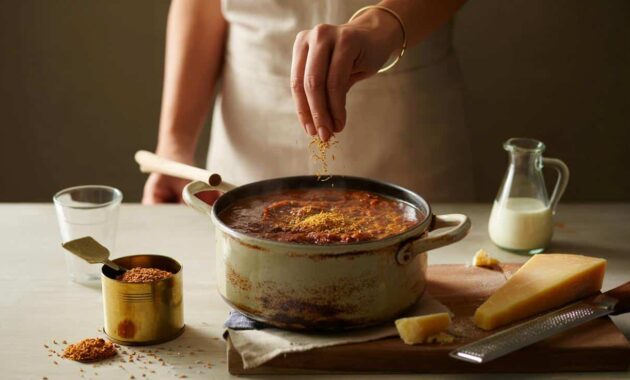
You can slow-cook a ragù for hours and still miss that whisper of old-family magic. The pot hums, tomatoes collapse, yet the flavour sits a little flat. Here’s the quiet fix home cooks keep overlooking: a single pinch of an Indian spice that unlocks the same deep, buttery warmth you swear only nonna could pull off.
My friend Priya arrived with a tiny tin and a grin, sniffed my Bolognese, then tapped a few amber crumbs into the sauce. We waited, talked about her grandmother in Kerala, and the room filled with a mellow, almost cheesy perfume that made everyone lean closer. I twirled a forkful, and the ragù tasted aged, rounded, like it had borrowed an extra Sunday from someone’s childhood. One pinch. That’s all.
The pinch that unlocks nonna-level depth
Here’s the reveal: fenugreek. Not much—just a small pinch of ground seed or crumbled dried leaves. The aroma carries sotolon, the same flavour molecule found in long-aged Parmesan and slow-reduced stocks. That’s why the sauce suddenly tastes older, wiser, more Italian than your shopping list suggests. It nestles into beef, tomato and milk like it’s always belonged there.
I tried it again the following week with a Hackney supper club: one pot as usual, one pot with a whisper of fenugreek added near the end. Ten people ate both without knowing which was which. Most pointed to the fenugreek version and said it tasted “slow-cooked” and “cheesier” even before we grated anything. One guest asked if I’d used bones or a splash of Marsala. I smiled, said nothing, and topped up their wine.
There’s logic behind the romance. Tomatoes bring natural glutamates. Meat and soffritto add Maillard depth. Fenugreek’s sotolon clicks into that umami web, amplifying both savoury notes and the mellow sweetness you get from milk in a proper Bolognese. It also tames sharp acidity, nudging the sauce towards that rounded, lip-smacking finish you chase when you simmer for hours. Chemistry meets memory, right there in the spoon.
How to use fenugreek in your ragù without turning it into a curry
Start small. Toast 6–8 fenugreek seeds in a dry pan for 30 seconds until nutty, then grind. Or crumble a pinch of dried fenugreek leaves (kasuri methi) between your fingers. Stir the tiniest pinch—about 1/8 teaspoon—into the ragù 20 minutes before serving. That’s the window where it marries with fat and dairy, not fighting the tomatoes. Taste. If you notice warmth rather than perfume, you’ve nailed it.
The big mistake is overdoing it. Fenugreek can turn bitter and bossy, dragging the sauce away from Emilia-Romagna. Add too early and it gets shouty; add too much and it reads “curry night” when you wanted Sunday lunch. We’ve all had that moment when a bold spice barges in like the loudest guest at the table. Be gentle, breathe, and let the sauce steer you. Let’s be honest: no one does that every day.
Think of it as a finishing touch, like nutmeg in béchamel or lemon zest on fried fish. You don’t notice it outright; you feel what it does to the whole.
“Fenugreek doesn’t change your Bolognese— it completes it,” Priya told me, tipping the tin like a secret handshake.
- Use seeds for a cleaner, toasty hit; use dried leaves for a buttery, herbal whisper.
- Add near the end to keep it mellow and rounded.
- Pair with milk and a Parmesan rind to echo that aged-cheese vibe.
- Stop at a pinch. Taste. Then decide if it needs another dusting.
One pinch transforms your sauce.
➡️ Panettone and pandoro: do you really know the difference between the two?
➡️ Under a glacier, the intact tomb of a knight resurfaces in Gdańsk
➡️ World record: this cake hasn’t budged since the age of the pharaohs (and it still looks delicious)
Why this tiny twist feels so right
Tradition isn’t a museum; it’s a kitchen with the door open. Italy’s ragù has always adapted—from the cut of meat to the milk, the wine, the pace of life—so the idea of a new pinch joining the party isn’t heresy, it’s hospitality. Fenugreek simply speaks the same flavour language as Parmesan and slow stock, just with an accent from further east. Share it with someone you love, then watch them reach for seconds. *Flavour is a passport, not a password.*
| Point clé | Détail | Intérêt pour le lecteur |
|---|---|---|
| The spice | Fenugreek (seeds or dried leaves) | Gives you nonna-level depth without extra hours |
| Timing | Add a pinch 20 minutes before serving | Keeps the flavour mellow, not overpowering |
| Why it works | Sotolon echoes aged cheese and slow stock | Amplifies umami and rounds acidity for a richer ragù |
FAQ :
- Which Indian spice are we talking about?Fenugreek—either the seeds, lightly toasted and ground, or the dried leaves known as kasuri methi.
- Will it make my Bolognese taste like a curry?Not if you use just a pinch and add it near the end. It blends with dairy and tomato to boost depth, not spice heat.
- Seeds or dried leaves: which is better?Seeds bring a clean, nutty note; dried leaves give a buttery, herbal softness. Both work. Try each on different nights and pick your favourite.
- When exactly should I add it?About 20 minutes before you stop simmering. That’s long enough to settle in, short enough to stay delicate.
- What if I don’t like fenugreek or can’t find it?Skip it and lean on a Parmesan rind, a splash of whole milk, and a touch of anchovy. The goal is depth, not dogma.
Originally posted 2026-03-09 02:43:00.