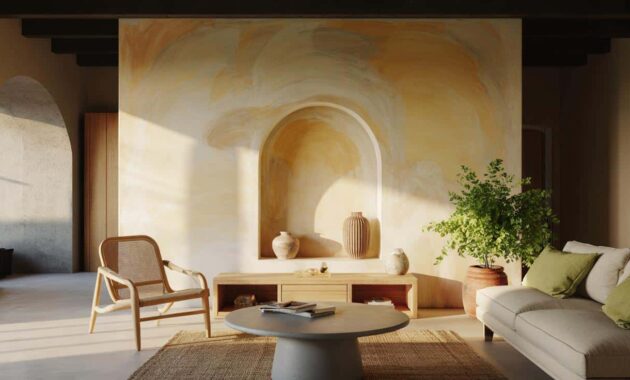
Feeds shift faster. Textures with soul are nudging sleek surfaces aside, and the mood this summer says warmth.
For nearly a decade, polished concrete ruled Instagram kitchens, spa-like bathrooms and minimalist living rooms. In 2025, the tide is turning. Designers, retailers and DIYers now reach for a natural finish that feels lighter, softer and calmer on hot days, while still looking refined.
Why polished concrete is fading in 2025
Visual fatigue has set in
Polished concrete’s grey, seamless sheen looked new a few years ago. Constant repetition drained the surprise. Feeds repeat the same neutral slabs, and rooms start to blend together. People crave movement, hand-worked texture and a calmer glow.
Real-world upkeep can grind you down
Surface scratches show quickly on smooth, mid-tone greys. Sealed microcement can stain from coffee, turmeric or hair dye without fast cleanup. Micro-cracks appear where substrates shift. Resealing cycles add cost, smell and downtime. Under bare feet in summer, the material reads cool and sometimes a bit stern.
Homes are chasing warmth and authenticity
After years of hard edges, 2025 leans tactile and human. Rooms need visual softness without clutter. Owners want breathable finishes that don’t trap moisture in old walls. Hand-applied texture signals care and craft in a way machine-smooth surfaces struggle to match.
Lived-in texture with breathable chemistry is replacing high-gloss minimalism. The mood is calm, dimensional and quietly sunny.
The natural alternative taking over: lime in all its forms
What lime actually brings to a room
Limewash paint and lime plaster use mineral binders that cure by absorbing carbon dioxide, creating a thin stone-like skin. The finish diffuses light, softens shadows and adds depth through gentle tonal shifts. Walls feel luminous at midday and cocooning at dusk.
Breathable by design
Traditional lime finishes are vapor-permeable, so walls can dry out after humid spells. That helps reduce condensation and musty smells. In older buildings, this permeability can protect masonry by letting moisture exit rather than stay trapped behind plastic paint.
Limewash and lime plaster regulate moisture, reduce glare and deliver movement you can read from the doorway.
More than one look
Limewash suits matte, cloud-like walls. Lime plaster gives thicker, velvety texture. Venetian-style lime plaster brings a soft sheen. Tadelakt, a Moroccan lime technique burnished with soap, creates water-resistant surfaces for showers and splash zones when done correctly.
➡️ The plantings experienced gardeners never miss for a flourishing spring orchard
| Feature | Polished concrete/microcement | Limewash/lime plaster |
|---|---|---|
| Look | Flat, uniform, industrial | Layered, tonal, hand-worked |
| Feel under hand | Cool, hard, smooth | Soft-matte, dry, mineral |
| Breathability | Low to medium (sealed) | High (vapor-permeable) |
| Maintenance | Periodic reseal; stain vigilance | Gentle clean; easy touch-ups |
| Best zones | Floors, worktops, hard-wear areas | Walls, niches, furniture, headboards |
| DIY difficulty | Medium–high | Low–medium; pro for tadelakt |
Where and how to use it at home
Start small, aim for impact
- Pick one accent wall in the living room to soften a TV zone.
- Shape a curved lime-plaster headboard and frame it with low lamps.
- Refresh a dated console or bedside table with a limewash and wax topcoat.
- Create a textured niche for candles or books to break up long corridors.
Colour families that flatter summer light
Warm whites, biscuit, oatmeal and pale clay tones enhance daylight without glare. Soft sage and almond green cool hot rooms. Terracotta works well in north-facing spaces that need a lift. Deep colours can look striking at night but demand careful lighting to avoid patchiness.
Mistakes to avoid
- Avoid full-room matchy-matchy. One or two limeworked elements keep the look fresh.
- Don’t fight your windows. Place lime finishes where angled sunlight can rake across the texture.
- Pair with honest materials: light oak, rattan, jute, linen and clear glass keep the mood airy.
- Skip clutter. The beauty is in the surface, not in layers of objects in front of it.
Application tips for a weekend project
Preparation makes or breaks the finish
Test a small area first. If a wall has shiny acrylic paint, scuff-sand or use a mineral primer designed for lime. Fill hairline cracks and let them dry fully. Dust off surfaces to avoid gritty streaks.
Simple process that rewards patience
- Mix limewash to yoghurt consistency; let it rest so bubbles escape.
- Work in thin, criss-cross strokes with a wide natural-bristle brush.
- Keep a “wet edge” to prevent tidal marks. Two to three coats usually deliver depth.
- Ventilate well while curing. Avoid splashes on metal fixtures; lime is alkaline.
Ballpark costs vary by region and brand. Limewash: roughly $40–$90 or £30–£70 per 5L, enough for a feature wall. Lime plaster kits: about $2–$5 or £2–£4 per square foot for materials. Skilled tadelakt is artisanal and priced accordingly; plan for professional labor.
Care, durability and safety
Everyday cleaning is straightforward
Dust with a dry cloth. For marks, use a damp sponge and mild soap. Skip bleach and abrasive pads. Expect gentle patina over time; it adds character rather than damage.
Moist rooms need the right system
Use breathable plasters in bathrooms away from direct splash, or choose tadelakt with soap sealing for showers. Good ventilation protects any finish. Seal shelves or window ledges that collect cups and plant pots.
Health and handling
Lime is alkaline before it cures. Wear gloves and eye protection during application. Once cured, most mineral finishes are low-odour and low-VOC, a helpful choice for families and pets.
Apply it with care, and lime finishes can outlast trends while staying easy to refresh in a single afternoon.
Trends to watch this year
Soft skies and coastal neutrals
Pale blues, dune beiges and chalky whites echo seaside tones without themed clichés. They suit small flats and large, sunlit rooms alike.
Graphic gestures on calm bases
Hand-drawn stripes or arches in a slightly darker limewash add character to rental-friendly white walls. The trick is subtle contrast, not heavy outlines.
Material mixing with finesse
Lime walls plus ribbed glass, unglazed ceramics and bleached oak create a gentle rhythm. The combination handles clutter better than high-gloss schemes.
Responsible sourcing
Brands now publish mineral content, recycled packaging and VOC data. Look for natural pigments and binders instead of synthetic fillers when possible.
Extra ideas that add real value
Choosing the right lime for your space
Limewash suits large surfaces and quick transformations. Lime plaster fits high-contact walls and curved features. Venetian lime delivers a subtle shimmer for entry halls. For wet zones, budget for tadelakt or keep lime above splash height and tile the lower section.
A quick test before you commit
Tape a 50 cm square of sample board to the wall and view it across a full day. Morning light shows hue; midday reveals texture; evening exposes patchiness. Adjust tone or technique before you open the big tub.
Moisture and substrate checks
If you suspect damp, hold a thin plastic sheet to the wall overnight. Condensation behind the sheet points to a moisture issue that needs fixing before any decorative work. Lime helps walls breathe, but it won’t solve a leak.
Small upgrades with big payoffs
- Limewash inside shelving alcoves to frame books and glassware.
- Give tired kitchen stools a stone-matte skirt with lime paint and hard wax.
- Shape a plastered arch over a doorway to soften long corridors.
Done right, the switch from polished concrete to lime does more than follow a trend. It cools glare, calms acoustics, and trims maintenance. Try one surface, measure the mood shift, then expand with confidence if it suits your space.