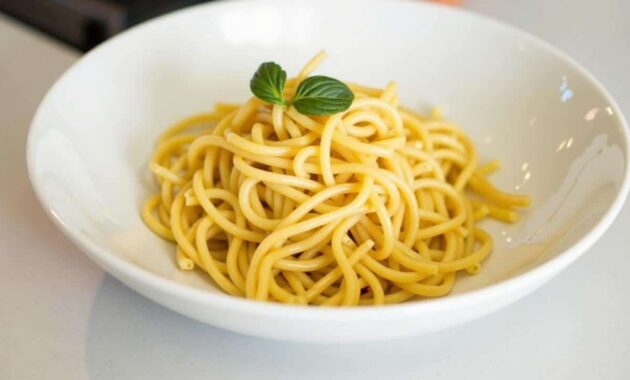
You already know what usually happens: a spin in the microwave, a plateful of sticky noodles, dry edges, and a lava-hot centre. Yet when you made that dish, it tasted fantastic. The good news is that chefs use a very simple method to bring leftover pasta back to life – and it works just as well in an ordinary home kitchen.
Why leftover pasta turns sad and soggy
Pasta behaves differently once it has cooled. The starch inside it firms up and tightens, which is why cold pasta feels harder and tends to clump together. That is normal. The real issue starts when you reheat it badly.
The microwave blasts heat into the outer layer first, while the inside lags behind. As the starch heats, it suddenly releases water. The pasta swells, the grains burst, and you get that thick, mushy texture. The sauce can split too, leaving greasy patches and dull flavours.
To keep pasta firm and springy, you need slow, even heat, a bit of fat and a small amount of hot water.
This is exactly what restaurant cooks aim for. They do not simply “reheat”; they effectively finish cooking the pasta a second time, with control and care.
The chef-style method, adapted for real kitchens
In a busy Italian restaurant, cooked pasta rarely sees a microwave. Instead, it goes into a hot pan with sauce and a splash of pasta water. In less than two minutes, it comes out glossy, coated and still slightly al dente.
You can copy that idea at home with just a frying pan and a kettle or small saucepan of hot water. The logic is simple: you are not reviving leftovers reluctantly, you are recooking them quickly. You move the pasta, you feed it moisture and fat, and you warm it gently right to the core.
Step-by-step: how to reheat pasta without turning it to mush
Equipment and basic ingredients
- 1 large frying pan or sauté pan
- 1 small pan or kettle for hot water
- 1 wooden spoon or spatula
- 300–350g cold cooked pasta (about two portions)
- 1 tbsp olive oil or 15g butter
- 4–6 tbsp boiling water
- Salt and pepper if needed
- 30–40g grated hard cheese such as Parmesan (optional but very effective)
Step 1: loosen the pasta
- Take the pasta out of the fridge 5–10 minutes in advance if you can.
- Break up any solid blocks gently with a fork or your fingers.
- If it seems very dry, coat it with a teaspoon of oil and toss.
Step 2: heat the pan
- Set the pan over a medium heat.
- Add the oil or butter and let it warm without smoking.
Step 3: “wake up” the pasta
- Add the pasta in a loose layer. Avoid piling it too high; it should lie across the base of the pan.
- Stir or toss gently so every strand or shape is lightly coated in fat.
Step 4: add hot water strategically
- Boil a small amount of water in a pan or kettle.
- Pour about 2 tablespoons of boiling water into the pan.
- Stir. You should see a little steam, which helps soften the inside of the pasta.
- After about a minute, taste a piece. If it still feels dry or too firm, add 1–2 more tablespoons of hot water.
Step 5: finish and serve
- Once the pasta is hot, flexible and shiny but still has some bite, lower the heat slightly.
- Add cheese or a spoonful of cream if you like a silkier finish.
- Stir for another 30 seconds, turn off the heat and plate up straight away.
The trick is restraint: a little water, medium heat, constant movement and a quick finish.
Adjusting the technique for different sauces
Plain pasta or lightly oiled pasta
- Follow the main pan-and-hot-water method.
- At the end, you can add a clove of chopped garlic briefly fried in the oil, a pinch of dried herbs, or a knob of butter for extra flavour.
Tomato-based sauces
- Reheat the pasta in the pan with fat and a little water over a medium-low heat.
- If the sauce is already mixed in, stir regularly so it does not stick.
- If the sauce is separate, warm it in a small pan with a splash of water, then combine with the pasta once both are hot.
- Finish with grated cheese to help the sauce cling.
Creamy sauces
- Use a very gentle heat, or the cream can split.
- Start with just 2 tablespoons of water; cream-based sauces need less dilution.
- If the sauce looks like it is separating, stir in a spoon or two of fresh cream at the end.
Pesto pasta
- High heat can turn pesto bitter and dull.
- Warm the pasta itself with oil and water in the pan.
- Turn off the heat, then add the pesto and mix thoroughly off the hob.
Already-baked pasta bakes and gratins
- Preheat the oven to 160–170°C (roughly 320–340°F).
- Spoon a few tablespoons of milk or cream over the top.
- Cover with foil to stop it drying out.
- Bake for 15–20 minutes, depending on thickness, until the centre is piping hot.
- Remove the foil for the last couple of minutes to re-crisp the top.
The classic mistakes that ruin reheated pasta
- Too much water: a big splash leaves you with a thin soup and washed-out flavours. Stick to a few spoonfuls.
- Heat that is too high: the base burns, the sauce sticks and the pasta overcooks.
- Neglecting to stir: some pieces scorch while others stay lukewarm. Gentle, regular movement keeps heat even.
- Reheating the same batch again and again: each cycle damages the texture. Only warm what you plan to eat.
What if you are stuck with a microwave?
The pan method wins for taste and texture, but life is not always organised around a hob. For office lunches or late-night snacks, the microwave still has a place if you use it carefully.
➡️ An AI-run company: what the results quietly reveal about our future at work
➡️ Why cleaning more doesn’t always mean living cleaner
➡️ Psychology explains why emotional calm doesn’t always feel safe at first
➡️ A revolutionary technology could soon land on your smartphone and let you see in 4K… like a snake
- Put one portion of pasta in a microwave-safe bowl.
- Add 1–2 tablespoons of water.
- Cover with a microwave lid or a plate.
- Heat for 1 minute on medium power, not full power.
- Stir and check the temperature.
- Heat in 30–60 second bursts, stirring in between, until just hot.
Short bursts at medium power with extra moisture give you a far better result than blasting at full power.
Turning leftovers into a new meal
Once you are comfortable with gentle reheating, you can start treating leftover pasta as a building block rather than a consolation prize.
- Vegetable stir-fry pasta: soften an onion, a clove of garlic, a diced carrot and a handful of frozen peas in oil. Add leftover pasta with a splash of water. Finish with Parmesan or a dash of soy sauce.
- Cheesy pan “gratin”: if your leftovers are already saucy, stir in diced ham and grated cheese in the pan. Let the bottom catch lightly for a crunchy layer.
- Warm pasta salad: quickly heat plain pasta in oil, then off the heat add cherry tomatoes, mozzarella, herbs and a drizzle of olive oil. Serve just warm.
Storage habits that set you up for success
Texture is partly decided at the moment you box up the leftovers. Good storage makes reheating far easier.
- Keep pasta in an airtight container in the fridge.
- Toss it with a spoonful of sauce or a little olive oil before chilling so it does not glue together.
- Eat within two to three days for best flavour and safety.
| Step | What to do | Why it helps |
|---|---|---|
| Initial cooking | Leave pasta slightly al dente | Gives a margin for reheating without going soft |
| Cooling | Coat lightly in oil or sauce | Prevents clumping and surface dryness |
| Reheating | Use a pan, medium heat, little water | Warms evenly and keeps structure |
Why “al dente” and starch matter when you reheat
Two ideas shape everything here: starch and al dente. Starch is the carbohydrate inside the pasta that swells when cooked. When cold, it tightens. When reheated gently with moisture, it relaxes again rather than breaking apart.
Al dente simply means the pasta still has a slight firmness in the centre. If you cook it to that point on day one, you give yourself a buffer. The second, brief cooking in the pan brings it up to a perfect texture instead of tipping it into mush. Treating leftovers with the same care as a fresh dish turns that sad fridge bowl into something you genuinely want to eat.