Your dog hops up next to you, circles twice, flops down with a sigh… and lets out a huge yawn. You smile automatically. “Sleepy head,” you mumble, scratching those familiar ears without even looking up.
A few hours later you clip on the leash for a walk. At the front door, your dog freezes for a second. Another big yawn. Same in the vet’s waiting room. Same when you grab the car keys. Same during that tense moment when two dogs size each other up at the park.
Are they really tired every single time? Or is something else going on behind that long, stretchy jaw and those blinking eyes?
What vets really see when your dog yawns
Most guardians think yawning equals “time for bed”. Vets see something different. To them, a yawn can be a neon sign for stress, confusion or inner conflict. The exact same movement that looks lazy on the sofa can mean “I’m not sure about this” in a crowded street or noisy kitchen.
When a dog yawns as you lean in for a hug, or as kids rush past, many veterinarians read that as a calming signal. A way for the dog to say, *I’m trying to stay cool here*. The body looks floppy; the mind is working hard.
Once you start watching yawns in context – when they happen, what just changed, who is nearby – you start seeing a whole private language your dog has been speaking for years.
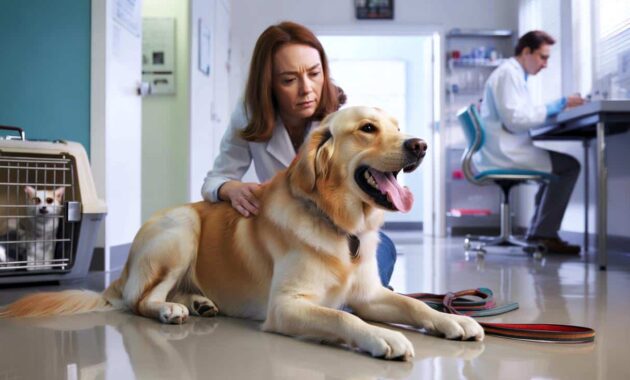
Picture this: a young Labrador at the vet, paws spread on the slick floor, nails clicking. The carrier door across the room squeaks; a cat hisses from inside. The Lab’s owner keeps whispering, “It’s okay, it’s okay,” as the dog’s chest rises fast. Then comes a slow, exaggerated yawn, followed by a quick lick of the nose.
The dog isn’t sleepy at 10 a.m. in a fluorescent-lit clinic. That yawn is the mind’s pressure valve. Vets see it right before a vaccination, just before stepping onto the metal scale, even as a dog hears the rustle of latex gloves. It shows up in puppy classes too, when games get loud and one pup starts to feel overwhelmed.
Studies on canine body language back this up. In work with shelter dogs, researchers found increased yawning in noisy, unpredictable environments. Trainers often film sessions and notice yawns spiking when exercises become too difficult or confusing. It’s a pattern that repeats, home after home, clinic after clinic.
What’s going on inside? Vets explain it like this: a dog’s nervous system is constantly toggling between “rest” and “ready for action”. A yawn can be the body’s attempt to reset that switch. More oxygen, a micro-break for the brain, a soft signal to others that the dog is trying to de-escalate instead of react.
➡️ This tiny hole is one of the dirtiest spots in your home – and it takes just a minute to clean
➡️ People over 65 who protect their daily energy this way feel steadier
➡️ Ten native seed mixes for wildflower meadows that support bees and cut lawn mowing time in half
➡️ People keep throwing this item away even though gardeners say it is pure gold for plant growth
➡️ Drain solutions that “work once” often just move the blockage further down
Humans do something similar in awkward meetings or before speaking on stage. We stretch, we sigh, we fiddle with a pen. The dog’s yawn is one of those tiny coping tools. It doesn’t mean “everything is fine”. It means “I’m trying to make everything fine”.
Vets also see yawns as part of a cluster. Rarely alone, they show up with turned heads, squinting eyes, a stiff tail or a sudden interest in sniffing the floor. One yawn at midnight? Probably tired. Repeated yawns during a loud argument in the next room? That’s a different story.
How to read your dog’s yawns like a pro
The first practical step: match every yawn to the five seconds before it. Ask yourself, “What just changed?” Did you bend over your dog? Lift a brush? Reach for the harness? Did another dog appear, or did someone raise their voice?
Keep it simple. Notice three things: where you are, who is near, and what your dog’s body is doing. Loose and wiggly with a droopy tail usually points to relaxation. Tight muscles, a closed mouth right after the yawn, or a quick shake-off can hint at stress. One small notebook or a few notes in your phone over a week can completely change how you see those sleepy jaws.
Once you’ve spotted a pattern – yawning before nail trims, for example – treat it as valuable data, not drama. Your dog is giving you a tiny weather report about their emotional climate.
Many guardians feel guilty once they realise yawning can mean stress. They replay old moments in their heads: the time the kids hugged the dog for pictures, the time visitors insisted on petting. Vets are quick to cut through that shame. Dogs are resilient, adaptable animals. What matters is what you do from now on.
Instead of panicking at every yawn, think in terms of small adjustments. Shorter training sessions. Quieter greetings. Letting your dog approach visitors instead of being pulled forward. Even shifting a food bowl away from a busy hallway can reduce those “I’m coping” yawns around mealtimes.
Many people also misread a stressed yawn as “being stubborn”. A dog who yawns and turns away during training isn’t trying to win a battle. They might be confused, pressured or simply full from dinner. Soyons honnêtes : personne ne fait vraiment ça tous les jours, mais pausing the session for a minute to reset usually helps more than pushing through.
One behaviorist vet summed it up neatly in consultation:
“When a dog yawns, I don’t ask, ‘Why is he being dramatic?’ I ask, ‘What did we just ask of him, and did we make it safe and clear enough?’”
To make that mindset easier to apply at home, many trainers share a simple checklist to pair with yawns:
- Was the room or situation noisy, crowded or new?
- Did I lean over, hug, or hold my dog’s collar?
- Has my dog had enough sleep and down-time today?
- Is there pain or discomfort that might make normal handling feel worse?
- Could we take a short break, add distance, or offer a calmer option?
That small list can quietly sit in your notes app. Glance at it when you notice a cluster of yawns and you’ll often spot one simple change that makes your dog breathe easier – literally and emotionally.
When a yawn is a whisper you shouldn’t ignore
Some yawns are just part of life. Others are early warning signs. Vets ask owners to look at frequency and setting. If yawning suddenly ramps up during car rides, new visitors, or grooming, it can signal rising anxiety. When it happens alongside lip-licking, widened eyes or a tucked tail, that’s your dog quietly waving a white flag.
There’s also the health angle. Excessive yawning paired with drooling, pawing at the mouth, foul breath or difficulty chewing can point to dental issues or nausea. In older dogs, new yawning patterns can be linked with cognitive changes or pain. A dog who yawns and struggles to lie down comfortably might be dealing with sore joints, not boredom.
Some vets talk frankly about what they call the “stacking” effect. A dog who spends the day swallowing mild stress – the courier at the door, the noisy renovation next door, the rough play at the park – may show that stress later as panting, shaking, or a run of yawns at night. Those yawns are not random. They’re the footage from the day, replaying in the body.
Many guardians only piece this together after something goes wrong: a snap at the groomer, a growl at a child, a refusal to get into the car. Looking back, they remember yawns, but wrote them off as tiredness. Once you know better, those yawns become early messages you can actually act on.
Stepping in early doesn’t mean wrapping your dog in cotton wool. It means recognizing that a living, feeling animal shares your home – and has been quietly telling you how they feel all along.
On a quiet evening, when everything around you is calm, watch your dog stretch, circle and settle into that perfect curl. Notice the slow yawn that comes then, the soft exhale, the heavy lids. That’s the classic, sleepy version.
Now imagine the exact same movement, but in a bright pet store aisle, or as a group of kids rush up. Suddenly that yawn doesn’t feel so cute. It feels like a question. And once you start hearing it as a question, your whole relationship with your dog shifts a little.
You may find yourself stepping between them and a pushy stranger, or asking a friend’s child to give the dog space. You might skip one crowded event in favor of a forest walk. These are small choices on paper, yet they rewrite how safe your dog feels next to you.
On a deeper level, understanding yawns invites you to slow down. To watch rather than assume. To remember that your dog’s day is full of invisible negotiations with the world, and you are their main ally in those negotiations. Every quiet yawn is a chance to say, without words, “I see you. I’ve got you.”
| Point clé | Détail | Intérêt pour le lecteur |
|---|---|---|
| Yawning as a stress signal | Dogs often yawn in confusing, tense or new situations | Helps you spot early signs of anxiety before things escalate |
| Context over single moments | Meaning changes depending on where, when and what just happened | Makes your reading of your dog more accurate and fair |
| Health and behavior checks | Sudden, frequent yawning can flag discomfort, pain or chronic stress | Encourages timely vet visits and kinder handling choices |
FAQ :
- Is every dog yawn a sign of stress?No. Dogs also yawn when they’re genuinely sleepy or winding down. Stress yawns tend to appear in clusters, in busy or tense situations, and often come with other body language like lip-licking or turning the head away.
- How can I tell a “tired yawn” from a “worried yawn”?Look at the setting. A relaxed dog on the sofa at the end of the day, with loose muscles and a soft tail, is usually just sleepy. A dog yawning repeatedly at the vet, in a crowd, or when someone leans over them is more likely sending a calming signal.
- Should I comfort my dog every time it yawns?You don’t need to rush in for every single yawn. If the context suggests stress, you can quietly help by giving more space, changing the environment, or pausing what you’re doing. Sometimes simply moving away from the trigger is more helpful than physical cuddling.
- Can yawning mean my dog is in pain or sick?Yes, in some cases. Excessive yawning along with drooling, pawing at the mouth, changes in appetite, or difficulty settling can point to nausea, dental problems or discomfort. That kind of pattern deserves a vet check.
- What should I say to people who ignore my dog’s stress yawns?You can keep it simple and firm: “She’s feeling a bit overwhelmed, let’s give her some space.” Stepping between your dog and the person, and calmly leading your dog away, sends a clear message without starting an argument.