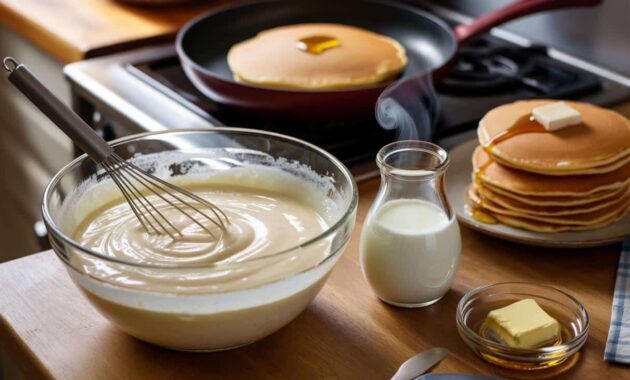
Sunday morning, the pan is heating, the coffee is cooling too fast, and your pancake batter looks… wrong. A little too lumpy, a little too thick, and somehow the first one always comes out rubbery, like a sad coaster. You follow the recipe, you whisk like a maniac, you even bought the fancy non-stick pan. Still not that soft, cloud-like texture you keep seeing on Instagram.
Then one day, almost by accident, you pour in milk that’s just been warmed for your coffee. The batter suddenly loosens in a silky way. The flour drinks it up. No stubborn flour pockets. The pancakes puff, brown, and stay tender.
Same ingredients. Same recipe. Just a tiny temperature shift.
And the whole breakfast changes.
Why slightly warm milk transforms pancake batter
Watch what happens when you pour cold milk straight from the fridge into your bowl of flour and eggs. The fat firms up, the melted butter starts to seize around the edges, and the batter fights back as you stir. You get streaks. Little cold clumps. That “just-mixed” look that never really goes away, even if you whisk until your arm hurts.
Now imagine the same scene with milk that’s just lukewarm. Not steaming, not scalded, just gently warm to the touch. The batter blends faster. The whisk glides instead of drags. You can almost see the flour relaxing and absorbing the liquid. The difference feels small in the bowl, but shows up on the plate.
Picture two batches of pancakes at a family brunch. Same flour, same sugar, same eggs. In one bowl, someone dumps in cold milk from the carton. In the other, a cousin who once worked in a café quietly warms the milk in the microwave for 20–30 seconds before mixing.
The first batch comes out a bit tough on the edges, pale in spots, with uneven bubbles. They’re fine. People eat them. The second batch, though, rises more evenly and feels almost cake-soft when you cut in with a fork. People reach for seconds without thinking. No one announces the secret. They just notice the pancakes taste more “professional” without knowing why.
There’s a practical reason behind that soft texture. Slightly warm milk helps dissolve sugar and salt more evenly, so the flavor spreads through every bite. It also helps melted butter stay liquid instead of turning into tiny cold bits that resist blending. The flour’s starches hydrate more thoroughly when the liquid isn’t icy, creating a smoother, more cohesive batter.
That better hydration translates into a tender crumb, not a chewy one. The tiny air bubbles created when you whisk have an easier time floating through a warm, fluid batter, which leads to more consistent rise in the pan. In the end, this tiny thermal tweak gently rewires the whole structure of your pancakes.
The right way to warm milk for fluffier pancakes
You don’t need a thermometer or barista-level skills. Just pour your milk into a mug or small jug and heat it in the microwave for 20–30 seconds. Swirl it. Touch it with a clean finger. You’re aiming for pleasantly warm, like fresh bathwater, not hot chocolate.
➡️ The flower that improves nearby plant resilience without competing
➡️ Goodbye Microwave: The New Appliance That Could Replace It for Good
➡️ Why don’t crocodiles eat capybaras
➡️ Neither shampoo nor chemicals: how rye flour can change your hair care routine forever
➡️ The quick trick for removing burnt sugar from saucepans
If you prefer the stove, use low heat and watch closely. Take the pan off the burner as soon as you see the first hint of steam, well before it simmers. Let it sit for a minute if it feels too hot. That gentle warmth is enough to coax the flour, eggs, and fat into working together instead of against each other.
There’s a trap a lot of home cooks fall into: overheating the milk. When the milk is too hot, you risk scrambling the eggs as soon as they meet in the bowl. Tiny cooked egg bits don’t exactly scream “luxury brunch”. They scream “omelet accident”.
We’ve all been there, that moment when the batter suddenly smells more like custard gone wrong than pancakes. If that happens, just cool your milk down next time until it’s only slightly warm. Think about the way a baby bottle feels on your wrist. That soft, gentle warmth is your sweet spot. Your batter should feel alive, not shocked.
*“Once I started using warm milk in the café, our pancake complaints disappeared overnight,”* says a brunch chef I interviewed last year. *“People kept asking if we’d changed the recipe. We hadn’t. We’d just changed the temperature.”*
- Warm, not hot: Aim for milk that feels comfortably warm to the touch, never so hot that it steams heavily or burns your finger.
- Add it gradually: Pour the milk in stages while whisking, so the batter loosens smoothly and lumps dissolve more easily.
- Combine fats wisely: Mix melted butter or oil into the warm milk before adding to the dry ingredients to keep everything silky.
- Rest the batter: Let it sit 5–10 minutes after mixing so the warm liquid can fully hydrate the flour.
- Don’t overwhisk: Stop as soon as the flour is incorporated; a few tiny lumps are fine and keep the texture tender.
Rethinking all those “little” details in pancake recipes
Once you notice what warm milk does to pancake batter, you start questioning other small habits in your kitchen. Are your eggs freezing cold while your pan is smoking hot? Is your butter half-solid by the time it hits the bowl? Do you rush the batter from whisk to pan without letting it settle and breathe?
Let’s be honest: nobody really does this every single day. Most mornings are about speed, kids asking where their socks are, and someone yelling that they’re late. Yet on the rare days you slow down and warm the milk, crack the eggs thoughtfully, and give the batter a couple of quiet minutes, the pancakes almost always reward you.
| Key point | Detail | Value for the reader |
|---|---|---|
| Use slightly warm milk | Heat milk until just warm to the touch, not hot or boiling | Smoother batter, better hydration, and softer pancakes |
| Mix warm milk with fats first | Combine melted butter or oil into the warm milk before adding to dry ingredients | Prevents fat from seizing, gives a more even, silky texture |
| Rest the batter briefly | Let the warmed batter sit for 5–10 minutes before cooking | Improves structure, leads to fluffier, more consistent pancakes |
FAQ:
- Do I absolutely need warm milk for good pancakes?Not strictly, you can still get decent pancakes with cold milk, but warm milk makes it easier to achieve a smoother batter, better rise, and a softer texture with less effort.
- What’s the ideal temperature for the milk?Around 35–40°C (95–104°F) is a good range, but you don’t need a thermometer; if the milk feels comfortably warm on your finger, you’re close enough.
- Will warm milk make my pancakes cook faster?Not by much, but it helps the batter spread and set more evenly, which can reduce those pale, undercooked spots in the center.
- Can I warm plant-based milk the same way?Yes, the same principle applies to oat, soy, almond or other plant milks; just warm gently and avoid boiling to keep the flavor pleasant.
- What if I accidentally overheat the milk?Let it cool for a few minutes, or stir in a splash of cold milk until it’s just warm; if it’s very hot, cool it fully before adding eggs to avoid cooking them.