The pan is already smoking before the bacon even touches it. A couple of slices weld themselves to the metal, another curls like a tight fist, and in the middle of it all you’re dodging tiny explosions of hot fat on your wrists. The smoke alarm clears its throat. You flip a strip, it tears. One piece goes crispy, the other stays limp and sulky. Classic Saturday morning chaos.
Then you watch a pro in a restaurant kitchen and it looks… almost boring. Sheet pan, parchment, rows of bacon as neatly lined as soldiers on parade. Into the oven. No flinching, no frantic flipping, no greasy T‑shirt sacrifice. Just calm confidence and a timer.
Five minutes later, the smell is the same, but the energy is completely different.
Something is going on there.
Why chefs quietly ditched the frying pan
Ask a line cook to fry bacon in a pan for a brunch rush and you’ll probably get a raised eyebrow. They know that standing over a skillet, slice by slice, is a losing game when you’ve got 40 orders on the ticket. Bacon in the oven is not a “hack” to them, it’s just the way things are done when you’re cooking for more than two people.
The truth is simple. The oven gives you control, consistency and free hands, while the pan gives you drama, splatter and guesswork. One looks impressive. The other wins every single time.
Picture a busy Sunday brunch at your favorite café. Plates of avocado toast, pancakes and egg sandwiches keep landing on tables, all crowned with the same thing: perfectly flat, evenly bronzed bacon that actually fits inside the sandwich. No burned edges, no half-raw pocket of fat in the middle.
That level of uniformity is almost impossible from a single frying pan. Even with a big skillet, only the center really cooks evenly. Corners go hot and cold, bacon overlaps, and suddenly three slices are done while two are still pale. On a sheet pan in the oven, every strip gets the same heat from all sides. One tray, one bake, same result from end to end. That’s why hotel buffets, diners and catering teams quietly rely on baking trays, not skillets.
The logic behind it is pretty straightforward. In a pan, bacon sits in a puddle of its own fat that heats unevenly and bubbles like crazy. The strips bend, twist and fight for contact with the metal, which is why they crisp in odd patches. In an oven, the air does the work. Hot, dry circulation slowly dehydrates and browns the meat while the fat renders out and spreads across the tray.
You get less violent bubbling, more gentle rendering. Less babysitting, more predictability. **Chefs love predictable things**, because predictable means they can repeat it every single morning without a meltdown. Home cooks benefit from the same physics, just with fewer tickets and no chef yelling in the background.
➡️ Goodbye to happiness ? The age when it falters, according to science
➡️ Pressure mounts on NASA: the space station is nearing its end and the handover is not secured
➡️ If you feel like you’re “too much” for others, psychology explains where that belief forms
How the oven method actually works
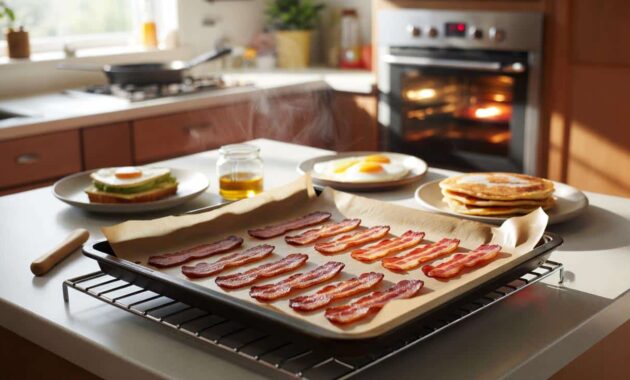
The basic move is almost embarrassingly simple. Set your oven between 375°F and 400°F (190–200°C). Line a rimmed baking sheet with parchment paper or foil, then lay your bacon slices in a single layer so they don’t overlap. Straight lines, no folding. Into the hot oven it goes.
Most regular-cut bacon will crisp in 15–20 minutes, thick-cut in 20–25. You don’t need to flip it. You don’t need to poke it. You just peek once or twice through the glass, then pull the tray when the color makes you happy. That’s why so many pros do it this way: same routine, same result, almost no drama.
A lot of people try oven bacon once, crowd the pan, and then decide it “doesn’t work”. The strips steam instead of crisping, or they fuse together into one giant pork blanket. That’s not the oven’s fault, that’s just too much ambition on one tray. Leave small gaps between the slices and use two pans if you need more.
We’ve all been there, that moment when you’re cooking for guests and suddenly regret every choice you’ve ever made in a kitchen. This is exactly the kind of technique that quietly saves that situation. Bacon goes into the oven, you walk away and scramble eggs, slice fruit, toast bread. By the time you’re stressed about something else, the bacon is already perfect and waiting.
“On the line, bacon is one less thing I want to think about,” says a brunch chef in Brooklyn. “If it’s in the oven, I know it’ll be right. The pan is for show, the tray is for work.”
- Use parchment or foilThis keeps bacon from sticking and turns cleanup into a quick toss, not a deep scrub.
- Play with temperatureLower heat (around 350°F / 175°C) gives chewier, less brittle strips. Higher heat leans into shatteringly crisp.
- Try a rack for extra crispnessSetting bacon on a metal rack over the tray lets fat drip away and air circulate under the slices.
- Save the rendered fatPour it into a jar while still warm. That liquid gold transforms roasted potatoes, fried eggs and even popcorn.
The quiet perks nobody mentions out loud
Once you switch, you start noticing all the small details that make oven bacon feel strangely civilized. The stove stays clean. Your clothes don’t smell like a diner for the rest of the day. The kitchen doesn’t fill with defensive smoke that turns every breakfast into a race against the alarm.
You also get options. Want half the tray super crisp and half just blushing gold for sandwich layering? Pull a few pieces early, leave the rest a few minutes longer. The oven gives you a sliding scale of doneness on the same sheet pan, not a chaotic shuffle across hot spots in a pan. *That quiet control is the thing people fall in love with, even if they don’t talk about it.*
| Key point | Detail | Value for the reader |
|---|---|---|
| Even cooking | Bacon lies flat on a sheet, heated evenly by circulating air | Predictable texture from strip to strip, less risk of burned or undercooked spots |
| Hands-free time | No constant flipping or guarding against splatters | Freedom to focus on eggs, coffee, kids, guests or just breathing |
| Less mess, more yield | Grease stays in the pan, easy to pour and store | Cleaner stove, reusable bacon fat and calmer breakfast energy |
FAQ:
- Question 1Won’t the bacon get rubbery if I bake it instead of frying it?Not if you give it enough time and space. Bake until the fat looks fully rendered and the edges deepen in color. For crisper results, use a rack or add a couple more minutes at the end.
- Question 2Should I start bacon in a cold or preheated oven?Both work, but a preheated oven is more consistent. Starting in a cold oven can give a slightly chewier texture as the fat renders more gradually, which some people actually prefer.
- Question 3Can I cook turkey or vegan bacon in the oven too?Yes. Lay it out the same way, just reduce the time a bit. Leaner products brown faster since there’s less fat to render, so watch closely during the last minutes.
- Question 4How do restaurants keep bacon warm without drying it out?They hold it on a tray in a low oven or warming drawer around 200°F (95°C). At home, you can tent the tray loosely with foil and keep it in a turned-off but still-warm oven for 10–15 minutes.
- Question 5Is oven bacon really healthier than pan-fried bacon?The nutritional difference is small, but some fat does render away and stay on the tray instead of soaking back into the strips. The bigger gain is peace of mind and less greasy chaos. Let’s be honest: nobody really cooks bacon for the health halo.