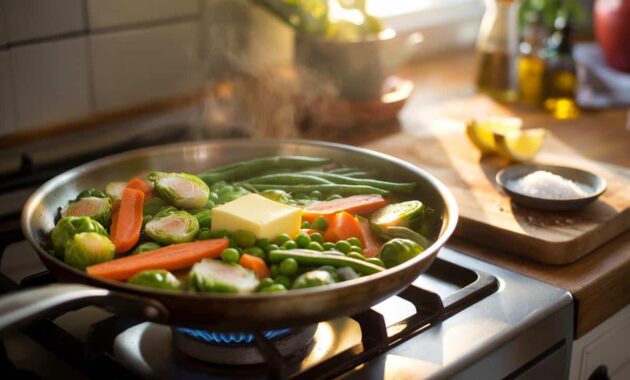
The first time I noticed the smell, I was standing in a friend’s tiny kitchen, coat still on, half distracted by my phone. A pan hissed softly on the stove, nothing flashy, just carrots cut in rough coins and a small pat of butter slowly melting around them. No garlic, no herbs, no chef-level drama. Just that warm, nutty scent starting to creep through the room.
When I finally tasted one, it stopped me mid-sentence. The carrot didn’t feel “healthy” in that worthy, boring way. It tasted like it had finally remembered it was supposed to be sweet.
I went home that night wondering about that little square of butter.
What if this was the missing shortcut between “I should eat vegetables” and “I actually want to”?
Why a tiny bit of butter wakes up vegetable sweetness
Watch what happens the next time a knob of butter hits a hot pan. It melts, then starts to foam, releasing a smell that’s oddly comforting, almost like toast and hazelnuts. When you tumble in sliced carrots, leeks or green beans, a quiet transformation begins.
The vegetables don’t just cook. They gloss over, their colors deepening slightly as the edges pick up a shy golden tint. You stir once or twice, and suddenly the kitchen smells like a real dinner instead of a duty. Butter doesn’t shout over the vegetables. It puts a soft spotlight on what’s already there.
Imagine two plates of carrots. One has been steamed in plain water, the other sautéed slowly in a little butter with a pinch of salt. On paper, they’re nearly the same ingredient. On the tongue, they live on different planets.
The steamed carrots taste… fine. Orange, vegetal, faintly sweet if you really concentrate. The buttered ones feel rounder, almost like their sweetness has been turned up a notch, the taste lingering a bit longer. Kids are more likely to finish them without being nudged. Adults go back for seconds without even thinking about it.
Same carrot. Same origin. Different emotional outcome at the table.
There’s a simple logic hiding inside that magic. Butter is fat, and fat is a powerful flavor carrier. Many of the molecules that give vegetables their sweetness and aroma dissolve better in fat than in water. When they bind with the butter, they spread across your tongue more evenly, so your brain registers them more clearly.
Something else happens too: those milk solids in butter start to brown, creating hundreds of new flavor compounds. They echo caramel and roasted notes, which your brain automatically links with “sweet”. *Your mouth is basically being primed to read the vegetable as sweeter than it actually is.*
➡️ France helps Greece challenge Turkey with €800 million high-tech warship: the FDI frigate
➡️ All People Who Have Bread In The Freezer Are Invited To Read This Information
➡️ Why chefs add finishing salt just before serving certain dishes
➡️ Scientists film a human embryo implanting in a uterus, a world-first medical milestone
➡️ A Star Wars prince was almost as powerful as Darth Vader and the Emperor, but no one knows his name.
So it’s not that butter adds sugar. It helps your senses catch the sweetness that was already hiding in the fibers.
The gentle method that changes weeknight veggies
The trick isn’t to drown vegetables in butter, but to treat a small amount like a seasoning. Start with a wide pan over medium heat and add a modest pat — about a teaspoon per person is often enough. Let it melt slowly until it foams and you catch that light nutty scent, just before it darkens.
Add your vegetables in a single layer if you can: sliced carrots, halved Brussels sprouts, strips of cabbage, even frozen peas straight from the bag. Sprinkle a bit of salt right away. Then just stir occasionally, keeping the heat gentle. You’re not chasing a hard sear, you’re coaxing.
After 8–12 minutes, the vegetables soften, glisten, and carry that soft, almost honeyed sweetness.
This is where many people get tripped up, often with the best intentions. They either go all or nothing. Either the vegetables are steamed totally plain “to be good”, or they’re drowning in cream and cheese “because life is short”. The middle road feels weirdly forbidden.
We’ve all been there, that moment when you eat your sad, under-seasoned vegetables first just to “get them out of the way”. Then you wonder why nobody at home is excited about them. The thing is, **a teaspoon of butter is not the enemy of health**. It’s the bridge between theory and daily life.
Let’s be honest: nobody really does this every single day with elaborate recipes and perfect timing. A quick buttery sauté is the kind of small effort that actually sticks.
There’s a quiet kind of wisdom in how good cooks talk about this.
“Vegetables don’t need rescuing,” an old chef once told me. “They just need someone in the pan rooting for them. Butter does that. It makes people listen.”
Practically, that “support” looks like a few simple rules:
- Use a small amount: think gloss, not puddle.
- Keep the heat medium so the butter browns a little but doesn’t burn.
- Add salt early to help draw out vegetable juices and balance sweetness.
- Finish with a splash of lemon or vinegar if things feel too heavy.
- Swap in half butter, half olive oil if you want a lighter touch.
One tiny ritual, five minutes of attention, and your side dish stops feeling like a chore.
Rethinking “healthy” through a small pat of butter
There’s something almost rebellious about gently buttering vegetables in a diet-obsessed world. For years, the message has been: less fat, more steamed greens, hold the pleasure. Then we wonder why eating “well” feels like a phase we fall out of by Thursday.
When you add a bit of butter to vegetables, you’re not just tweaking flavor. You’re changing the story. A bowl of glossy green beans with a light sheen and a sweet bite feels like real food, not homework. You sit a little longer at the table. You talk more. People pick at the last bits in the dish.
Health looks different in that context. It stops being about punishment and starts being about a pattern you can actually live with, day after day, season after season.
| Key point | Detail | Value for the reader |
|---|---|---|
| Butter amplifies natural sweetness | Fat carries and spreads flavor compounds, and browned milk solids echo caramel notes | Vegetables taste richer and more appealing without adding sugar |
| Small amounts are enough | About a teaspoon per person, cooked gently over medium heat | Enjoy better taste while keeping dishes light and balanced |
| Simple method, big upgrade | Sauté with salt, low heat, and optional splash of acidity to finish | Transforms everyday vegetables into something people actually look forward to eating |
FAQ:
- Does butter actually make vegetables sweeter?It doesn’t add sugar, but it helps your taste buds pick up existing sweetness and adds browned, caramel-like notes that your brain reads as sweet.
- Is it unhealthy to cook vegetables in butter?Used in small amounts, butter can fit into a balanced diet, especially if it helps you eat more vegetables overall.
- Which vegetables benefit most from a bit of butter?Carrots, peas, green beans, cabbage, leeks, Brussels sprouts and sweet potatoes all respond beautifully to gentle sautéing in butter.
- Can I mix butter and olive oil?Yes, combining them lightens the dish and raises the smoke point, giving you flavor and a bit more flexibility with heat.
- How do I avoid burning the butter?Use medium heat, wait for gentle foaming, stir occasionally, and lower the heat if the butter turns too dark or smells acrid instead of nutty.
Originally posted 2026-03-09 05:34:00.