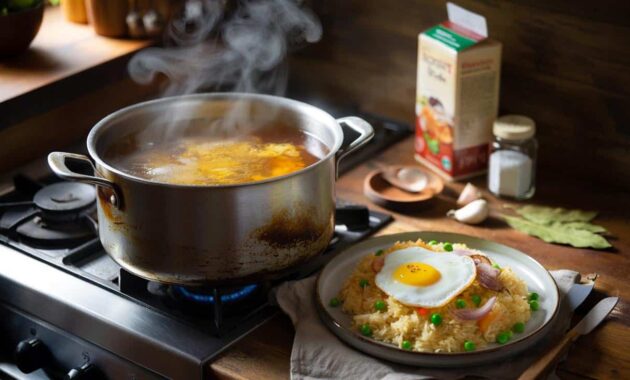
The first time someone told me to cook rice in broth instead of water, I rolled my eyes. It sounded like one of those fussy “foodie” tricks you see on Instagram, the kind nobody actually does on a Tuesday night. Then one evening, with half a carton of chicken stock left in the fridge and zero motivation for a complicated dinner, I poured the broth into the pot, tossed in a cup of basmati, and walked away.
When I lifted the lid twenty minutes later, the smell hit first — deep, savory, almost like a slow-cooked soup had snuck into my plain side dish. The grains were shiny, tender, and tasted like they’d been cooked in a restaurant kitchen. My forkful of rice suddenly didn’t feel like a filler. It felt like the main event.
That tiny swap changed how I saw this everyday staple. And once you taste it, it’s hard to go back.
Why broth turns basic rice into real food
There’s a moment when the steam from a pot of rice hits your face and you already know if you nailed it or not. With water, that moment is quiet, almost neutral. With broth, it’s like the volume suddenly goes up. The aroma carries salt, fat, and slow-simmered vegetables right into your kitchen.
Suddenly this neutral, white canvas becomes something else. You get flavor in every grain without adding a single extra pan. No sauces to whisk, no complicated seasonings, just rice that already tastes like dinner.
That’s the real shift: rice stops being the boring side and starts acting like a co-star on the plate.
Picture a weeknight where you’re exhausted, the fridge is half empty, and all you have is some rice, a lonely onion, and maybe two eggs. Cook that rice in plain water and you’re probably heading toward a sad bowl, more survival than satisfaction.
Now imagine you pour in vegetable or chicken broth instead. The onion suddenly matters. The egg, fried or scrambled on top, feels intentional rather than desperate. You add a bit of soy sauce, maybe a handful of frozen peas, and you’ve got something you’d happily serve a friend.
The ingredients haven’t changed. Only the liquid has. Yet the whole meal feels warmer, richer, more thought-out.
There’s a straightforward reason broth rice hits differently. Water just hydrates the grain. It softens the starch and carries a bit of salt if you add some, nothing more. Broth brings dissolved fats, proteins, and aromatics from bones, meat, or vegetables. Those tiny particles seep into the rice as it cooks and swell.
Each grain becomes a little flavor sponge. Instead of seasoning only the outside with sauce at the end, you’ve seasoned from the inside out. That’s why the taste seems deeper and rounder, even when you barely add anything else.
*You’re not just cooking rice in a liquid, you’re trading blank space for built-in flavor.*
The simple method that quietly upgrades every pot
The basic move is almost laughably simple: replace the cooking water with broth, one-for-one. If your usual ratio is one cup of rice to two cups of water, go for one cup of rice and two cups of broth. Bring it to a gentle boil, stir once, lower the heat, lid on, and let it do its thing.
Use whatever broth you have — chicken for comfort, vegetable for freshness, beef for a deeper, darker note. If it’s store-bought and quite salty, dilute it with a bit of water. About two-thirds broth, one-third water works well for sensitive taste buds.
Then, once the rice is cooked and rested a few minutes off the heat, fluff it and inhale. That’s when you realize this tiny habit quietly changes your entire plate.
A lot of people try broth rice once, then decide it “didn’t work” because it came out sticky or salty. The problem rarely comes from the rice itself. It’s usually two small things: too much heat, too much seasoning. Broth already carries salt and umami, so your usual pinch of salt might be overkill.
Start by tasting the broth on its own. If it’s strong, go lighter on extra salt and maybe dilute just a bit. And keep the heat gentle once it starts simmering. Rice likes to be coddled, not boiled into submission.
We’ve all been there, that moment when you lift the lid to discover clumpy grains and a layer stuck on the bottom. That doesn’t mean you “can’t cook rice”. It usually means the flame was just a touch too high.
Cooking teacher Ana, who has spent years showing beginners how to handle a pan, told me: “Rice in broth is the cheapest way to pretend you’ve slow-cooked something for hours. People think I’ve done some magic. I’ve just changed the liquid.”
- Start small
Test broth rice with one cup of rice first, so you can tweak salt and ratio without wasting a big batch. - Choose the right broth
Light, clear broths work best for everyday meals; richer stocks are better when you want a more luxurious, almost risotto-like feel. - Play with aromatics
A smashed garlic clove, a bay leaf, or a small knob of butter added before cooking can tilt the flavor in a direction you love. - Respect the rest time
Let the rice sit covered for 5–10 minutes off the heat so the grains finish absorbing and firm up. - Use leftovers smartly
Cold broth-cooked rice turns simple stir-fries, grain bowls, or stuffed peppers into something that tastes like you planned ahead.
Once you taste it, “plain” rice stops being the default
The strange thing about switching from water to broth is how quickly your baseline changes. After a few weeks, plain water rice starts to taste muted, almost like someone turned the flavor down without asking you. You notice it most in simple meals. Grilled vegetables with broth rice. A fried egg with broth rice. Leftover roast chicken with broth rice.
There’s a quiet sense of care built into the plate, even if the rest of the meal is minimal. You didn’t cook a complicated sauce or spend all evening in the kitchen. You just made one small decision at the start, and everything downstream felt a bit kinder, a bit more generous.
Let’s be honest: nobody really does this every single day. Some nights, water and salt will still win out because the carton of broth is gone and you’re tired. But once you’ve seen how big a difference that swap can make, you start looking at that “plain” pot differently.
You begin to ask yourself: if something as humble as rice can be transformed by changing just the liquid, where else in my routine am I settling for neutral when I could have flavor?
| Key point | Detail | Value for the reader |
|---|---|---|
| Swap water for broth | Use the same liquid ratio you normally use, replacing all or part of the water with broth | Instant flavor boost with zero extra cooking skills required |
| Adjust salt and heat | Taste the broth first, go easy on added salt, and keep the simmer gentle | Prevents mushy, overly salty rice and builds confidence |
| Reuse flavorful leftovers | Turn broth-cooked rice into bowls, stir-fries, or fillings the next day | Reduces waste and creates quick meals that feel intentional |
FAQ:
- Can I use stock cubes instead of liquid broth?
Yes. Dissolve a cube or paste in hot water, then taste before cooking. They’re often saltier and more intense, so you may want to dilute a little or skip extra salt.- What type of rice works best with broth?
Most types work: long-grain, basmati, jasmine, even brown rice. Just follow the usual cooking time and liquid ratio for that variety, using broth instead of water.- Will broth change the texture of my rice?
The texture stays similar, as long as you keep the same liquid-to-rice ratio and gentle heat. The big change is in aroma and taste, not in how firm or soft the grains are.- Is broth rice healthier or less healthy?
It depends on the broth. A low-sodium, homemade or good-quality broth can add minerals and protein. Very salty or fatty broths will taste great but should be balanced with the rest of your meal.- Can I freeze broth-cooked rice?
Absolutely. Cool it quickly, portion into airtight containers or bags, and freeze. Reheat with a splash of water in a pan or microwave, and it comes back fluffy and flavorful.
Originally posted 2026-03-09 05:33:00.