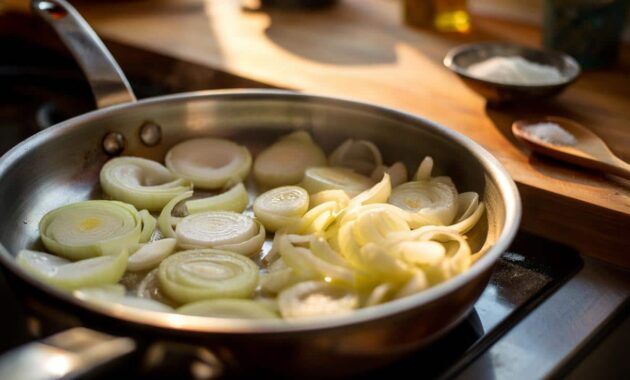
The pan is quiet at first. Just a lazy shimmer of oil and a small pile of pale onion crescents, resting there like they’re not quite sure what’s about to happen. You stir once, twice. No searing sound, no dramatic smoke, just a low, comforting hiss as they slowly slump into the heat. Ten minutes pass. Fifteen. The sharp smell softens, turning round and mellow, like a room where someone has been baking all afternoon.
At some point, without warning, they cross a line.
You taste one. Suddenly, they’re sweet.
What really changes when you cook onions slowly
Watch someone in a rush throw onions into a blazing hot pan and you’ll see two things happen fast. They brown on the edges and they stay loud on the nose, still a bit aggressive, still a bit raw in the middle. They taste “oniony”, but not especially sweet.
Now watch a patient cook. Low heat, a wide pan, onions piled but not crammed, and no salt yet. The slices melt and turn translucent, then gently golden. The kitchen smell changes from sharp to almost honeyed. You can feel it in your shoulders: your body relaxes. Something deeper is going on than “just cooking.”
Think of an onion as a storage vault for sugar locked away inside tight cells. When you rush it, you scorch the outside before the inside has time to open up. The water trapped in those cells hasn’t had time to slip out, the enzymes haven’t fully done their quiet work, and the natural sugars haven’t moved to the surface.
On low heat, with time, the onion slowly gives up its defenses. Water evaporates bit by bit, the cell walls break down, and the interior starts to concentrate. That’s when the “raw bite” fades and the natural sweetness starts to show.
Now add the role of salt. Salt pulls water out of cells via osmosis. If you sprinkle salt from the start, the onions dump their moisture quickly, cool the pan, and start to stew. Stewing is fine for a soup base, but it slows down browning and dulls that round, caramel sweetness.
By holding back on salt, you let the onions manage their moisture gently, warming and softening before they give up too much liquid. Once they’ve turned soft and translucent, then a little salt enhances what’s already happened. It doesn’t fight it. *That tiny delay is what turns a basic onion into something people remember from the meal.*
Why starting without salt changes the sweetness
Here’s the simple move professionals rely on. They heat a pan on low to medium-low, add a thin film of fat, then add onions and just…wait. No immediate seasoning, no anxious poking every two seconds. Just the soft scrape of a wooden spoon every few minutes. You want them to sweat lightly, not hiss in protest.
➡️ Most people underestimate how often they make spending decisions
First they soften, then they glisten, then they slump. Only when most slices are translucent, almost silky, does the cook reach for the salt.
Picture a weeknight pasta sauce. You’re tired, everyone’s hungry, you toss onions into hot oil, dump salt on them “for flavor”, turn the heat up and hope for the best. They release a flood of water, the pan goes quiet, and the onions half-boil in their own juice. You wait, crank the heat higher, and they start catching in dark spots while the rest stays pale.
The sauce is fine. Nobody complains. But there’s a reason it never tastes like that one bistro you love, where the tomato sauce somehow tastes sweeter, deeper, like it’s been simmering since breakfast. Often, the only real difference is the way they started those onions.
Salt early, and you interrupt the dance between heat, moisture, and sugar. The water rushes out, the surface temperature of the onions drops, and the gentle Maillard reactions that bring nuttiness and sweetness slow right down. On top of that, early salt tightens the pectins in the onion cell walls, so they hold their shape a bit more stubbornly.
Wait on the salt and you get the opposite. The cells relax in the warmth, break down, and the sugars inside get more surface exposure. Then, once things are softened and concentrated, you sprinkle salt and those same sugars pop on your tongue. **You didn’t add sugar. You just stopped getting in its way.**
How to cook onions for deeper, natural sweetness
Here’s a simple method you can use tonight. Slice your onions thinly and as evenly as you reasonably can. They don’t have to be perfect; just avoid huge chunks mixed with paper-thin slivers. Put a wide pan on low to medium-low heat and add enough oil or butter to coat the bottom in a thin, shiny layer.
Add the onions and stir to coat them in fat. Then leave them alone for 3–4 minutes. You want to hear a soft, steady hiss, not a frantic sizzle. If they start to brown too quickly, lower the heat. This is the calm part of cooking that most home kitchens skip.
Ten minutes in, the onions will start turning translucent and giving off that gentle, sweet smell. Only now sprinkle a pinch of salt and stir again. The salt will draw out a bit more moisture, but the onions are already on their way, softened and warm throughout.
From here, you can decide who they want to be. For soft, sweet onions for a stew or sauce, you can stop once they’re completely limp and pale gold. For true caramelized onions, keep going, stirring every few minutes, letting brown bits form and then dissolving them back in with a splash of water. Let’s be honest: nobody really does this every single day. But doing it once a week changes your cooking.
“Onions teach you how to wait,” a French chef once told me. “If you rush them, they punish you. If you’re patient, they give you sugar for free.”
- Start low and slow – Gentle heat unlocks sweetness before color.
- Skip salt at the start – Delay it until the onions turn soft and translucent.
- Use a wide pan – More surface area means better evaporation and flavor.
- Stir, don’t fuss – A lazy stir every few minutes is enough.
- Decide your finish line – Translucent for subtle sweetness, deep brown for jammy intensity.
A small change that rewires how you taste food
There’s a quiet satisfaction in discovering that something you’ve cooked your whole life still has a secret. The onion, of all things. The cheapest, most ordinary thing in the basket, suddenly turning into the part of dinner people talk about. “What did you put in this?” they ask, and you shrug because you know the answer is time, not tricks.
This is one of those plain kitchen truths that doesn’t ask you to buy anything new, only to cook a little differently.
Once you sense the difference between rushed, salted-from-the-start onions and those patient, slow, unsalted beginnings, you start noticing similar patterns everywhere. When bread dough rests, when meat comes up gently to room temperature, when coffee blooms before you pour all the water. Stress and speed flatten flavor.
Slowing the onions, and holding back the salt at first, is a tiny act of resistance against that. **You’re letting a simple vegetable tell you what it can do if you just give it room.** Maybe you’ll try it this week. Maybe you already do it and never really knew why it worked. Either way, the next time that soft, sweet smell drifts out of your kitchen, you’ll know what’s happening under the surface.
| Key point | Detail | Value for the reader |
|---|---|---|
| Slow cooking unlocks sweetness | Low heat breaks down onion cells, concentrates natural sugars, and softens sharp flavors | Better-tasting sauces, soups, and bases without extra sugar |
| Skipping salt at the start changes texture | Delaying salt prevents early water loss and stewing, encouraging gentle browning | More control over flavor, color, and mouthfeel |
| Simple method, big upgrade | Wide pan, even slices, patient stirring, late seasoning | Restaurant-level depth using the same basic ingredients and tools |
FAQ:
- Should I always avoid salt at the start with onions?For maximum sweetness and gentle browning, yes, delay the salt until they’re soft and translucent; if you’re just sweating onions quickly for a soup base, early salt won’t ruin them, but you’ll get less depth.
- How long should I cook onions to get them really sweet?For soft, sweet, translucent onions, plan on 10–20 minutes; for deeply caramelized, jammy onions, 40–60 minutes on low heat is common, depending on quantity and pan size.
- What heat level is best for sweet onions?Use low to medium-low heat so they soften and release sugars gradually; if they’re browning faster than they’re softening, your heat is too high.
- Can I speed it up with sugar or baking soda?A pinch of sugar or baking soda can accelerate browning, but it changes the flavor and texture; for pure, rounded sweetness, time and gentle heat are more reliable.
- Does the type of onion matter?Yes, yellow and sweet onions (like Vidalia) have more natural sugars and give richer sweetness, while red and white onions stay a bit sharper even when well cooked.