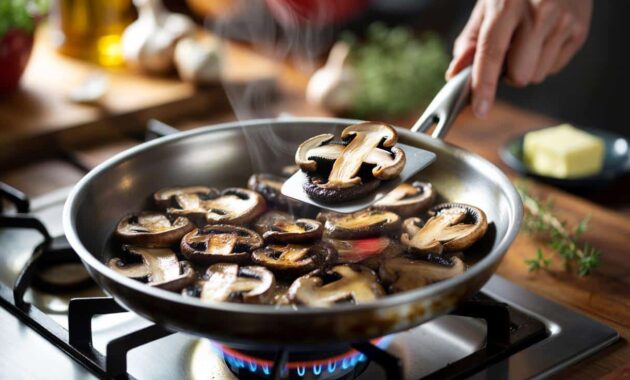
The pan was already too crowded, but I threw in the mushrooms anyway. They hit the hot metal with a soft hiss, then quickly drowned in a pale beige puddle. I poked them around with my wooden spoon, getting impatient, watching them weep out water and shrink into something vaguely sad and rubbery. The smell was… fine. Not bad, just not that deep, earthy, steakhouse kind of aroma I’d hoped for on a Tuesday night when dinner was meant to feel like a small reward.
A week later, I watched a chef do the exact opposite. Mushrooms into a hot pan. Then nothing. No stirring. No touching. Just a tense, quiet minute that felt weirdly long in a home kitchen.
When he finally flipped them, they were dark, crisp-edged, and smelled like they’d been cooked in a restaurant with secrets.
What really happens when you “leave mushrooms alone”
The first shock when you stop stirring mushrooms is the sound. At the start, they hiss. Then, if the pan is hot enough and you don’t crowd them too much, the hiss sharpens into a faint crackle. That noise means water is evaporating and the mushrooms are starting to sear, not steam. The surface that’s hugging the pan is undergoing a slow, invisible transformation.
You only see it when you finally slide your spatula under them. Underneath, there’s that darker caramel color, like the golden crust on a burger. The smell changes too, going from raw-forest to roast-meat. It feels like a magic trick, but it’s just heat, time, and restraint teaming up in your skillet.
Think about what usually happens on a busy weeknight. You toss sliced mushrooms into a pan with some oil, maybe a knob of butter. Your reflex kicks in: stir, toss, shuffle them around so nothing “burns.” The pan fills with a cloudy steam, then a pool of liquid appears as the mushrooms release their moisture. You keep stirring, watching them swim.
Fifteen minutes later, you have something soft and brownish. Not terrible, but slightly squeaky between the teeth and a bit bland unless drenched in cream or cheese. You did all this “work” with the spoon, yet the mushrooms never really developed that deep, nutty flavor you taste in good bistros or from that one friend who mysteriously “just knows how to cook.”
The plain truth is that flavor in mushrooms comes from two big things: evaporation and browning. When mushrooms sit still against a hot surface, their water has a chance to boil off quickly at the point of contact. Once the surface dries, the sugars and amino acids in the mushroom can start to brown through the Maillard reaction. That’s the same chain of reactions that makes toast smell like toast, steak taste like steak, and coffee smell like a Sunday morning.
If you stir too early, the mushrooms never get that sustained contact with the hot pan. They keep releasing moisture all over the place, the temperature of the pan drops, and instead of frying, you’re gently steaming them. *No steam, more sizzle: that’s the quiet rule behind deeper mushroom flavor.*
The exact gesture that changes everything
Here’s the move that chefs use, and that instantly changes home-cooked mushrooms. Start with a wide pan, not a small pot. Heat it until a drop of water flicked into the pan skitters and vanishes. Add a thin film of oil, then drop in the sliced mushrooms in a single layer. They should sizzle right away.
➡️ Exercise, a remedy as effective as medication against depression
➡️ France and Rafale Lose €3.3 Billion Military Contract Following Diplomatic Breakdown
➡️ The unexpected trick of removing turmeric stains from counters with baking soda
➡️ A new maker of passenger jets arrives: it’s not Chinese but Indian
➡️ Why putting a lemon slice in tea can reduce bitterness
➡️ Hairdressers recommend this cut for hair that tangles easily
Now comes the hard part: walk away. Or at least, resist hovering with the spoon. Let them sit untouched for 2–4 minutes, depending on how hot your stove runs. You’re aiming for the bottom side to go golden and start to crisp at the very edges before you flip. Only when you smell that rich, roasted aroma do you stir and expose a new side to the pan.
This is where most of us struggle a bit. We’ve been taught to constantly stir things “so they don’t stick”. With mushrooms, that instinct backfires. Stirring too soon spreads their moisture everywhere and turns the pan into a mini sauna. The result is pale, floppy slices that taste more watery than wild.
We’ve all been there, that moment when you’re peeking under one mushroom, thinking, “They’re going to burn, I know it.” But real burning smells acrid and sharp. If you’re just seeing deeper browning and you smell toastiness, you’re usually still in the safe zone. The bigger risk is not giving them enough time to get there.
There’s also a mindset shift. Instead of worrying about “doneness”, think in layers of flavor. The first layer comes from that initial hands-off sear. Only after that do you season with salt, add butter, garlic, or herbs.
“Let them stick a little,” a Paris bistro cook once told me. “That’s not burning, that’s flavor clinging to the pan. You’ll pick it up with butter.”
- Use a wide pan: Crowded mushrooms steam, spaced-out mushrooms sear.
- High heat at the start: You want a clear sizzle, not a gentle whisper.
- Salt later, not at the beginning: Early salt pulls out water too fast and floods the pan.
- Flip in batches of time, not constantly: Give each side its minute of direct contact.
- Finish with fat and aromatics: Butter, garlic, thyme, or soy sauce can cling to those browned edges.
Why this small act of patience changes your whole pan
Once you’ve tasted mushrooms cooked this way, it’s hard to go back. Suddenly, they aren’t just a “side” tossed into pasta or hidden under a blanket of cream. They become the interesting part of the dish. The thing you pick out of the pan with your fingers before the plate even hits the table. The difference sits in that first quiet minute, where you do nothing and let the heat do its work.
It’s almost funny that such a small tweak feels so oddly intimate, like you’re learning a secret handshake with your own stove. Let’s be honest: nobody really stands over mushrooms timing every second with a stopwatch every single day. Some nights you’ll stir too soon or crowd the pan and accept a softer result. On other nights, you’ll give them that extra minute, and dinner will taste like it came from somewhere else entirely.
Once you internalize this idea—heat, space, patience—you start to see it everywhere in cooking. With roasted vegetables. With seared fish. With steak, of course. You realize that a lot of deep flavor has less to do with fancy ingredients and more to do with letting food have its silent moment in contact with real heat. And that’s the kind of small, practical “secret” that’s oddly satisfying to share with friends over a plate of very good, very brown mushrooms.
| Key point | Detail | Value for the reader |
|---|---|---|
| Initial no-stir phase | Let mushrooms sear 2–4 minutes untouched on high heat | Develops deep, roasted flavor instead of pale, watery texture |
| Space and pan size | Use a wide pan and avoid overcrowding | Prevents steaming, encourages browning on each slice |
| Timing of seasoning and fat | Add salt and butter after browning starts | Concentrates flavor and creates a glossy, restaurant-style finish |
FAQ:
- Why do my mushrooms always release so much water?Because mushrooms are mostly water and often crowded in the pan. Use a wide, hot pan, cook in batches if needed, and resist stirring at the start so the moisture can evaporate instead of pooling.
- Should I salt mushrooms at the beginning or the end?Better toward the middle or end. Early salting pulls out water quickly, which cools the pan and encourages steaming instead of browning.
- Do I need a non-stick pan for good mushrooms?Not necessarily. Stainless steel or cast iron actually brown mushrooms more deeply. A little sticking is normal and can be released with butter, stock, or a splash of wine.
- What kind of fat works best for searing mushrooms?Neutral oil handles high heat well for the first sear. You can add butter later for flavor once the mushrooms have already browned.
- How thick should I slice mushrooms for maximum flavor?Medium slices, about 3–4 mm, work well. Too thin and they dry out fast, too thick and they take longer to brown and can stay spongy inside.