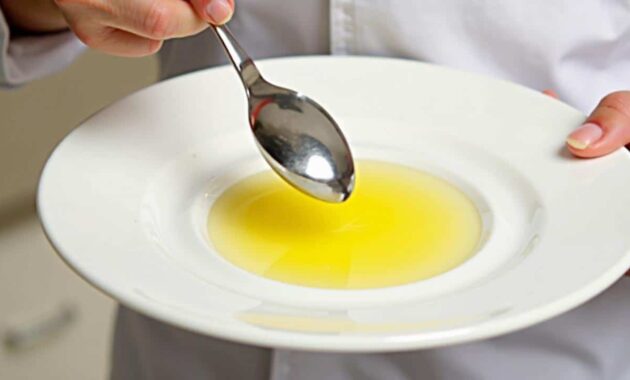
That revolution is clarified butter, a pantry staple for many chefs that’s slowly slipping into home kitchens. Behind this simple ingredient lies a very practical reason: it lets you cook hotter, cleaner and with more control, all while keeping that beloved buttery taste.
What clarified butter actually is
Regular butter is not just fat. It’s roughly 80–82% fat, plus water, milk proteins and a little lactose. Those “extra” elements are exactly what cause trouble in a hot pan.
When you heat ordinary butter, the water starts to evaporate, then the milk solids sink or float and grow dark. That’s the point where your pan suddenly fills with smoke, and your food picks up a bitter note.
Clarified butter is simply butterfat that has been gently separated from water, lactose and milk proteins.
By removing those components, you keep the flavour of butter but gain something much more stable for cooking. The texture turns clear and fluid, a deep golden liquid that behaves closer to an oil than a dairy product.
Why chefs quietly rely on clarified butter
Higher heat, fewer disasters
The main attraction is its higher smoke point. Regular butter starts to smoke around 170°C. Clarified butter can handle significantly higher temperatures, edging closer to many neutral oils.
For chefs pushing out dozens of dishes in a service, that difference matters. They can sear scallops, brown chicken or flash-fry vegetables without watching the fat darken and burn.
- Searing steaks for a deep crust without bitter notes
- Pan-frying fish fillets so the skin crisps but the butter doesn’t scorch
- Roasting potatoes until blistered and golden, not greasy
- Finishing sauces with buttery flavour that stays bright
The appeal is technical as much as tasty: clarified butter lets cooks work at restaurant temperatures with familiar butter flavour.
Cleaner flavour and better texture
Milk solids catch quickly and can give food a nutty edge, but cross the line and you get acrid, burnt flavours. Clarified butter strips away that risk, leaving a clean, rich taste.
➡️ [News] Indian Air Force rules out local Su-57E production, stays the course with Rafale for MRFA
➡️ The pantry mixture that brings burnt baking trays back to life with minimal scrubbing
➡️ Does my landlord have the right to enter my garden to pick fruit?
Food browns more evenly because there are no scorched specks floating in the pan. That means a more uniform crust on meat and a more attractive colour on vegetables and crêpes.
Longer shelf life and easier storage
Without water and most proteins, clarified butter oxidises more slowly. Kept in a sealed jar in the fridge, it can last weeks, sometimes months.
Many chefs keep a container of it right by the stove. It stays spoonable when cool, melts in seconds, and is ready whenever a recipe calls for frying, glazing or basting.
A global ingredient hiding in plain sight
Clarified butter might sound like a modern chef’s trick, yet similar preparations have been used for centuries across different food cultures.
| Region | Name | Typical use |
|---|---|---|
| India | Ghee | Cooking curries, frying spices, finishing lentil dishes |
| North Africa | Smen (often aged) | Tagines, couscous, flavouring breads and festive dishes |
| Middle East | Samen / clarified butter | Rice dishes, pastries like baklava, savoury pies |
In each case the idea is the same: remove the parts of butter that spoil or burn, and keep only the fragrant fat. In India, ghee is often cooked a little longer, developing a deeper nuttiness that stands up well to spices. In Morocco, smen can be fermented and aged, gaining a pungent, cheesy edge that transforms simple couscous or vegetable dishes.
From ghee to smen, cuisines around the globe rely on clarified butter to deliver reliable heat and layered flavour.
How to make clarified butter at home
The slow, gentle method
You don’t need specialist equipment or professional training. What you do need is gentle heat and a bit of patience.
Here’s a straightforward method that works on a small saucepan or in a bain-marie:
Once cool, the fat will set to a pale, opaque block that can be scooped like soft butter when at room temperature.
Good clarified butter looks clear when warm, sets firm when cold, and smells gently nutty, not burnt.
Small tips that change the result
Choose unsalted butter so you can control seasoning later. A heavy-bottomed pan helps avoid hot spots that might brown the solids too fast.
If you want something closer to Indian-style ghee, let the milk solids toast lightly at the bottom of the pan before straining. The fat will darken a shade and gain a pronounced roasted aroma, great with lentils, rice and root vegetables.
Why some people tolerate clarified butter better
By skimming off the foam and leaving the milky layer behind, you also remove most of the lactose and casein. Those are the parts of dairy that trouble many people with sensitivities.
Clarified butter is not always completely lactose-free, but it tends to be better tolerated by some individuals who struggle with regular butter or cream. For anyone trying to cut down on dairy proteins, it offers a way to keep buttery flavour in their cooking with fewer side effects.
Where clarified butter shines in everyday cooking
Upgrading weeknight staples
Swapping your usual oil or butter for clarified butter can subtly tighten up simple dishes:
- Use it to fry eggs with crisp edges and a sunny yolk that tastes luxuriously buttery.
- Roast carrots, squash or cauliflower in it for a light caramelised sheen.
- Brush it over chicken skin before roasting to encourage even browning.
- Toast bread or naan in a pan with clarified butter for an instant upgrade.
Because it doesn’t burn as readily, you can push the heat a bit higher and get more colour on food before it dries out.
Sweet uses that surprise people
Clarified butter isn’t just for savoury cooking. Pastry chefs use it in certain cakes and biscuits for a cleaner, more defined flavour.
In French-style madeleines and some shortbreads, clarified butter brings a delicate nutty note without the risk of random brown flecks. Brushing it over filo layers in a strudel or baklava helps every sheet crisp, with fewer patches of sogginess.
Understanding a few technical terms
Two words often appear alongside clarified butter: “smoke point” and “browning”. The smoke point is the temperature at which fat starts to break down visibly, sending up wisps of smoke. Once you hit that point, flavours shift from pleasantly roasted to acrid in seconds.
Browning, on the other hand, comes from reactions between amino acids and sugars on the surface of food. Using a stable fat like clarified butter lets you reach that browned stage on the food itself without destroying the cooking fat at the same time.
Practical scenarios and small risks to watch
There are a few situations where clarified butter deserves a second thought. Because it is almost pure fat, the calorie density is slightly higher by weight than standard butter. People watching their fat intake might find it easier to overuse, since it pours and spoons so easily.
Another risk is temperature creep. The very advantage that makes clarified butter attractive – higher heat tolerance – can encourage cooks to crank the flame far beyond what food actually needs. That can lead to dry meat or tough vegetables, even if the fat itself is not burnt.
A balanced approach is to treat clarified butter as a tool: use it for searing, roasting and finishing, then lean on lighter methods like steaming or poaching for contrast across the week. Combined this way, it can add character to meals without dominating them.