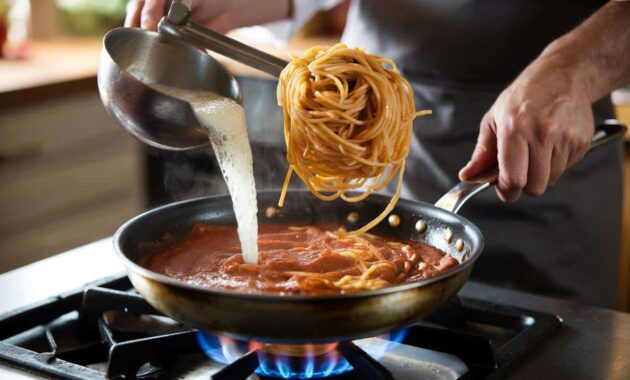
On a Tuesday night in a small, noisy kitchen, a home cook stands over a pan of tomato sauce, frowning. The pasta is ready, steaming in the colander. The sauce looks fine, smells fine, but somehow feels… flat. She does what most of us do: dumps the pasta straight into the pan, gives it a stir, waits for the magic. Nothing. The noodles stay a bit pale and slippery, the sauce clings in sad little patches, and the dish tastes like two separate things that met five minutes ago and haven’t said hello yet.
Then she remembers that video where a chef yelled, “Don’t throw out the pasta water!” and, almost on a whim, she scoops a ladle of the cloudy liquid into the pan. Suddenly, the sauce loosens, shines, and wraps around the spaghetti like it was built for it.
Something small just changed the whole dish.
Why that cloudy pasta water is culinary gold
Watch any Italian nonna or serious restaurant chef at work and you’ll see the same little gesture. They reach past the olive oil and salt, grab the pot of boiling pasta, and ladle a bit of that murky, almost suspicious-looking water straight into their pan of sauce. It feels wrong the first time you do it at home. You’ve been trained to think “clear water good, cloudy water dirty.” Yet this cloudy water is the quiet star.
That splash doesn’t just thin the sauce. It turns something separate and clumpy into something glossy and unified, like the pasta and sauce finally decided to be a couple.
Picture a busy restaurant service. The line cook has a pan of cacio e pepe that’s too thick, almost like paste. He doesn’t panic, doesn’t reach for cream. He tosses in a ladle of pasta water, shakes the pan a few times, and you can literally see the sauce transform. It goes from chalky to silky, hugging each strand of spaghetti like a cashmere sweater.
Food scientists will tell you this isn’t witchcraft. It’s starch and salt, suspended in water, acting like a natural bridge between the fat in the sauce and the surface of the pasta. The cook just looks at the plate, sees it shining, and sends it out without thinking twice.
What’s happening is simple and slightly magical. As pasta boils, it releases starch into the water. Those starch molecules give the water a soft, slippery feel. When that liquid hits a hot, fatty sauce, the starch helps emulsify it, pulling together the oil, the water, and the pasta into one smooth mixture.
The salt seasonings that water carry along, quietly boosting flavor without you having to dump in more cheese or salt at the last minute. *This is why the same sauce recipe can taste dull one day and restaurant-level the next, just because you “saved a bit of the water.”* Beneath the tiny gesture sits real kitchen chemistry.
How to actually use pasta water like a chef
The basic move is almost laughably simple. Before you drain your pasta, dip a heatproof cup or ladle into the pot and set aside at least one cup of that cloudy water. That’s your liquid gold. Drain the pasta, then toss it directly into the pan where your sauce is already waiting over low to medium heat.
Now add a splash of the pasta water — two or three tablespoons to start — and toss or stir vigorously. You’re looking for the sauce to loosen just enough to slide and cling, not pool at the bottom of the pan. If it still looks thick and clumpy, add another small splash and keep tossing.
This is where most home cooks get tripped up, and it’s not your fault. You either forget to save the water, or you dump in half a cup at once, panic, and end up with soup. Try thinking of pasta water more like seasoning than like stock. You add, you look, you taste, then you adjust.
We’ve all been there, that moment when the pasta looks sticky and you’re tempted to pour in olive oil “so it doesn’t clump.” That’s the move that sabotages your sauce. Use water instead of more fat, and let the starch do the work. Let’s be honest: nobody really does this every single day, but when you start, it’s hard to go back.
A Roman chef once told me during service: “If your pasta and sauce look like roommates, you didn’t use enough pasta water. They should look like lovers, not flatmates.”
- Start salty
Salt your pasta water generously so it tastes pleasantly briny, not just “meh.” The water you add later will carry that seasoning into the sauce. - Reserve before you drain
Scoop at least a cup of water before you pour anything into the sink, even if you think you won’t need it. - Add gradually
Work in small splashes while tossing the pasta in the pan, watching the texture change rather than following a fixed amount. - Use heat and movement
Keep the pan warm and the pasta moving. That friction helps the starch bond the sauce and pasta together. - Stop when it shines
You’re done when the pasta looks glossy, well-coated, and the sauce clings in a thin, velvety layer instead of sitting separately.
The small habit that quietly upgrades every bowl
Once you start paying attention to that milky water in the pot, you stop seeing it as waste and start seeing it as a tool. It changes the way you finish pasta: no more draining, rinsing, and dumping sauce on top like an afterthought. You learn to marry pasta and sauce in the pan, using gentle heat and a few spoonfuls of water to turn two parts into one dish.
This is also where your own style quietly appears. Maybe you like your sauces looser, more brothy, almost like a ramen bowl. Maybe you chase that rich, clinging sheen you get in tiny trattorias where the cook has been doing this for forty years without talking about “starch molecules” once.
The trick spreads too. That same starchy water can rescue a too-thick pesto, soften a stubborn Alfredo, or even bring last night’s leftover pasta back to life in a hot pan. You stop throwing it away automatically, and you gain a bit more control over the texture of what you eat.
For a tiny splash of something you used to pour straight down the drain, that’s a pretty generous payoff. The next time you’re standing over a pot of boiling spaghetti, watching those little bubbles break the surface, you might catch yourself reaching for a ladle before you even know why.
| Key point | Detail | Value for the reader |
|---|---|---|
| Starch is the secret | Pasta releases starch into the cooking water, which helps emulsify sauce and coat pasta evenly. | Gives you that restaurant-style silky texture without extra cream or butter. |
| Use it at the right moment | Add small splashes of pasta water while tossing pasta and sauce together over heat. | Prevents dry, clumpy noodles and lets you adjust thickness on the fly. |
| Salted water boosts flavor | Well-seasoned pasta water subtly seasons and rounds out your sauce. | Helps your dish taste deeper and more “finished” with almost no extra effort. |
FAQ:
- Should I ever rinse my pasta after cooking?For sauced pasta, no. Rinsing removes the surface starch that helps sauce cling. Only rinse when making pasta salads that you’ll chill and dress separately.
- How salty should the pasta water be?Think of a mild sea, not the Dead Sea. It should taste pleasantly salty on your tongue, not harsh or overwhelming.
- Can I use pasta water for cream-based sauces?Yes, it’s especially useful there. The starch helps keep the cream and fat from splitting and gives a smooth, glossy finish.
- What if my sauce becomes too thin?Just keep the pan on low heat and toss the pasta. The extra water will reduce, and the starch will thicken the sauce back up.
- Does this work with gluten-free pasta?It does, though the water can be even starchier. Start with smaller splashes and adjust, as it can thicken more quickly.
➡️ Which colours make us look older according to psychology?
➡️ Why a single spoonful of this pantry powder in mop water makes tile floors look freshly installed
➡️ “This baked pasta is what I cook when I want food that lasts”
➡️ New rule bans hiding your electric meter behind dense hedges under penalty of a fine