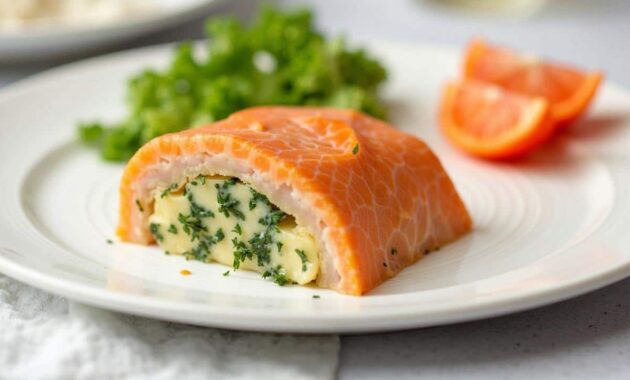
Served chilled with a squeeze of lemon or still warm beside a crisp salad, this microwave fish terrine turns basic white fish into a surprisingly elegant starter in barely 10 minutes, without a bain-marie, without an oven, and with very little washing up.
What makes this fish terrine different
Traditional fish terrines usually mean water baths, long oven times and the lingering fear of overcooking. This version takes a different route. Everything is blitzed, poured into a microwave-safe mould, and gently cooked on medium power.
In under 10 minutes of hands-off cooking, you get a light, sliceable terrine with a delicate, almost mousse-like texture.
The recipe relies on simple, affordable ingredients: white fish, eggs, light cream and herbs. No need for rare seafood or specialist kit. A silicone loaf mould and a standard microwave are enough.
Core ingredients and smart swaps
For 4 to 6 servings, the basic formula stays very straightforward.
- 300 g white fish fillets (cod, pollock, hake or similar)
- 100 g light cream or reduced-fat crème fraîche
- 2 eggs
- 1 shallot or a small clove of garlic (optional)
- ½ teaspoon mustard
- Juice of half a lemon
- Salt and black pepper
- Fresh herbs: chives, parsley or dill
Fresh or frozen fish both work. Frozen fillets just need to be fully defrosted and well drained. Any remaining bones should be removed before blending.
The key is a mild white fish: it lets the herbs and lemon stand out, and keeps the terrine light.
For readers watching saturated fat, light cream keeps the mixture soft without making it heavy. Full-fat cream will give a slightly richer texture, closer to a classic terrine.
Step-by-step: from fridge to mould in minutes
The preparation is almost as quick as reading the ingredient list. A basic hand blender or food processor is enough.
➡️ A breakthrough injection for head and neck cancers: promise of a therapeutic turning point
➡️ Mystery solved: here’s why a “tradition” baguette costs 20 cents more than a classic one
➡️ Extend your battery life: simple charging tips
➡️ A developing pattern is raising new questions among researchers
Blending the base mixture
- Cut the raw fish into chunks and blend until finely chopped but not completely puréed.
- Add cream, eggs, mustard, lemon juice and the finely chopped shallot or garlic.
- Season generously with salt and pepper.
- Stir through chopped herbs for colour and freshness.
The texture should be smooth but not runny, closer to a thick batter than a liquid soup.
A quick blend is enough: leaving a hint of texture in the fish stops the terrine feeling like baby food.
Preparing the mould
Pour the mixture into a silicone loaf mould or any microwave-safe dish that is not too deep. A shallow shape helps the centre set at the same pace as the edges.
- Lightly oil the mould if it is rigid plastic or glass.
- Cover with microwave-safe cling film or a loose-fitting lid to prevent splattering.
Microwave cooking: the gentle method
The cooking relies on medium power, not maximum. This keeps the eggs from curdling and the terrine from going rubbery.
- Cook on 500–600 W for 8 to 10 minutes.
- Check doneness by inserting a thin knife in the centre: it should come out clean, without liquid mixture.
- Leave the terrine to rest for 5 minutes; the residual heat finishes the cooking.
Think of the resting time as part of the cooking: rushing this stage can leave the middle too soft to slice.
If the top looks pale, that is normal in the microwave. Fresh herbs, a drizzle of olive oil or a spoonful of tomato coulis add colour on the plate.
Serving ideas: cold slices or warm wedges
This versatile terrine works from brunch to light dinner.
- Cold: slice thickly and serve with light mayonnaise, extra lemon or a chilled vegetable coulis.
- Warm: cut into wedges and pair with a green salad or steamed vegetables.
The terrine holds its shape well once chilled, which makes it practical for meal prep. Prepared the day before, it firms up in the fridge and is easier to slice neatly.
| Occasion | How to serve |
|---|---|
| Weeknight starter | Cold with lemon, alongside a mixed salad |
| Summer brunch | On toast or crackers, with dill and cucumber |
| Light dinner | Warm, with steamed carrots and green beans |
| Buffet table | Cut into small cubes on toothpicks |
Tricks to avoid failure
Microwave cooking can feel unpredictable, but a few habits make this terrine very forgiving.
- Do not blend the fish for too long; aim for a fine mince, not a completely smooth paste.
- Use eggs at room temperature for a more even set.
- Pick a mould that is wide and not too deep for uniform cooking.
- Add a pinch of turmeric or mild paprika if you want a warmer colour.
If you are unsure about timing, cook for 7 minutes, check the centre, then continue in 1‑minute bursts.
The main risk is overcooking. The texture then becomes slightly bouncy. Keeping to medium power and respecting the resting period keeps that under control.
Lighter than a quiche, easier than a soufflé
Nutritionally, this terrine sits somewhere between a quiche and a steamed pudding, with more protein and usually less fat. White fish brings lean protein and iodine, while the light cream keeps calories contained. The eggs act as a natural binder and add some vitamin D.
Served with raw vegetables or a grain salad, this kind of dish fits well into a Mediterranean-style eating pattern, where fish appears several times a week and heavy sauces are kept in check.
Variations for leftover nights
The method adapts well to what you have in the fridge or freezer. Some ideas:
- Swap part of the white fish for peeled prawns or salmon pieces.
- Fold in small cubes of cooked courgette for colour and fibre.
- Use a mix of parsley and dill for a more Nordic flavour profile.
- Add a spoonful of grated hard cheese on top just before serving, if you reheat the slices briefly.
This is one of those recipes that quietly empties the freezer: odd fillets, a handful of prawns, even leftover cooked fish can be blended in.
For leftover cooked fish, reduce the microwave time slightly and watch the texture, as pre-cooked flakes need less heat than raw fillets.
Understanding the “terrine” concept at home
In classic French cooking, a terrine is a mixture gently cooked in a mould until just set, often served sliced. At home, the same principle can be applied to lighter, everyday recipes. The goal is a firm but tender slice that holds its shape without feeling dry.
This fish terrine uses that structure but cuts out the heavy cream and animal fat often associated with pâtés. For home cooks who like hosting but have limited time or oven space, it offers a practical compromise between tradition and convenience.
Practical scenarios for busy households
Consider a week where evening meetings or children’s activities stack up. Preparing this terrine on Sunday night creates a ready-to-go base for three quick meals: served cold on Monday, in a sandwich on Tuesday, and warmed with vegetables on Wednesday.
For people hesitant about cooking fish because of smell or cleanup, this method also reduces hassle. The fish cooks enclosed, and there is no risk of sticking to a pan. A quick rinse of the blender and mould, and the kitchen is back in order.