Car strategy is splitting into several paths.
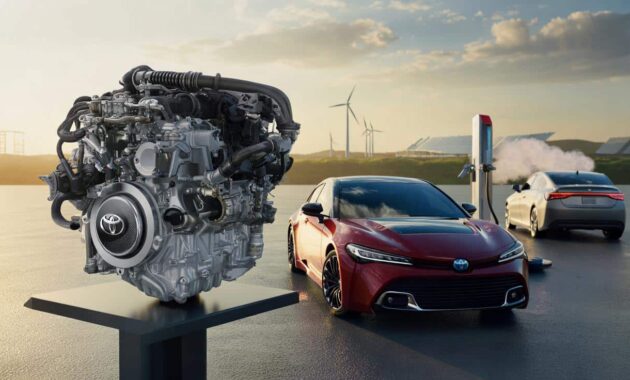
In that shifting map, Toyota is betting on two fronts at once: a radical new four-cylinder and a deeper push into hydrogen. The mix aims to cut emissions while keeping factories flexible and products profitable across very different markets.
Why Toyota is doubling down
Toyota’s approach isn’t a sudden swerve. Over the past decade it has scaled hybrids, advanced fuel-cell systems, and refreshed its combustion lineup. The Mirai fuel-cell sedan, launched in 2014, signaled a long game on hydrogen even as battery-electric cars surged into view. The company wraps this strategy into its Beyond Zero vision, which extends from vehicles to supply chains and operations.
Toyota’s roadmap blends electrification, hydrogen, and cleaner combustion to reduce lifecycle emissions while protecting manufacturing resilience.
The logic is blunt. Different regions regulate at different speeds. Charging infrastructure and power grids vary wildly. Heavy-duty work, aviation, and some long-distance freight still struggle with battery mass and charging downtime. A portfolio reduces risk and buys time as technology and policy mature.
A compact four-cylinder with big ambitions
In January, chief technology officer Hiroki Nakajima lifted the curtain on a new four-cylinder family in 1.5‑liter and 2.0‑liter forms. The headline is stark: up to 400 horsepower from a unit sized like a mainstream hatchback engine. The design targets electrified platforms first, yet it can slot into conventional combustion models if a market needs it.
That output suggests an intense cocktail of turbocharging, precise combustion control, robust cooling, and friction reduction. If matched with a hybrid system, the package could run in its most efficient zones more often, while electric boost fills torque gaps. Smaller engines also free designers to lower the hood, improve aero, and cut mass — all compound benefits for efficiency and range.
A downsized, high-output four-cylinder can trim weight and drag, lift efficiency in everyday driving, and still deliver serious performance when asked.
- Packaging: slimmer engine bay enables better crash structures and sleeker fronts.
- Efficiency: hybrid pairing keeps the engine near peak efficiency more of the time.
- Modularity: shared blocks across 1.5L and 2.0L help scale costs and parts.
- Compliance: tighter combustion control aids future emissions standards.
What 400 hp really signals
High specific output is not new, but bringing it to mass production with durability and warranty-friendly maintenance is the hard part. If Toyota holds that line, the engine could underpin compact performance models, tow-capable crossovers, and premium hybrids without moving to larger, thirstier units. It is also a hedge: strong engines remain valuable in regions where charging is scarce or power prices swing.
Hydrogen’s second wind
Toyota continues to invest in hydrogen on two tracks: fuel cells that make electricity onboard and engines that burn hydrogen directly. Each path solves different problems. Fuel cells suit quiet, efficient, steady-state duty. Hydrogen combustion offers a familiar mechanical feel, potentially lower cost, and quicker integration into existing platforms.
➡️ How setting one weekly money check-in changed my entire financial mindset
➡️ It’s the end of microcement in 2025: the material set to replace it in our homes
➡️ Jane Austen on who we really are: “It’s not words or thoughts that define us, but our actions”
➡️ Engineers have created a solar panel that works even at night and it’s changing everything
➡️ Indoor Pollution: Why Ditch Detergents and Disinfectants to Clean Your Screen
➡️ The pantry blend homeowners use to lift grease and revive old cabinet wood
➡️ Efficient tricks to cut your pellet use in 2026: adopt them now
The case gets sharper in sectors where batteries hit physics limits. Aviation hates weight. Long-haul trucks need uptime. Some industrial vehicles run multi-shift days and can’t sit at chargers. That’s where hydrogen’s energy density and rapid refueling change the math, even if the fuel remains expensive today.
Where battery weight and charge times choke operations, hydrogen keeps heavy-duty cycles moving — especially in long range and high-utilization roles.
Challenges remain stubborn. Green hydrogen supply needs massive scale and cheaper renewables. Transport and storage demand high-pressure tanks or cryogenic systems. Hydrogen engines can emit NOx if not carefully managed, which means lean-burn strategies and aftertreatment. And without reliable station networks, fleets won’t commit.
Industrial constraints and policy realities
Automakers are juggling mineral supply, grid reliability, and regulatory patchwork. A one-size powertrain strategy risks being stuck in the wrong place at the wrong time. Toyota’s diversified plan spreads tooling risk and keeps suppliers engaged across multiple technologies. It also positions the brand for regions that back hydrogen for heavy transport while others push pure battery mandates for city cars.
What drivers and fleets could see next
If Toyota’s compact four-cylinder lands as promised, expect hybrids that accelerate harder yet sip fuel, plus performance trims that don’t need six cylinders. Hydrogen models will likely grow first in fleets that can control refueling, like depots and airports. The consumer shift, if it comes, would follow price drops in renewable hydrogen and denser station maps.
| Technology | Strength | Constraint | Best fit |
|---|---|---|---|
| Battery-electric | High efficiency, low local emissions | Charging time, battery weight, grid peaks | Urban, commuting, light duty |
| Hydrogen fuel cell | Quick refuel, steady efficiency | Fuel cost, infrastructure build-out | Fleets, heavy-duty, fixed routes |
| Hydrogen combustion | Lower changeover cost, familiar service | NOx control, storage complexity | Performance niches, mixed-use fleets |
| High-efficiency ICE hybrid | Broad refueling, proven cost base | Tailpipe CO₂, policy pressure | Global mass market, long trips |
Key questions to watch
Will hydrogen prices fall with new electrolysis capacity and cheap renewables, or will e-fuels attract the investment instead? Can stricter emissions limits be met by hydrogen combustion without costly aftertreatment? How fast can charging improve in rural corridors? And can a 400-hp small-displacement engine maintain reliability with real-world maintenance habits?
Beyond the headline: practical angles for readers
Terminology often confuses the debate. Hydrogen fuel cells don’t burn hydrogen; they convert it to electricity via a membrane stack, producing water and heat. Hydrogen combustion engines burn hydrogen in cylinders like petrol, which demands careful timing, turbo mapping, and NOx control. Both can be hybridized, which complicates spec sheets but improves efficiency in traffic.
For fleet managers running tight schedules, a simulation exercise pays off: model a week of routes using battery trucks versus hydrogen or high-efficiency hybrids. Factor in charging dwell, depot electrical upgrades, demand charges, and fuel price volatility. The total-cost picture shifts once you add downtime and infrastructure amortization, not just fuel per mile.
There are risks to balance. Hydrogen infrastructure lock-in can strand assets if policy shifts. Battery packs face residual value uncertainty as chemistries evolve. High-output small engines could see higher maintenance sensitivity if oil and cooling intervals slip. The upside is real, though: modular platforms let companies mix powertrains by region and duty, trimming emissions now instead of waiting for a single perfect solution later.
If Toyota’s bet holds, shoppers might soon see compact cars that feel quicker yet use less fuel, and fleets could pick from battery, hydrogen, or hybrid based on a route’s daily demands. It’s not a tidy narrative, but it fits a world where energy, climate, and industry don’t move in lockstep.
Originally posted 2026-03-10 19:51:00.