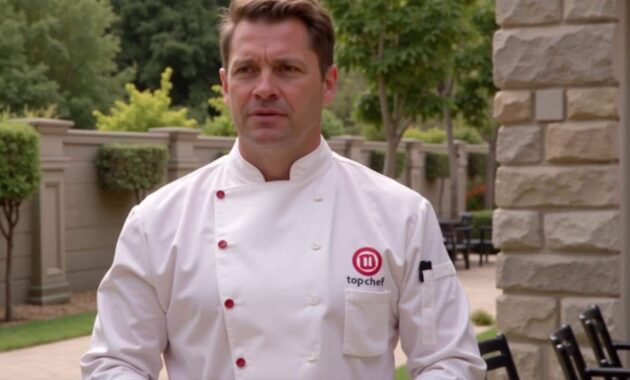
The cult cooking competition is returning with a fresh look, a shaking up of the rules and a promise of higher‑pressure challenges, all under the watchful eye of Philippe Etchebest and a fully reunited jury.
When and where Top Chef 2026 kicks off
The new season, officially Top Chef season 17, lands on French channel M6 on Wednesday 4 March 2026 at 21:10, with the episode released at the same time on the streaming platform M6+.
The schedule sticks to a classic weekly prime‑time rhythm. Every Wednesday evening, fans can expect a new round of eliminations, surprise ingredients and nerve‑racking tastings.
The production is betting on a stable weekly slot — Wednesdays at 21:10 — to turn the show into a regular midweek food ritual.
A full-strength jury with Philippe Etchebest at the centre
Presenter Stéphane Rotenberg returns to host, while the judging panel remains packed with heavyweights of French gastronomy:
- Hélène Darroze
- Philippe Etchebest
- Stéphanie Le Quellec
- Paul Pairet
- Glenn Viel
This line‑up has now become the backbone of the show. Each chef brings a distinct style: Darroze’s emotional cooking, Etchebest’s rigorous bistro‑gastronomy, Le Quellec’s technical precision, Pairet’s avant‑garde touch and Viel’s modern rustic flair.
Their job this time is to judge 16 contestants. But there is a twist: the famous brigade system, where candidates used to be split into teams led by chefs, has been scrapped.
The unprecedented rule: no more brigades
For years, Top Chef framed the competition around coloured brigades, with contestants fighting not only for themselves but also for their mentor’s reputation. Season 17 breaks with that tradition.
The production wants to “re‑empower” contestants by putting them alone in front of the judges, their plates and the pressure.
➡️ State Pension Cut Approved Outrage Grows £140 Monthly Reduction Starting March 2025
➡️ This oven recipe works when you want food, not fuss
➡️ The clever hack of cleaning burnt baking dishes overnight with baking soda
➡️ This small money rule helped me save $5,000 in a year without feeling restricted
➡️ The overlooked cause of tension in the neck and upper back
➡️ I learned it at 61 : few people know the difference between white eggs and brown eggs
Without brigades, there’s no protective group and no tactical shelter behind a mentor’s choices. Each chef must defend their own cuisine, style and vision from day one.
Why this change matters
This new rule changes how strategies will play out:
- More individual responsibility: no shared blame when a dish fails.
- Clearer reading of talent: judges can track each cook’s evolution more precisely.
- Psychological pressure: contestants stand alone in front of a jury of five stars.
The producers have explained that they want to see who can adapt to any environment and any challenge, from altitude cooking to historic venues. That means fewer excuses and more focus on pure skill.
From studio to iconic locations across France
Season 17 also moves away from the comfort of a single studio kitchen. Filming takes place in emblematic locations across France, such as:
| Location | Region | Potential challenge theme |
|---|---|---|
| Le Touquet | Hauts‑de‑France | Seafood, coastal cuisine |
| Amiens | Hauts‑de‑France | Market cooking, regional products |
| Abbaye de Collonges‑au‑Mont‑d’Or | Auvergne‑Rhône‑Alpes | Classic French gastronomy, Paul Bocuse heritage |
| Château de Fontainebleau | Île‑de‑France | Historical menus, banquet formats |
These settings are not just pretty backdrops. They impose technical constraints: different kitchens, unpredictable temperatures, service logistics and varying access to equipment.
The season aims to test adaptability by uprooting contestants from the controlled studio environment and confronting them with real‑world service conditions.
A high-altitude opening episode in Tignes
The premiere on 4 March sets the tone immediately, taking place in Tignes, in the French Alps. The contestants cook at “Le Panoramic”, a restaurant perched at around 3,000 metres above sea level.
At this altitude, boiling points change, creams behave differently and cooling times can be unpredictable. For young chefs already under TV pressure, it is a baptism of fire.
Comfort food, mountain style
The theme of the first challenge is mountain comfort food, split in two parts:
- Savoury: reinventing melted‑cheese dishes, moving beyond raclette clichés while keeping that indulgent, warming spirit.
- Sweet: creating an original interpretation of hot chocolate as a plated dessert.
Two guest stars will judge the plates:
- Clément Bouvier, chef of Le Panoramic, for the savoury dishes.
- Yann Couvreur, renowned French pastry chef, for the sweet creations.
Those names send a clear signal. Bouvier represents modern mountain gastronomy, where cheese and charcuterie are revisited with finesse. Couvreur is known for technically sharp yet approachable desserts. Both set a demanding standard for the contestants from the very first service.
What this new format means for contestants
Competing solo changes the entire rhythm of a Top Chef season. No brigade means no internal team hierarchy, fewer shared recipes and less chance of being “carried” by a stronger teammate during team challenges.
Expect candidates to double down on:
- Signature dishes: clearly defined plates that express their personality in one glance.
- Identity: storytelling around origins, regions and culinary influences.
- Mental strength: capacity to bounce back quickly after harsh feedback.
The show shifts from a semi‑team competition to a pure duel format where each plate speaks only for one person.
How fans can take inspiration at home
Even if you never plan to face Philippe Etchebest with a sauce in your hand, some ideas are easily adapted at home.
For anyone inspired by the Tignes episode, a mountain‑comfort evening might look like this:
- Use a quality melting cheese (Comté, Beaufort, Abondance) in a gratin with root vegetables instead of potatoes only.
- Serve a bright salad with acidic vinaigrette next to the cheese dish to cut through the richness.
- Turn hot chocolate into a dessert plate: thick drinking chocolate, a quenelle of whipped cream, a crunchy biscuit and a touch of spice like cardamom or chilli.
The show also highlights the effect of context on food. High altitude, outdoor service or historical buildings all raise questions of logistics, temperature control and equipment — issues that mirror, at a smaller scale, what home cooks face when cooking for large groups or in holiday rentals.
Key terms and behind-the-scenes realities
Several expressions often heard in Top Chef gain extra weight in this new season:
- “Signature cuisine”: a personal style built from technique, memories, culture and ingredients. With no brigades, this becomes the main survival tool.
- “Adaptability”: the ability to cook under unknown conditions while keeping quality high — new ovens, time pressure, or unusual ingredients.
- “Comfort food”: dishes associated with emotional relief and nostalgia, often high in fat or sugar, but here reworked through a fine‑dining lens.
Viewers rarely see the full physical load behind those plates. Filming days can stretch for long hours. Standing in a hot kitchen at altitude, carrying heavy pans, repeating takes for cameras — all that eats into energy and concentration. The absence of brigades removes a layer of support, raising the risk of technical errors late in the day.
On the other hand, this format offers clearer exposure. A single brilliant dish can mark a juror like Etchebest or Darroze and open doors in the restaurant industry. For young chefs still searching for a position or investors, every Wednesday night at 21:10 on M6 could turn into a career‑defining moment.