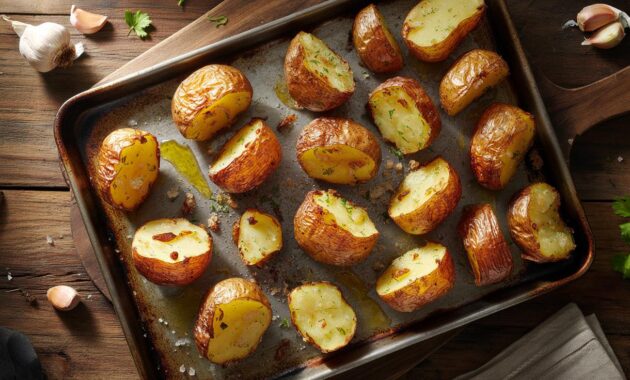
The tray hit the table with that soft, hollow clink only metal on wood can make. A wave of hot, garlicky air rolled through the kitchen, and every conversation froze mid-sentence. People didn’t even ask what it was. They just leaned in, eyes narrowing, hands already hovering over the pan like they were afraid someone else would move faster. The potatoes were a deep kind of golden, the kind that says “one more minute and I’d have burned,” their edges ruffled and sharp like tiny shards of crust.
Someone stabbed one straight from the pan, blew on it twice, then yelped and laughed anyway. You could hear the crunch from across the room. Then came the quiet, that silence that only happens when a table suddenly remembers it’s starving.
All from a recipe so simple you could almost miss the trick.
The almost-too-simple secret behind shatteringly crisp garlic potatoes
The funny thing about garlic roasted potatoes is that most of us think we’ve already nailed them. We toss some chunks with olive oil, salt, maybe a few garlic cloves, throw them in a hot oven and hope. They come out… fine. Soft. Pleasant. But not the kind that makes people fall silent and schedule their next visit around “that potato thing.”
The difference lives in tiny details that don’t look like much on paper. A few extra minutes here. A pinch of something there. A sheet pan that suddenly matters more than your most expensive skillet. These are not fancy chef secrets. They’re the kind of tweaks a tired home cook discovers on a Wednesday night and never unlearns.
Picture this. You’re coming home late, fridge half empty, energy at 20%. You grab the bag of potatoes you bought “for later,” the garlic that’s starting to sprout, and turn the oven on without much hope. Dinner is survival, not ceremony. You cube the potatoes, boil them for a few minutes because you read that somewhere, shake them in the colander a bit, toss them with oil and garlic, and shove the tray in the oven.
Half an hour passes. You open the door, and everything looks… different. The edges have fluffed and set into sharp, crisp ridges. The garlic has gone from raw punch to mellow, sticky bits clinging to each piece. So you taste one. Then another. Then suddenly you’re eating off the tray, over the sink, in your coat, wondering how something this basic tastes like a restaurant side.
What happened in that half hour isn’t magic, it’s science with good PR. Parboiling the potatoes opens up their surface and releases starch, which turns into that rough, fuzzy coating once you shake them around. That coating is exactly what crisps up so dramatically in a hot oven. High heat evaporates moisture fast, and oil wraps each little edge in a thin layer of fat that fries while it roasts.
Garlic joins the party twice: once fresh, for aroma, and once already warming in oil, so it doesn’t burn into bitterness. The result is that rare balance between fluffy inside, glassy-crisp outside, and deep, savory flavor that doesn’t taste “garlicky” as much as quietly addictive. It’s domestic alchemy, achievable with the stuff you already have on the counter.
How to actually pull it off, step by step (without overcomplicating dinner)
Start with the potatoes. Waxy ones stay too firm, so you want starchy or all-purpose: Russets, Yukon Golds, Maris Piper if you’re lucky. Cut them into even chunks, about the size of a big walnut. Not tiny cubes. Big, confident pieces. Drop them into cold, generously salted water, then bring to a boil and cook until a knife barely slips in. Soft at the edges, not falling apart.
➡️ Officials urge caution: Heavy snow expected tonight as authorities urge drivers to stay home
➡️ Meteorologists warn Arctic conditions are deteriorating ahead of February in unprecedented ways
➡️ A study links gut microbiome to autism, anorexia and ADHD
➡️ The unexpected trick of cleaning cutting boards with coarse salt and lemon
➡️ What Writing Your Shopping List On Paper Really Says About You
➡️ Turkey goes toe-to-toe with France as it unveils the ideal partner for its next-gen Kaan fighter
Drain them, then comes the slightly chaotic part. Leave them in the colander, and shake. A few seconds, maybe ten. The outsides will look rough, almost fuzzy. That’s good. That’s your crispness in waiting.
While the potatoes steam off a bit, slide a sheet pan into a hot oven with a good splash of oil. Let the tray heat up like a shallow frying pan. On the stove, warm a little more oil with crushed garlic cloves, just until the kitchen smells like you want to stand in it longer. Don’t let them brown yet. Then, carefully, pour that garlic oil over the roughed-up potatoes with salt, pepper, and maybe a pinch of smoked paprika or dried thyme.
Toss with your hands so every angle wears a thin coat of oil. Spread them on the screaming-hot tray in a single layer, cut sides down, with space between each chunk. Crowded potatoes just steam. Lonely ones crisp.
While they roast, there’s a whole catalog of tiny sabotages that can creep in. Pulling them too early because you’re hungry. Adding fresh minced garlic at the start, only to scrape off blackened bits later. Using a flimsy pan that warps and pools oil in the corners. We’ve all been there, that moment when the picture in your head and the thing in your oven are not quite the same.
Be patient. Let the bottoms take on serious color before you even think of turning them. Flip once, maybe twice. Add fresh grated garlic and chopped parsley only in the last five minutes, when there’s no time left for burning, only blooming.
*The plain truth is: the crisp you dream about only arrives when you’re willing to wait five more minutes after you think they’re done.*
- Use a preheated, heavy sheet pan – it gives you that instant sizzle that kick-starts the crust.
- Parboil until the edges are soft – that rough surface is your built-in breadcrumb coating.
- Add fresh garlic late – early garlic is aroma, late garlic is flavor insurance.
- Leave space between potatoes – trapped steam is the enemy of crunch.
- Don’t skimp on oil – crisp is just controlled, high-heat oil meeting rough potato edges.
When crispy garlic potatoes become more than “just a side”
What’s strange is how quickly a tray of roasted potatoes turns into something larger than a recipe. They start as a budget-friendly side and quietly become the thing friends request with mock seriousness: “Are you doing the garlic potatoes tonight?” They anchor lazy Sunday lunches, rescue bland roast chicken, and somehow make a plate of fried eggs feel like a café brunch.
They’re also the kind of dish that invites improvisation. A shower of lemon zest at the end. A handful of grated Parmesan melting into corners. Chili flakes for the friend who always says “spicier, please.” You can nudge them toward Mediterranean, pub food, or comfort-heavy winter dinner without ever rewriting the base method.
Let’s be honest: nobody really does this every single day. Most nights, it’s toast, pasta, something from the freezer. Maybe that’s why the nights you do take 40 minutes for these potatoes feel different. Slower. Slightly ceremonial. There’s a quiet pride in setting down a tray that looks and smells like this, even if the rest of dinner is a fried egg and a green salad you barely washed.
If you try them, you might find yourself doing what others do: snapping a photo halfway through the meal, sending the recipe to a friend before you’ve even finished chewing, or tweaking the seasoning until it feels like “yours.” That’s the mark of a keeper. Not perfection. Just a simple recipe that walks into your weeknight chaos and decides to stay.
| Key point | Detail | Value for the reader |
|---|---|---|
| Parboil and rough up | Boil potatoes until edges soften, then shake in a colander | Creates the starchy coating that crisps into a crunchy shell |
| Preheat oil and tray | Heat a heavy sheet pan with oil before adding potatoes | Delivers instant sizzle and deep browning instead of soggy steaming |
| Stagger the garlic | Infuse oil early, add fresh garlic and herbs at the end | Strong garlic flavor without bitterness or burnt bits |
FAQ:
- Question 1Why do my roasted potatoes never get fully crispy?
- Answer 1You’re probably skipping the parboil, crowding the pan, or using a tray that isn’t preheated. You need roughened edges, high heat, space between pieces, and hot oil waiting to meet the potatoes.
- Question 2Can I use any kind of potato for this recipe?
- Answer 2Technically yes, but starchy or all-purpose potatoes work best. Russet, Yukon Gold, or Maris Piper crisp beautifully while staying fluffy inside. Waxy ones tend to stay too firm and less crunchy.
- Question 3How do I stop the garlic from burning?
- Answer 3Infuse the oil with crushed cloves at low heat, then strain or leave the cloves whole and add them to the pan. Add finely chopped or grated garlic only in the last 5 minutes of roasting so it toasts gently instead of scorching.
- Question 4Can I prep the potatoes in advance?
- Answer 4Yes. You can parboil them earlier in the day, drain well, and let them air-dry in the fridge. Toss with oil and roast just before serving. Dry, cold surfaces often crisp even better.
- Question 5What oven temperature works best?
- Answer 5A hot oven is non-negotiable. Aim for 220°C / 425°F or even 230°C / 450°F if your tray and oil are up to it. The high heat drives off moisture fast and creates that deep golden crust you’re after.