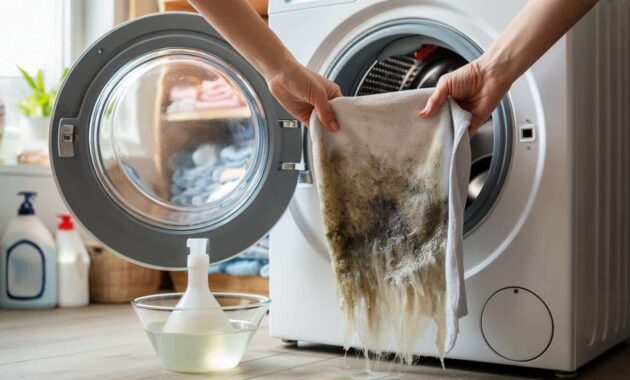
The real culprit hides in a place you barely notice.
Across countless homes, washing machines quietly turn into bacteria farms, even as they churn out fresh-looking clothes. One overlooked rubber part, meant to stop leaks, often becomes a sticky trap for grime, mould and foul odours – and, if ignored, it can shorten your appliance’s life.
The hidden trap around your drum
Front-loading machines rely on a thick rubber seal around the door, often called the door gasket. Its job sounds simple: keep the water inside. But the way it folds and curves creates small channels and pockets where dirt loves to settle.
Every wash sends a mixture of detergent, softener, lint and body residue swirling through your machine. Most of it goes down the drain. A surprising amount does not.
In those folds of rubber, undissolved detergent, fabric softener, fibres, hair and pet fur blend into a grey, sticky sludge that never really dries out.
Because the gasket flexes, that gunk is pushed deeper into the creases, where you rarely look. If you gently pull the rubber back with your fingers, you may find:
- Soap scum and dried detergent stuck along the inner edge
- Black or dark specks of mould on the rubber surface
- Stray coins, hairpins or a forgotten tissue reduced to mush
Once that build-up settles, each wash cycle swirls warm, slightly dirty water over it. Some of that water splashes back onto your clothes, leaving unexplained marks or that disappointing “wet dog” or cellar-like smell on fresh laundry.
Why your machine becomes a mould nursery
Inside a washing machine, conditions are ideal for microbial growth. You have moisture, warmth and organic matter. Add a closed door, and you get a mini-greenhouse for fungi and bacteria.
Cold and low-temperature washes, now common for saving energy, make the problem worse. These temperatures clean lightly soiled clothes, but they do little to kill microbes. Over time, colonies settle on the rubber gasket, feed on the grime and start to spread.
Those black stains on the seal are not just cosmetic—they’re living mould patches releasing spores and odours into every wash.
➡️ This rustic countryside pasta dish is quietly returning to restaurant menus everywhere
➡️ The overlooked reason your eyes feel tired even without heavy screen use
➡️ The surprising method of removing burnt food from pans using vinegar and baking soda
➡️ This haircut trick helps hide uneven hair density without obvious layers
As the contamination progresses, the gasket can start to harden or crack. That raises the risk of leaks and expensive repairs. Leaving the problem untreated for months or years can mean you end up paying for a new seal, or even a new machine, when a few basic habits would have kept it in service for far longer.
The under-£1 weapon that actually works
Many people reach straight for bleach when they notice mould. That can backfire. Bleach may discolour the rubber and, over time, make it more brittle. A cheaper, safer product does a better job: plain white vinegar.
Why white vinegar is so effective
Household white vinegar is mildly acidic. That acidity:
- Loosens and dissolves limescale
- Breaks down compacted detergent and softener residue
- Helps inactivate mould spores and some bacteria
Used correctly, it cleans the seal without stripping or degrading the rubber.
Step-by-step: cleaning the gasket properly
Set aside 15–20 minutes the first time you do this. After that, maintenance will be quicker.
- Switch off the machine at the socket for safety.
- Open the door and gently pull back the rubber seal all the way around the drum.
- Remove any visible objects: coins, hair ties, tissues, buttons.
- Soak a clean microfibre cloth or old towel with white vinegar.
- Wipe the entire gasket, pushing the cloth deep into each fold.
- For stubborn black spots, scrub gently with an old toothbrush dipped in vinegar.
- On badly stained areas, press a vinegar-soaked cloth against the rubber and leave it for 10–15 minutes before scrubbing again.
- Finish by wiping with a dry cloth to remove loosened residue.
A monthly vinegar clean keeps the seal flexible, cuts smells at the source and halts mould before it becomes embedded.
Two daily habits that prevent the worst
Crisis cleaning helps, but small, consistent actions prevent the gasket from turning into a swamp again.
Habit 1: a 10-second wipe after every wash
When the cycle ends and you pull out your laundry, the seal stays wet. Puddles of water sit in the lower folds, mixed with lint and hair. Left alone, that moisture feeds new mould.
Before walking away, take a small hand towel or microfibre cloth and:
- Run it around the inside of the door seal
- Press gently into the grooves to absorb pooled water
- Pick up any visible fluff or hair
This habit removes both damp and debris, so grime never has time to settle and harden.
Habit 2: let your machine breathe
Closing the door between washes traps humid air. The inside stays clammy for hours. Instead, once you’ve finished wiping:
Leave the door slightly open so air can circulate through the drum and seal, allowing them to dry fully.
If you share a home with small children or pets and worry about safety, you can leave the door ajar only as far as is reasonably safe, or use a simple door clip designed for washing machines.
Beyond the seal: other hotspots you should not ignore
The gasket is often the worst offender, but it’s not the only part influencing smell and cleanliness. Other zones deserve attention:
| Area | Typical problem | Simple fix |
|---|---|---|
| Detergent drawer | Dried softener, mould, slime | Remove and soak in hot water and vinegar, scrub and dry |
| Filter / pump trap | Coins, fluff, buttons, stagnant water | Open hatch, clean filter monthly, place a tray underneath |
| Drum interior | Biofilm, detergent film | Run a hot maintenance wash with vinegar or a machine cleaner |
Looking after these points supports what you do at the seal and reduces the total bacterial load inside the machine.
What happens if you ignore the smell?
Leaving a musty machine to “sort itself out” rarely works. Over time, you might notice:
- Persistent odours that transfer to towels, gym kits and bedding
- Brown or grey streaks on light fabrics
- Allergy flare-ups or irritation for sensitive skin
- Higher energy use as you rewash loads trying to refresh them
Technicians also report that neglected machines are more likely to develop drainage problems and leaks. Grime sheds from the seal, travels through hoses and clogs other components.
Low-temperature washing, hard water and other risk factors
Some everyday choices unintentionally make your gasket dirtier, faster. A few examples:
- Frequent 30°C or cold washes: gentle on fabrics, but kinder to microbes too.
- Excess detergent: creates thick foam that doesn’t rinse away and sticks to rubber.
- Liquid softener: tends to leave waxy deposits that feed mould.
- Hard water: leaves limescale which traps dirt and bacteria on the seal.
Small adjustments help. Use the dosing line on detergent caps, alternate cool washes with occasional 60°C cycles, and consider a water softening product in very hard-water regions.
Real-life scenario: from “ruined towels” to fresh laundry
Imagine a family where towels always smell stale within hours of washing. They switch brands of detergent, try extra fragrance, add fabric softener, even use scent beads. Nothing works for long.
Only when someone peels back the door seal do they notice the problem: black mould spots, grey slime, and hair matted around the lower curve. After a thorough vinegar clean, a hot maintenance wash and two new habits—quick wipe and door left ajar—the smell fades. Within a week, towels dry without that sour edge, and the laundry cupboard finally smells neutral.
Key terms that help you understand what is going on
Biofilm: a thin, often invisible layer of microorganisms clinging to a surface, held together by a sticky matrix. On a washing machine seal, it traps odours and shields microbes from quick rinses.
Gasket / door seal: the flexible rubber ring around a front-loader’s opening. Without it, water would pour out. With poor care, it becomes the machine’s dirtiest zone.
Knowing these terms makes the problem less mysterious. Instead of blaming a vague “smell”, you can target the exact surface where biofilm and mould sit and break the cycle with a cloth, some white vinegar and a few new habits.