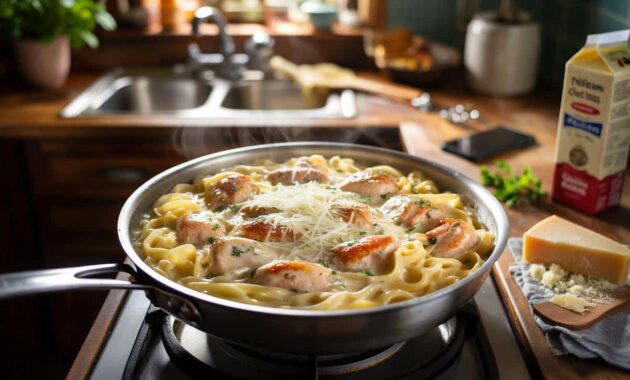
The first time I watched real, honest Alfredo come together in a single pan, I was standing in a tiny rental kitchen with a broken exhaust fan and a hungry friend hovering behind me. The sink was already piled with the detritus of the day: coffee mugs, plastic lunch boxes, a pan that had bravely hosted scrambled eggs at 7 a.m. The idea of boiling pasta in one pot and building a creamy sauce in another felt like a personal attack. So I didn’t. I grabbed one deep skillet, a box of pasta, some chicken, and a carton of cream that was hitting its expiration date.
Ten minutes later, the steam smelled like a night out at a decent Italian restaurant. Fifteen minutes later, we were both eating straight from the pan, standing at the counter, because plates felt like extra work.
That’s when this one-pan chicken Alfredo became my quiet weeknight superpower.
Why one-pan chicken Alfredo feels like a tiny miracle
There’s something almost smug about dropping dry pasta into the same pan where your chicken is already sizzling. No separate pot of aggressively bubbling water, no colander balanced precariously in the sink. Just one wide pan, a wooden spoon, and the gentle confidence that dinner will basically cook itself while you answer a text or wipe down the counter. The kitchen looks calmer. You feel calmer.
This style of cooking doesn’t scream “restaurant-level technique.” It whispers, “Hey, you’re allowed to be tired and still eat well.” A cozy bowl of glossy, cream-coated pasta suddenly becomes less of a production and more of a reflex.
Picture this: it’s 8:15 p.m., your brain is still racing from the day, and the only thing you’ve eaten since lunch is half a granola bar you found in your bag. You open the fridge and see chicken, cream, a sad wedge of Parmesan, and half a lemon. In the cupboard, there’s that box of fettuccine you bought with ambitious plans three weeks ago.
You heat one pan, sear the chicken with a bit of garlic, pour in water or broth, slide in the pasta, and let it all simmer together. By the time you’ve kicked off your shoes and scrolled through two messages, the starch from the pasta has thickened everything into a silky, clingy sauce that looks way more planned than it actually was. Dinner is suddenly not a question anymore. It’s right there, bubbling.
The quiet genius behind this one-pan method is simple kitchen physics. As the pasta cooks directly in the pan, it releases starch into the liquid. That starch doesn’t get poured down the sink like it would with a separate pot of boiling water. It stays, mingling with the cream, butter, and cheese, turning what could have been a thin, watery sauce into something naturally velvety. No flour, no roux, no packet mixes.
The chicken cooks in that same liquid, lending flavor and fat. The fond — those browned bits stuck to the pan after searing — dissolves back into the sauce, deepening the taste. *You’re not doing more; you’re simply allowing the ingredients to work harder for you.* It feels like a small kitchen hack, but it quietly changes how you think about “homemade.”
How to pull off creamy, one-pan Alfredo without stress
Start with a pan that feels almost too big. A deep, wide skillet or sauté pan lets the pasta lie flatter, cook more evenly, and soak in the sauce instead of clumping. Cut boneless chicken breasts or thighs into bite-size pieces and season them generously with salt, pepper, and maybe a pinch of smoked paprika or Italian herbs. Get your pan hot, add a swirl of oil and a small knob of butter, then let the chicken get some color. Not grey. Golden.
➡️ Car experts share the dashboard setting that clears fog twice as fast
➡️ Some teachers can’t take it anymore: students can’t even watch a whole film
➡️ Enthusiasts always do it in late February: the secret to changing hydrangea colour
Once the chicken is lightly browned, toss in minced garlic and let it perfume the pan for about 30 seconds. Then pour in your liquid: a mix of water or chicken broth and cream. Drop in the dry pasta, give everything a quick stir so nothing sticks, cover the pan, and let the simmering do the work.
The most common mistake with one-pan Alfredo is impatience. People crank the heat, walk away, and come back to pasta that’s glued to the bottom or sauce that’s split. Keep the heat at a gentle simmer, not a wild boil. Stir every couple of minutes, especially in the beginning, so the pasta doesn’t decide to attach itself to the pan and never let go.
Another frequent slip: drowning everything in cream and then wondering why it tastes flat. Balance matters. A squeeze of lemon, a good handful of freshly grated Parmesan, a pinch of salt at the end — these small moves wake everything up. Let’s be honest: nobody really does this every single day. So when you do cook, you might as well squeeze every bit of flavor out of it.
Right before serving, turn off the heat and add extra Parmesan, maybe a touch of butter, and stir until the sauce thickens and clings. If it looks too thick, splash in a little hot water. If it looks too thin, give it a minute off the heat; it will tighten as it cools. That’s the sweet spot where the pasta slides off the fork in soft ribbons instead of landing in heavy clumps.
“I used to think creamy pasta meant three dirty pots and a sink full of defeat,” laughs Elena, a nurse who works night shifts and now swears by one-pan dinners. “This one, I can literally start at 9:30 p.m. and still eat before my brain shuts down.”
- Use a wide, deep pan so pasta cooks evenly and sauce reduces nicely.
- Brown the chicken first to build flavor, then simmer pasta directly in the same pan.
- Keep the heat gentle and stir regularly to avoid sticking and splitting.
- Finish off-heat with Parmesan, a little butter, and lemon for a glossy, balanced sauce.
- Taste at the end and adjust with salt, pepper, and maybe a handful of chopped parsley.
The quiet comfort of a one-pan ritual
There’s a reason this kind of recipe travels so fast between friends, group chats, and late-night Google searches. It’s not just about the cream, the carbs, or the chicken. It’s the promise that you can walk into your kitchen on a chaotic weekday and still end up with something that feels like a treat, using what you already have. One pan on the stove, one spoon in your hand, one less reason to order takeout again.
We’ve all been there, that moment when you open your cupboard and feel slightly guilty about the untouched pasta and the half-used carton of cream. A one-pan Alfredo folds those stray ingredients into something that feels deliberate. Not lazy. Not last-minute. Just quietly efficient and comforting.
Maybe you’ll eat it at the table with a glass of wine. Maybe you’ll stand at the counter like I did, tasting straight from the pan and thinking, “This is actually pretty good.” Maybe you’ll reheat the leftovers tomorrow and be pleasantly surprised that the sauce hasn’t turned into a sad, clumpy memory. A simple dish like this has a way of sticking around — not just in your meal rotation, but in your sense of what you’re capable of on an ordinary night. And that might be the real recipe worth holding onto.
| Key point | Detail | Value for the reader |
|---|---|---|
| One-pan cooking | Pasta, chicken, and sauce all cook together in a single wide skillet | Fewer dishes, less cleanup, and a calmer cooking experience |
| Starch-powered creaminess | Pasta releases starch directly into the cooking liquid and cream | Natural, velvety sauce without extra thickeners or complicated steps |
| Flavor layering | Browned chicken, garlic, Parmesan, and a hit of lemon at the end | Restaurant-style taste from basic ingredients you probably already have |
FAQ:
- Can I use milk instead of cream?You can, but use whole milk and expect a slightly lighter, less silky sauce. Simmer gently and finish with extra Parmesan to bump up richness.
- What kind of pasta works best?Fettuccine is classic, but penne, rotini, or any short pasta that fits comfortably in the pan will do well in a one-pan Alfredo.
- How do I stop the pasta from sticking?Use enough liquid to just cover the pasta, keep the heat at a low simmer, and stir every couple of minutes, especially in the first half of cooking.
- Can I add vegetables?Yes — toss in broccoli florets, peas, or spinach in the last few minutes of cooking so they stay bright and don’t turn mushy.
- How long do leftovers keep?Store in an airtight container in the fridge for up to three days. Reheat gently with a splash of water or milk to loosen the sauce.