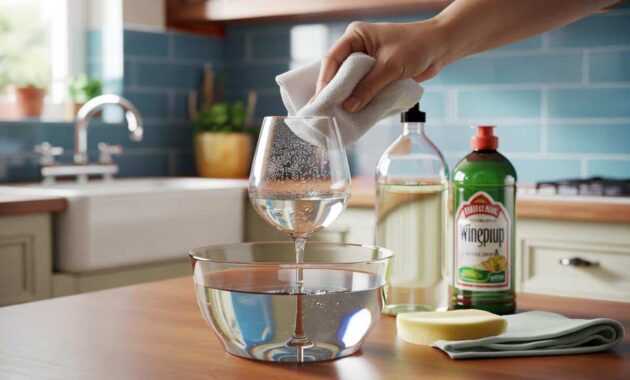
Cloudy glasses kill the mood faster than a lukewarm toast. You rinse, you rub, the milky veil still clings. Tonight’s table looks tired, and it’s not the candlelight’s fault.
The wine was lovely, the company easy, yet the glasses looked like they’d been dusted with chalk. She laughed it off, blaming the dishwasher, but I watched her face tighten when a guest peered through the haze. We’ve all had that moment when something small suddenly matters. It’s not about perfection; it’s about feeling you’ve done things with care. She reached for the cupboard, pulled out two things most British kitchens always have — white vinegar and washing-up liquid — and did something quietly brilliant. Then someone whispered: vinegar.
Why the vinegar and washing-up liquid combo works
Cloudy glassware is usually hard water’s calling card. Minerals like calcium and magnesium cling to the surface and dry into a thin, chalky film. Add a trace of greasy residue from dinner, and your stemware loses that crisp, bell-clear sparkle. The dishwasher amplifies the problem if the rinse aid is low or the water is very hard. Your glasses aren’t dirty exactly — they’re wearing a mineral coat.
At a small supper in Bath, where the water is famously mineral-heavy, I watched the “magic” happen. A bowl, a generous splash of white vinegar, a squeeze of washing-up liquid, warm water. Ten minutes later, those dull tumblers came out bright enough to catch the fairy lights. One guest swore they looked new. No special kit, no drama, just kitchen staples doing honest work.
There’s simple chemistry behind the change. Vinegar’s acetic acid dissolves the alkaline mineral film that makes glass look frosted. Washing-up liquid brings surfactants to the party, breaking the surface tension so residue lifts and rinses clean. Heat helps loosen the bond. **Vinegar dissolves the mineral film; washing-up liquid lifts the grease, and together they reset your glass to bare clarity.** If the cloudiness disappears when wet, it’s mineral film. If it stays when wet, the surface may be etched — tiny permanent scratches the dishwasher can create over time.
The exact method to clear cloudy glassware instantly
Grab a large bowl or the sink. Mix one part white vinegar with three parts warm water. Add three to five drops of washing-up liquid and swirl gently. Submerge the glasses fully for 10 minutes. Lift one, wipe once around with a soft microfibre cloth or a non-scratch sponge, and rinse hot. Let them drip upside down for a minute, then give a quick polish with a lint-free cloth. **Ten minutes is the sweet spot for most cloudy wine glasses.** For stubborn haze, repeat with fresh solution rather than scrubbing harder.
Skip anything abrasive — salt, scourers, baking soda pastes — which can micro-scratch and turn a fixable haze into permanent dullness. Keep the water warm, not boiling, to avoid thermal shock. Don’t soak metal rims or decorative paints; treat those areas with a cloth dipped in the solution instead. Let’s be honest: nobody does that every day. Make it a once-a-month reset, or before a dinner. Rinse aid in your dishwasher helps, as does keeping the salt topped up if you’re in a hard-water area.
Think of it as a tiny ritual with outsized results.
“I’ve tried every gadget going,” says Jess, a London sommelier. “Vinegar and a few drops of washing-up liquid beat them all in ten minutes.”
- Ratio: 1 part white vinegar to 3 parts warm water, plus a few drops of washing-up liquid.
- Time: 10 minutes for most films; repeat rather than scrub.
- Tools: Microfibre cloth, non-scratch sponge, lint-free drying towel.
- Avoid: Abrasives, mixing vinegar with bleach, soaking painted rims.
Clear glasses, clearer moments
There’s something quietly satisfying about seeing a table come to life when the glassware gleams. Water looks colder, wine looks richer, even lemonade gets a bit of glamour. The vinegar and washing-up liquid combo is boring in the best way — low-cost, fast, and reliable. It doesn’t ask for a shopping list. It just gives you back that click-glass confidence. **Clear glass makes everyday water feel like a treat.** Share it with a neighbour who blames their dishwasher, or the friend who collects stemware and quietly winces at the frost. The fix is at arm’s length, hiding in plain sight.
➡️ If you feel responsible for keeping the peace, psychology explains how that role formed
➡️ I tested the cleaning robot everyone on social media talks about and here is the truth
➡️ How to hide router cables elegantly using this £5 IKEA hack designers approve instantly
➡️ 12 things flight attendants notice about you the moment you board
➡️ If your garden looks lush but feels unproductive, this imbalance is often the silent cause
| Point clé | Détail | Intérêt pour le lecteur |
|---|---|---|
| Correct ratio | 1 part white vinegar to 3 parts warm water + 3–5 drops washing-up liquid | Fast results without trial and error |
| Film vs. etching test | If the haze vanishes when wet, it’s film; if not, it’s etching | Avoids endless scrubbing of permanent damage |
| Drying method | Rinse hot, drip-dry upside down, then polish with a lint-free cloth | Stops fresh spots and brings back sparkle |
FAQ :
- Can vinegar damage glass?No. Glass is non-reactive, and white vinegar is mild. Avoid soaking decorative paints, gilded rims, or soft metals. Rinse well after the soak.
- What if my glasses are still cloudy after soaking?Do the wet test. If they look clear when wet but cloudy again when dry, repeat the soak. If they stay cloudy when wet, the surface is likely etched and won’t fully clear.
- Can I use malt or apple cider vinegar?Use white vinegar. Malt can stain and leave odour; cider vinegar can leave a faint tint. Distilled white vinegar is clean and predictable.
- Is it safe for crystal?Yes for modern crystal, with care. Keep the soak short and avoid hot-cold shocks. For very old or lead crystal, work with a cloth dipped in the solution rather than immersing.
- Why do glasses go cloudy after the dishwasher?Hard water minerals, low rinse aid, and high heat combine to leave film or cause etching. Top up salt and rinse aid, and choose a gentler cycle for glass.
Originally posted 2026-03-09 02:47:00.