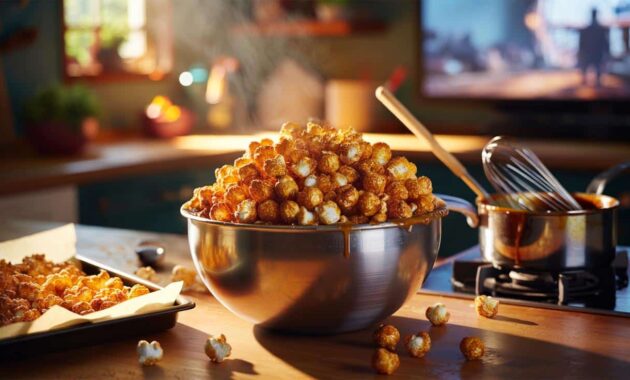
You’re standing in your kitchen with a sticky bowl of homemade caramel popcorn, and something just feels… off. It’s sweet, yes. Crunchy in places, sure. But that magic movie theater flavor? Missing in action. You taste it again, searching for that deep, toasty, slightly salty note you get when you’re halfway through a bucket in a dark room with air conditioning a bit too high and trailers still rolling.
The popcorn is good. But it doesn’t taste like the movies.
The truth is, cinema popcorn has a tiny secret. And it lives in your pantry, not in some industrial machine.
The real reason movie theater caramel popcorn tastes different
The first time you notice the difference is usually at home, not in the theater. There’s that smug moment when you pull your tray from the oven, golden kernels shining under a glossy caramel coat. They crackle as they cool. You’re proud.
Then you bite into a handful. It’s nice, but it’s missing that almost burnt, buttery depth. The one that hits the back of your throat and lingers as you fish around for “just one more piece.”
A friend told me about their own caramel popcorn disappointment after a Sunday movie marathon. They’d followed a viral recipe step by step: butter, brown sugar, syrup, vanilla. Popped the corn, baked it low and slow, tossed it religiously every 15 minutes.
The end result looked like a Pinterest board. Picture-perfect. But during the movie, everyone quietly drifted back to the store-bought bag sitting on the coffee table. The homemade bowl cooled on the counter, barely touched. No one said anything, but the verdict was clear: pretty, polite, and a bit boring.
What restaurants and movie theaters know is that flavor has less to do with fancy recipes and more to do with one simple thing: controlled browning. Caramel flavor comes from sugar cooking past the safe, light-gold stage and into something darker, more complex, just before it burns.
Commercial machines do this consistently, keeping sugar hot and moving. At home, we stop too soon, scared of going too far. That’s exactly where the gap opens between “nice” and *I can’t stop eating this and I don’t even like sharing*.
The quick kitchen trick: double-heat caramel for movie-level flavor
Here’s the surprisingly simple trick: cook your caramel twice. You make your usual caramel sauce in a saucepan, then you push it just a little further on the heat before it hits the popcorn. That second, quick “push” is where the movie theater flavor wakes up.
➡️ The unexpected reason some cooks add banana to curry sauce
➡️ White rocks found on Mars reveal the Red Planet was a tropical paradise 3 billion years ago
➡️ Here’s what a yellow rag tied to a motorbike’s handlebar really means, according to riders
➡️ For 25 years, this has been Picard’s best‑selling dessert
➡️ Why adding a spoon of honey can balance overly acidic sauces
Start with your standard base: butter, brown sugar, a spoon of corn syrup or honey, a pinch of salt. Let it bubble gently for 4–5 minutes. Then comes the move theaters copy with their hot kettles: raise the heat slightly and cook it for 45–60 seconds more, whisking, until the caramel deepens from golden to a rich amber and smells intensely toasty.
This extra minute doesn’t sound like much, and that’s exactly why most home cooks skip it. They see bubbles, they get nervous, they turn off the heat at the first hint of color.
That’s where the flavor is lost. During that short second phase, the sugars keep transforming, butter solids brown further, and you get those nutty, roasted notes that feel like “the movies.” When you pour this darker caramel over freshly popped corn and toss fast, every kernel gets coated in something that tastes like it came out of a professional machine, not a home pot that just did its best.
Scientifically, what you’re doing is nudging the caramel closer to the edge of bitterness, without falling in. The Maillard reactions in the butter, plus deeper caramelization of the sugar, build layers of flavor that basic sweet syrup never reaches.
This is also why movie popcorn never tastes simply “sweet.” It’s sweet, salty, slightly bitter, warm, and weirdly addictive. **That contrast is what your brain locks onto.** When you mimic that with this double-heat trick, your kitchen batch starts to taste unnervingly like something you’d buy in a massive tub for an unreasonable price.
How to do it at home without burning everything
Here’s a simple, practical way to copy the cinema method in your regular kitchen. Pop your corn first: 1/2 cup kernels in a heavy pot with a tablespoon of neutral oil, lid on, medium heat. Shake now and then until the popping slows, then pour the fluffy popcorn into a big metal bowl and fish out unpopped kernels.
In a saucepan, melt 1/2 cup butter with 1 cup brown sugar and 1/4 cup corn syrup or honey, plus a good pinch of salt. Bring it to a simmer over medium heat and let it bubble gently for about 4–5 minutes, stirring occasionally. It will go from grainy to glossy.
Now comes the “movie” moment. Turn the heat up just a notch. Keep stirring as it deepens to a darker amber, about 45–60 seconds. Smell it: when you catch a faint toasted, almost smoky note, pull it off the heat immediately. Stir in 1/2 teaspoon baking soda and a splash of vanilla. The baking soda will foam and lighten the caramel so it grips the popcorn better.
Pour the hot caramel over the popcorn at once, tossing with a spatula or two big spoons. Work fast but don’t stress if a few clumps happen; that slightly uneven texture feels more real than factory-perfect pearls.
Now, the gentle warning: most people don’t undercook because they’re lazy, they undercook because burnt sugar is trauma-level gross. Be kind to yourself if you’ve stopped too early in the past.
One plain-truth sentence: nobody is standing over a sugar thermometer on a Tuesday night for fun.
Spread the coated popcorn on a parchment-lined tray and bake at 250°F (120°C) for 30–40 minutes, tossing every 10–15 minutes. This step dries everything out, gives you that shattering crunch, and continues the slow browning without tipping into charcoal.
Sometimes the whole kitchen smells like a movie theater before you even take the tray out. That’s when you know you’ve hit the right shade of caramelized.
- Use the “nose test”
Don’t just trust color. When the caramel shifts from sweet to toasty on the nose, you’re in the movie zone. - Salt more than you think
- Play with “cinema add-ons”
- Let it cool completely
- Store it like the theater
A light sprinkle of fine salt on the hot popcorn right after baking turns simple caramel into something that tastes layered and grown-up.
Toss in roasted peanuts, pretzel bits, or a drizzle of melted dark chocolate once it’s cool. These echoes of snack-bar chaos make the bowl feel strangely familiar.
Warm caramel popcorn tastes good, but the real crunch-and-crackle payoff only appears once everything is fully cooled and dry.
An airtight container keeps that crisp, glossy shell longer. A paper bag softens it. Choose your side: crunchy bucket or chewy bag.
Why this tiny change feels strangely emotional
There’s a reason this trick hits harder than just “better snack.” Movie theater caramel popcorn is tied to first dates, kids with sticky fingers, late shows where the room is half-empty and you’re still reaching into the bucket long after you’re full. When your kitchen suddenly smells like that, it pulls all those memories right into your hallway.
You may find yourself standing alone at the counter, grabbing piece after piece before anyone else even knows it’s ready. There’s a small, quiet joy in realizing that this cinema-only taste now lives in your regular saucepan.
You don’t have to chase perfection each time. *Some batches will be a touch darker, a bit clumpier, a little too salty or not quite sweet enough.* That’s fine. The point isn’t to become a concession stand, it’s to close that gap between “almost” and “oh wow, this tastes like the real thing.”
Next time you start a movie at home, try the double-heat caramel move and watch what happens. People reach for the bowl more often. The room quiets down for a moment. And somebody will probably say, without thinking, “This tastes just like the theater.”
| Key point | Detail | Value for the reader |
|---|---|---|
| Double-heat caramel | Cook caramel, then push it 45–60 seconds longer to deep amber | Recreates the intense, toasty movie theater flavor |
| Low oven drying | Bake coated popcorn at 250°F (120°C) for 30–40 minutes | Gives long-lasting crunch and avoids sticky, soggy kernels |
| Use salt strategically | Salt the caramel and lightly sprinkle the finished popcorn | Builds that addictive sweet-salty balance cinemas rely on |
FAQ:
- Question 1How do I know I’ve pushed the caramel far enough without burning it?
- Question 2Can I skip the oven step if I’m in a hurry?
- Question 3What kind of sugar works best for movie-style caramel popcorn?
- Question 4Is there a way to reduce the sweetness but keep the movie flavor?
- Question 5How long does homemade caramel popcorn keep its crunch?