For the second year in a row, Russia’s defence industry skipped the Singapore Airshow, Asia’s flagship aerospace event, signalling a sharp shift in where Moscow now hunts for weapons deals – and where it quietly concedes ground.
Russia’s quiet exit from Asia’s premier airshow
The Singapore Airshow, running from 3–8 February, has long been a shop window for global military aviation. In previous editions, Russian firms used the venue to push helicopters, fighter jets and air defence systems to Asian buyers.
In 2020, Russia’s presence was highly visible. Moscow backed joint pavilions for Russian Helicopters and United Aircraft Corporation. Senior officials flew in. Model aircraft lined the stands, and sales teams worked the aisles, targeting militaries from Southeast Asia to South Asia.
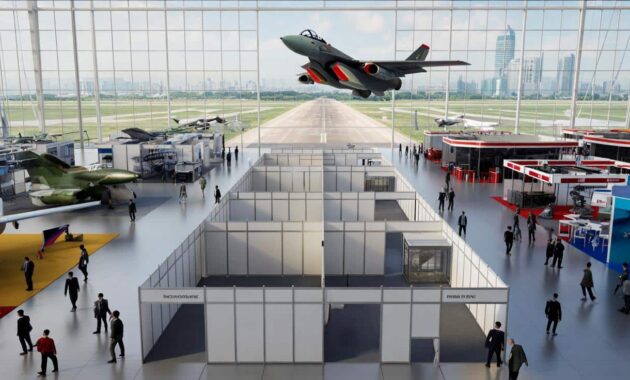
This year, there were no such stands, no official delegation from the big state arms exporters and no full-scale mock-ups of Russian fighters drawing crowds of selfie-takers.
Russia has effectively vacated one of Asia’s most-watched stages for military hardware, just as regional demand for advanced kit stays high.
Analysts link that absence to the war in Ukraine, sanctions and the strain on Russia’s own armed forces, which now consume much of the country’s production of tanks, missiles and aircraft.
From booming Asian sales to a contracting footprint
Russia’s defence industry once treated Asia as its prime export theatre. From around 2005 to 2011, Moscow clinched some of its largest post-Soviet arms deals with India and China.
During that period, contracts for fighter jets, air defence systems and naval equipment surged. According to figures collated by the Stockholm International Peace Research Institute, China alone accounted for a dominant share of Russian major weapons deliveries in the mid-2000s.
The legacy of that era still appears in the skies. At this year’s Singapore show, Malaysia’s air force took part in flying displays with its Sukhoi Su-30MKM jets, a heavily customised variant of a Russian design purchased years before Moscow’s current troubles.
➡️ Put A Lemon Slice In Your Cold Oven : Why People Are Doing It And When It Actually Helps
➡️ Goodbye to happiness? The age when it falters, according to science
➡️ Half a glass and a toilet bowl like new: smart ways to restore old sanitary ware
➡️ Why chefs sometimes add pasta cooking water to finished dishes
Yet while older Russian platforms still fly over Asia, new orders have slowed. Several regional buyers have diversified suppliers, turning to Western, South Korean or indigenous systems. Others worry about the long-term supply of Russian spare parts, software support and upgrades while sanctions remain in place.
Analysts: not a pivot, but a forced retrenchment
Defence specialists stress that Moscow did not choose to walk away from Asia as a matter of strategy.
Instead, they describe a shrinking and increasingly concentrated exports portfolio, pushed into narrower markets by structural pressures: sanctions, battlefield losses, production bottlenecks and uneasy customers.
Russia’s arms industry is reallocating limited capacity, focusing on regions where political backing is stronger and scrutiny is weaker.
One Europe-based research fellow described Moscow’s current approach as “regionalised” and “selective”, with a tilt towards states that remain willing to accept the political cost of buying sanctioned equipment.
New attention on the Middle East and Africa
As its Asian presence recedes, Russia has stepped up visibility at defence shows in the Middle East, especially in the Gulf.
Last February, Russian firms turned out in numbers at the IDEX and NAVDEX exhibitions in Abu Dhabi. More than a dozen companies took stands, showing off upgraded armoured vehicles, air defence systems and missiles, and pitching “battle-tested” technologies drawn from the Ukraine conflict.
They are set to repeat that formula at the World Defense Show in Saudi Arabia, for which Russia flew in equipment weeks in advance. Rosoboronexport, the state arms exporter, has promised new systems with recent combat experience, a selling point aimed at militaries seeking proof of performance.
Outside the Gulf, Moscow is nurturing links with a patchwork of partners across Africa and parts of the Middle East. Examples surfaced in recent years include Algeria’s interest in advanced fighter jets and sustained military cooperation with governments or factions in Mali, eastern Libya and Ethiopia.
- Gulf states: focus on air defence, missiles and electronic warfare suites
- North Africa: combat aircraft, armoured vehicles and training
- Sub-Saharan Africa: small arms, helicopters and security assistance
These relationships are not all high-value mega deals. Some are smaller packages, but they provide steady revenue and political influence at a time when traditional markets feel less predictable.
Money, secrecy and contested numbers
Russian President Vladimir Putin has claimed that Russia’s arms sector generated more than $15 billion in export revenues over the past year.
Western analysts question both the figure and the trend line. The war has clearly boosted domestic orders as the Kremlin races to replace battlefield losses and replenish missile stocks, but that surge can squeeze exports rather than feed them.
Since February 2022, Moscow has stopped publishing detailed official export data for defence equipment. That opacity makes it hard for independent institutes and foreign governments to verify how much hardware is actually delivered abroad, and to which customers.
Without transparent data, estimates of Russian arms sales rely on fragmentary shipping records, corporate hints and partner-country disclosures.
The secrecy itself sends a signal. It shields Russia from embarrassment if volumes have fallen and provides flexibility in structuring deals that might sidestep restrictions or be politically sensitive for the buyer.
Why skipping airshows matters for Russia’s image
Defence expos like the Singapore Airshow are more than just trade fairs. They are stages where states signal their technological ambitions and political alignments.
When Russia once filled large pavilions in Singapore, it visually reinforced its status as a major supplier to Asia and as a near-peer competitor to Western arms manufacturers. Its absence now undercuts that perception and gives rivals room to spread out.
For Asian governments, the optics matter as well. Walking through halls dominated by US, European and increasingly Asian manufacturers, with no Russian presence, could subtly influence procurement debates over the next decade.
| Region | Russian presence at shows | Current trend |
|---|---|---|
| East/Southeast Asia | Previously strong at Singapore and regional expos | Visible decline, including complete absence in Singapore |
| Middle East | Regular at IDEX, NAVDEX, World Defense Show | Reinforced presence and expanded displays |
| Africa | Smaller pavilions, bilateral showcases | Selective growth tied to security partnerships |
What this means for Asian buyers
For states that operate Russian aircraft or air defences, the shift raises practical questions. Access to spare parts, life-extension upgrades and software patches is critical to keeping fleets safe and reliable.
If Russian firms maintain only a minimal footprint at Asia’s largest airshow, customers could read that as a sign that after-sales support may not be a top priority. Some already hedge by seeking local maintenance capacity or secondary supply chains via third countries.
Others accelerate diversification. India, Russia’s biggest historical client, has expanded purchases from France, Israel and the US, while also investing heavily in indigenous programmes. Southeast Asian states have purchased more from South Korea and Europe, or delayed Russian-linked projects amid financing and sanctions concerns.
Key terms and underlying risks
Two expressions surface repeatedly in discussions of Russia’s current position: “battle-tested” and “sanctions risk”.
When a system is marketed as “battle-tested”, it generally means it has been used in real combat. That can attract buyers, since they can judge performance against adversaries rather than just in trials. At the same time, systems used intensively in conflict can suffer wear, design flaws may be exposed and export versions may differ from the models fielded at the front.
Sanctions risk is a different concern. Countries that buy Russian weapons may face difficulties using Western financial channels or sourcing components that include Western-made electronics. There is also the possibility of political pushback from key partners, particularly the US and EU, which have laws penalising major transactions with Russia’s defence sector.
States can find themselves balancing short-term gains – lower prices or faster delivery – against long-term exposure to sanctions, spare-parts shortages and political pressure.
One plausible scenario is a further split in the global arms market. A cluster of states accepts restrictions and closer ties to Moscow in exchange for discounted or customised equipment. Others gravitate more firmly toward Western or homegrown suppliers, where supply chains might be more stable but political conditionality can be higher.
For now, the empty Russian stands in Singapore offer a visible snapshot of that realignment. The aircraft still loop over the bay, the deals still get signed in back rooms, but the balance of who is selling what – and where – is shifting in plain sight.
Originally posted 2026-03-09 02:48:00.