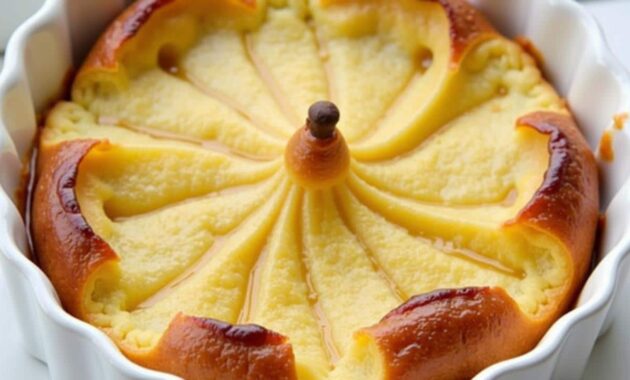
Built from everyday ingredients and orchard fruit, the pear flognarde is the kind of dessert families share without ceremony, then ask for again the next week. Behind its slightly odd name lies a rustic cousin of clafoutis that’s easier to pull off, more forgiving in the oven, and surprisingly light for such a comforting bake.
What exactly is a pear flognarde?
The flognarde sits somewhere between a flan and a thick crêpe batter poured over fruit. In the centre of France, the word “clafoutis” is traditionally kept for the version made with cherries. As soon as cooks switch to apples, plums or pears, the same style of dessert becomes a flognarde.
The term likely comes from the Occitan “flaunhard”, evoking something soft and tender. That is exactly the goal: a custardy pudding that trembles slightly when it leaves the oven and sets into a gently squidgy texture as it cools.
Think of pear flognarde as the countryside answer to clafoutis: fewer rules, less fuss, same cosy payoff.
In Auvergne and neighbouring regions such as Limousin, Périgord and Corrèze, families long made this dessert with whatever fruit was hanging on their own trees. Pears became an obvious choice for winter, when soft, aromatic varieties keep well and bring fragrance to an otherwise simple batter.
Why pears make this “softer than clafoutis”
Pears behave differently from cherries in the oven. They hold more juice, turn silky as they cook and perfume the batter around them. That natural softness is what makes the dessert feel almost lighter than classic clafoutis, even when the ingredient list is similar.
Traditional home recipes for six people typically revolve around:
- 5–6 ripe but not mushy pears
- 3 eggs
- around 60–100 g flour (plain wheat or a blend)
- about 150 g sugar, sometimes partly brown sugar
- 30 cl milk and 20–25 cl liquid cream
- butter for greasing the dish
The batter needs to stay fluid, somewhere between pancake batter and custard. That looseness lets it wrap around the fruit rather than sitting on top like a cake.
Choosing the right fruit
Varieties such as Louise Bonne, Comice or Conference work well. They need to be ripe enough to smell fragrant but still have structure. Very firm winter pears can be lightly poached in syrup for a few minutes before baking, which helps them collapse gently in the heat instead of staying chalky.
➡️ “It’s the first time I’ve ever seen one”: Dinard fisherman hauls up ultra-rare blue sea spider crab
➡️ Never leave the bedroom door open at night: here’s why you should close it
The more character your pears have, the less you need to rely on added flavours like vanilla, rum or pear liqueur.
For children or anyone avoiding alcohol, flavour can come from citrus zest, a little vanilla or a pinch of cinnamon rather than spirits.
How to prepare a classic Auvergne-style pear flognarde
The method is straightforward, which partly explains why this dessert is so rooted in everyday cooking. It can be assembled between work and dinner, then baked while the main course rests.
Step-by-step method
| Step | Action | Why it matters |
|---|---|---|
| 1 | Whisk eggs with most of the sugar | Dissolves sugar and adds air for a lighter texture |
| 2 | Sift in the flour | Prevents lumps and keeps the batter smooth |
| 3 | Pour in milk and cream gradually | Creates a fluid, silky mixture between flan and crêpe |
| 4 | Let the batter rest in the fridge | Relaxes gluten, giving a softer, more even bake |
| 5 | Butter the dish and sprinkle with remaining sugar | Encourages a fine caramelised crust on the base |
| 6 | Arrange sliced pears in one snug layer | Ensures every bite has fruit and the custard sets evenly |
| 7 | Pour over the batter and bake at 180°C for 40–45 minutes | Gives just enough time for the centre to set while edges brown |
Once out of the oven, the dessert should look slightly puffed with golden edges. The centre still wobbles a little when you nudge the dish. That tremor signals a soft, moist interior rather than a dry, overcooked one.
Many families bake flognarde the evening before, refrigerate it overnight, then serve it chilled or brought back to room temperature the next day.
Serving: from family table to weekend brunch
Pear flognarde is flexible. It works as a family dessert, a casual pudding for guests or even as a sweet component of a weekend brunch. It pairs well with strong drinks that cut through its creaminess: coffee, black tea, hot chocolate or a small glass of dessert wine for the adults.
Some like it just warm, when the custard is barely set and the fruit is molten. Others prefer it fully chilled, when slices hold together neatly and the flavours have melded. A dusting of icing sugar right before serving gives a gentle contrast without turning it into a heavy, iced dessert.
Adjusting for intolerances and lighter versions
The recipe adapts easily to different needs. For gluten-free guests, plain wheat flour can be swapped for rice flour or cornflour, keeping roughly the same quantity. The batter stays fluid, and the texture remains soft and custardy rather than cake-like.
Dairy can also be lightened. Whole milk can replace part of the cream without losing the characteristic wobble. Plant-based milks, especially oat or almond, give decent results if paired with a touch of neutral oil or dairy-free cream to maintain richness.
This is one of those desserts where technique matters more than precise brands of ingredients.
The key is respecting the loose batter, the gentle oven temperature and the baking time. Overbaking is the main risk: it turns the custard rubbery and the fruit stringy.
How flognarde differs from flan and clafoutis
For anyone used to British or American puddings, the terminology can feel confusing. Three desserts look similar in the dish but behave differently on the spoon:
- Flan is closer to a set custard, often cooked in a water bath and unmoulded, with a firmer, more uniform texture.
- Clafoutis uses a comparable batter but traditionally sticks to cherries, often with their stones left in for extra flavour.
- Flognarde keeps the clafoutis-style batter but welcomes other fruits, leading to slight variations depending on their juice and ripeness.
This diversity is part of why the dessert has stayed rooted in home cooking rather than restaurants. Each household adjusts sweetness, thickness and baking time to its own taste and oven.
Practical scenarios: using what you have
A common situation, especially in winter, is a fruit bowl of pears that all ripen at once. Flognarde provides a way to use them up before they cross the line into mushy. Slightly bruised fruit is not a problem; imperfections disappear into the custard.
The dessert also slots neatly into a batch-cooking routine. One can prepare the batter in the morning, keep it chilled and assemble the dish just before dinner. Leftovers keep well for up to 24 hours in the fridge and even make a gentle breakfast the following day.
Think of it as an edible insurance policy against wasted fruit and last-minute dessert stress.
Related ideas and risks to watch
Once the technique feels comfortable, the same base opens the door to variations: a mix of pears and apples, a handful of prunes, or a layer of sliced quince previously poached in syrup. Each fruit changes the moisture level slightly, so baking time may vary by a few minutes.
The main pitfalls are simple: using fruit that is too hard, which stays mealy even after baking, or piling the dish too high, which slows down cooking and leaves the centre underdone. A shallow, well-filled layer of fruit works better than a deep mountain of slices.
Served at a family lunch, on a chilly Sunday night or as part of a relaxed brunch spread, pear flognarde shows how a rural recipe from Auvergne can slot neatly into modern kitchens. With a short list of ingredients and a forgiving method, it turns surplus pears and basic pantry staples into something quietly memorable.
Originally posted 2026-03-09 06:10:00.