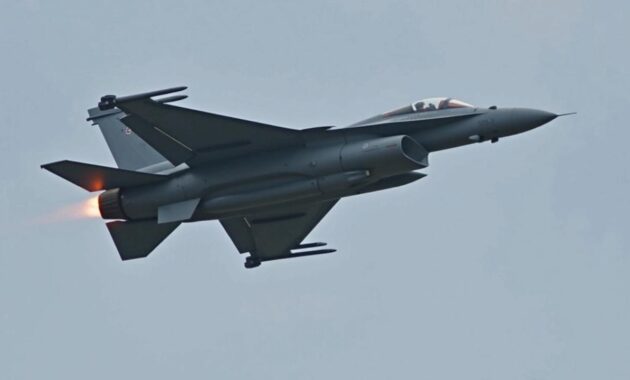
French and German officials are quietly rethinking their flagship fighter jet project, while another, more digital vision gains momentum.
The Future Combat Air System, once hailed as Europe’s answer to American and Chinese air power, now faces an unexpected rival: its own virtual twin. Paris and Berlin are weighing whether the heart of their cooperation should move away from a brand‑new fighter aircraft and towards a “combat cloud” linking drones, sensors and existing jets. The debate is igniting fresh concern that European defence plans could splinter just as war returns to the continent.
France and Germany rethink their flagship jet
For years, the Franco‑German Future Combat Air System (FCAS) has been sold as a sixth‑generation fighter jet flanked by drones and advanced communications. Spain later joined, turning it into a three‑nation effort. The jet itself was the star attraction, a symbol of European industrial strength and strategic autonomy.
Now, officials in both capitals are openly questioning whether that centrepiece still makes sense. Cost, delays and diverging military cultures are pushing decision‑makers to ask if the project’s digital backbone – the so‑called combat cloud – should take priority instead.
The conversation has shifted from “Which jet do we build?” to “Which network do we need to win the next war?”
Several defence planners see a risk that by the time a new manned fighter is ready, perhaps in the 2040s, it could already be outdated against swarms of drones, cyber attacks and hypersonic threats. A flexible network connecting many platforms, they argue, might offer more value than a single exquisite aircraft.
What the combat cloud actually is
The combat cloud is not a single device but a web of software, data links and processing power. It aims to connect fighter jets, drones, satellites, ground stations and even naval units into one shared digital battlefield.
In theory, any unit in the network could see what others see, in real time. Algorithms would fuse radar tracks, infrared images and electronic intelligence into one picture. Weapons could be guided by whichever platform has the best angle, not just the one that fired them.
The combat cloud turns each aircraft or drone from a lone asset into a node in a constantly shifting, data‑rich network.
From fighter as “hero platform” to fighter as “connected node”
The shift in thinking is subtle but deep. Traditional aviation programmes treat the manned fighter as the hero. All other systems are supporting actors. The combat cloud flips that hierarchy.
➡️ This overlooked home habit could be adding to your power bill every month
Under this approach, a future French or German pilot might fly a jet that looks less glamorous on paper than rivals, but is plugged into a powerful European network. Drones would scout ahead, electronic warfare pods would jam enemy radars, and ground operators would help manage the flow of data.
- The jet becomes a command centre, not just a weapons truck.
- Drones and unmanned wingmen handle risky front‑line roles.
- Software upgrades keep the network evolving faster than hardware.
Why scrapping the joint jet fuels division fears
The joint fighter has always been more than a piece of metal. It is a political symbol. It says Paris and Berlin can build high‑end defence systems together rather than buying off the shelf from Washington.
Walking away from that symbol, or shrinking it to a side project, would send a loud message to the rest of Europe. Some capitals already worry that defence integration promises rarely survive domestic politics.
If the flagship Franco‑German jet falters, smaller EU states may lose faith in common projects and turn back to national or US‑made solutions.
That fear is not purely emotional. Industry supply chains, research labs and smaller contractors across Europe have already been gearing up for work linked to the new fighter. A major redesign could reshuffle contracts, leaving some countries and companies stranded.
London and Rome watch from the sidelines
Complicating matters, the UK, Italy and Japan are pushing ahead with their own sixth‑generation fighter and combat cloud initiative, known as GCAP. While politicians like to say the two programmes will be “interoperable,” they remain separate families of aircraft and systems.
European defence planners warn that if FCAS weakens, the continent could split into parallel camps: a Franco‑German‑Spanish cluster leaning on one ecosystem, and a British‑Italian‑Japanese group fielding another. Both would likely still rely on US technology for key components, from engines to stealth coatings and software.
| Programme | Core countries | Main focus |
|---|---|---|
| FCAS | France, Germany, Spain | New fighter plus European combat cloud |
| GCAP | UK, Italy, Japan | Sixth‑generation fighter with advanced networking |
| NATO initiatives | Multiple allies | Common standards, data sharing and air defence |
Money, timelines and industrial friction
Budget pressure is the immediate driver of the rethink. A cutting‑edge fighter jet can cost tens of billions of euros from concept to deployment. Running a parallel effort to build drones, sensors and a secure cloud pushes the total even higher.
German politicians face voters wary of massive long‑term defence commitments. France, already deeply invested in its Rafale line, wants strong guarantees for its aerospace champions. Spain expects solid workshare in return for joining FCAS later in the game. Balancing these demands slows decisions.
Industry competition adds another layer. French firm Dassault and German group Airbus Defence & Space are both heavyweights. The question of who leads which part of the programme has triggered repeated rows, especially on flight controls, mission systems and data security.
The combat cloud offers a way to split tasks: one side leads the aircraft, the other steers networks and software – but that balance is delicate.
Some German officials argue that focusing resources on the digital backbone gives their companies a clearer edge in an area where they feel stronger. French leaders fear that a weaker emphasis on the jet could undercut Dassault’s role as prime contractor and threaten jobs tied to fighter design.
What a combat‑cloud‑first Europe might look like
If Paris and Berlin formally pivot towards the combat cloud, Europe’s air forces could start to modernise in layers rather than through a single big‑bang aircraft arrival. Existing fleets like Rafale and Eurofighter could receive deep upgrades, including new data links and sensors designed for the cloud.
Armed drones and “loyal wingmen” – smaller, cheaper unmanned aircraft that fly alongside crewed jets – would likely be fielded earlier. That could give militaries useful capabilities in the near term while they wait for a next‑generation manned platform.
War games already show how such a networked force might behave. In a Baltic crisis scenario, for example, French, German and Polish jets could share targeting data with Swedish and Finnish radars. Drones would patrol risky airspace, while a rear‑area tanker aircraft coordinates the flow of information through secure satellites.
Key risks and benefits of the shift
Moving away from a clear jet‑centric vision carries political and military risks. Allies may see it as backtracking. Timelines could still slip. And a cloud without a modern fighter at its heart could leave Europe reliant on US‑built F‑35s for decades.
- Risks: fragmented procurement, competing standards, weaker bargaining power with the US, and domestic backlash over lost industrial promises.
- Benefits: faster deployment of useful capabilities, easier upgrades via software, better integration of smaller allied air forces and more flexible use of drones.
There is also the issue of cyber vulnerability. A powerful combat cloud is only as strong as its security. Adversaries will target data links, satellites and servers with hacking, jamming and spoofing. Building resilience – with backup channels, encryption and AI‑driven cyber defence – becomes as crucial as designing the aircraft.
Terms and concepts that matter in this debate
Several technical notions sit at the core of the Paris‑Berlin discussion:
- Sixth‑generation fighter: an aircraft designed from the start for stealth, sensor fusion, loyal wingmen control and strong networking, going beyond today’s F‑35 or Rafale.
- Loyal wingman: a drone that flies in formation with a manned jet, carrying extra weapons, sensors or jammers, controlled by the pilot or by AI.
- Interoperability: the ability of systems from different nations to talk to each other securely and effectively, without leaking sensitive data.
- Strategic autonomy: the political goal of being able to act militarily without depending entirely on US equipment or decision‑making.
How these concepts are prioritised will shape Europe’s defence landscape well into the middle of the century. A combat‑cloud‑first choice would mean betting that software, data and networks will dominate future air warfare more than any single piece of hardware.
For European citizens watching wars on their borders, the argument may seem abstract. Yet the outcome will affect where tax money flows, which factories stay open, which skills are developed, and ultimately how credible European governments look when they promise to defend their skies without always calling Washington first.