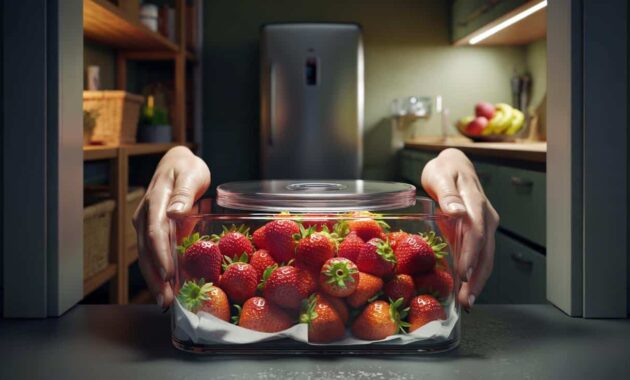
The fix starts long before dessert.
From the moment you pick up a punnet at the supermarket or market stall, every choice you make affects how long those berries stay firm, fragrant and safe to eat. The right storage spot is not where most people put them, and a couple of simple habits can easily add two or three days of freshness.
Why strawberries go bad so quickly
Strawberries are fragile fruit with very thin skin and high water content. That combination makes them incredibly vulnerable to bruising and mould.
Once they’ve been picked, they stop ripening. They only deteriorate. Any damage, even a small soft spot, becomes a gateway for bacteria and mould spores to spread from one berry to the next.
One bruised strawberry in a box can turn into a chain reaction of mush and mould in less than 24 hours.
Moisture is another problem. Condensation in plastic packaging, or droplets left after washing, create the perfect humid microclimate for fungi. Warm air speeds things up. Cold air from a very chilly fridge can be just as harsh, breaking down the texture so they taste flat and woolly.
First step: choosing strawberries that can actually last
Good storage begins in the shop aisle. You cannot rescue berries that are already on their way out.
- Look for bright, even red colour, with no dull brown patches.
- Check the green caps (calyx): they should look fresh and perky, not wilted.
- Turn the punnet over and examine the bottom for juice stains or crushed fruit.
- Avoid boxes with condensation inside or a strong fermented smell.
Packaging matters too. Rigid plastic boxes often compress the fruit during transport. Cardboard or wooden punnets give a bit more protection and allow air to circulate, limiting trapped humidity.
The vinegar bath that buys you extra time
Once you’re home, resist the urge to rinse everything under the tap and toss it straight into a bowl. A quick, diluted vinegar bath can significantly slow mould growth.
Mix one part white vinegar with three parts cold water in a bowl. Submerge the strawberries for one to two minutes, gently swishing them so the solution reaches every surface. The goal is to reduce surface bacteria and fungal spores, not to soak them for ages.
➡️ The clever hack of adding lemon zest to sugar for instant citrus sugar
➡️ This simple method keeps small spaces feeling organized
➡️ This bakery chain sells the unhealthiest bread, warns UFC-Que Choisir
A short, diluted vinegar rinse can extend fresh strawberry life by several days without affecting flavour when done properly.
After the bath, drain the fruit and dry it very thoroughly with kitchen paper. Pat, don’t rub, to avoid bruising. Any leftover moisture between berries will work against you later.
Leave the green tops on. Removing them creates a small opening in the flesh that speeds up dehydration and gives microorganisms an easier access point.
Why the fridge is not your strawberry’s best friend
Many people head straight for the fridge shelf. That feels logical, but it’s rarely the best move if you want flavour and texture.
Very cold air damages the structure of strawberry cells. Water inside those cells can partly freeze, then leak when the berries come back to room temperature. The result is a soft, slightly mushy texture and a faded taste. You still get something edible, but not that intense, fragrant bite that makes seasonal strawberries special.
There is also the issue of humidity. Fridges tend to be moist environments, especially when you open and close the door frequently. Unless the berries are carefully protected, that moisture will accelerate mould.
And the fruit bowl? Not great either
A fruit bowl on the counter seems like the charming, natural option. For strawberries, it’s closer to a fast-track to spoilage.
At room temperature, especially in warm kitchens, strawberries lose firmness quickly. They breathe faster, use up their stored sugars, and start to collapse. If they sit near ethylene-producing fruit such as bananas, pears or apples, they may deteriorate even faster.
On a warm day, strawberries left in a fruit bowl can go from picture-perfect to soft, sweaty and speckled in one afternoon.
The open air also exposes them to more airborne mould spores, and the sunlight from a nearby window can heat them unevenly.
The best place to keep strawberries fresher for longer
For most homes, the sweet spot is a cool, dark, dry cupboard or pantry, using a semi-closed container that controls moisture without suffocating the fruit.
Here is a simple method that works well:
- Take a clean, shallow container with a lid (glass or plastic).
- Line the bottom with kitchen paper to absorb excess moisture.
- Arrange the strawberries in a single layer, if possible, without crowding.
- If you need a second layer, add another sheet of paper between them.
- Place the lid on loosely, or pierce a few tiny holes if using foil or cling film.
- Store the container in a cool, ventilated cupboard or pantry, away from heat sources.
This approach controls humidity, shields the berries from light, and limits bruising from stacking. The slight airflow through the partially open lid prevents condensation, which slows mould development.
When the fridge can still be useful
If your home is particularly warm, or you will not eat the berries for a day or two, a fridge can still help, as long as you adapt your strategy.
| Situation | Storage option | Key tip |
|---|---|---|
| Cool kitchen, eating within 24–48 hours | Pantry or cupboard in a semi-closed box | Keep moisture low, avoid stacking too high |
| Hot weather, eating within 2–3 days | Top shelf of fridge in lined container | Let them come to room temperature before serving |
| Serving same day | Short chill in fridge, then out on the counter | Rinse just before eating for best flavour |
If you do refrigerate, keep the container set up as described earlier, with kitchen paper and limited stacking. Place it away from the back wall so the berries aren’t exposed to the coldest air. Take them out 20 to 30 minutes before serving so flavour and aroma can develop.
Common mistakes that ruin a fresh punnet
Several habits shorten strawberry life dramatically, even when the fruit looks fine at first.
- Washing everything straight away, then storing while still damp.
- Removing the green tops before storage.
- Leaving strawberries in tight supermarket plastic with condensation.
- Stacking berries in deep piles, which crushes those at the bottom.
- Storing next to strong-smelling foods, which can transfer odours.
Keep strawberries as they are: whole, gently dried, loosely packed, and shielded from both harsh cold and warm air.
How to tell if strawberries are still safe to eat
A little softness does not always mean danger, but there are clear signs that strawberries need to be binned.
Check for white, green or blue fuzz, which means active mould. Throw away any visibly mouldy berries and inspect the rest carefully. If several in the same box show growth, it’s safer to discard the lot.
Also pay attention to smell. A sour or wine-like odour suggests fermentation. In that case, they’re not suitable for fresh eating, though some people use slightly overripe ones for cooked sauces or jam, as long as there is no visible mould.
Planning ahead: freezing and using imperfect berries
When you realise you bought more than you can eat, freezing is a good backup. Frozen strawberries will never regain their fresh texture, but they’re excellent in smoothies, compotes or baking.
Spread hulled, dry strawberries on a tray lined with baking paper and freeze them in a single layer. Once solid, transfer them to a freezer bag. This keeps them separate, so you can grab only what you need.
Slightly soft berries that are still clean and mould-free are ideal for coulis, quick jam, or folding into yoghurt. Turning them into another recipe reduces waste and stretches your budget, especially during the short high season when prices rise and fall quickly.
Why these small tweaks matter for taste and waste
Strawberries are one of the fruits most often thrown away at home because they spoil so fast. A few shifts in how you buy, wash and store them can cut that waste dramatically. You save money, and you also keep more of those fleeting early-summer flavours on your plate rather than in the bin.
Think of storage as part of the recipe. The same punnet can become a bland, limp topping or a bowl of plump, juicy berries, depending on where you put it the moment you walk through the door. Once you’ve tasted strawberries that have been handled gently and kept in the right place, the fridge shelf and the fruit bowl start to look surprisingly hostile.