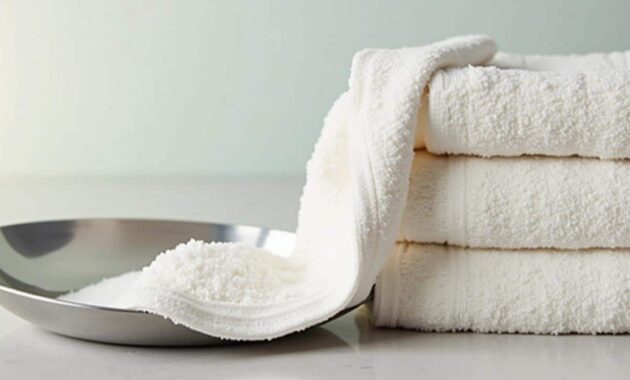
For years, many households have chased fluffy hotel-style towels with pricey detergents and softeners, rarely questioning the routine.
Now a simple ingredient sitting in almost every kitchen cupboard is shaking up that industry, promising softer towels without the usual bottle of chemicals.
Why your towels feel stiff in the first place
When towels lose their cloud-like feel, most people blame age or “cheap quality”. The real culprit is usually build-up.
Each wash leaves tiny traces of detergent, minerals from hard water, and residues from fabric softener clinging to the fibres. Over time, this mixture forms a thin coating that makes towels feel rigid and less absorbent.
That slightly scratchy, cardboard-like feel is often a sign of too much product, not too little.
Fabric softeners, which promise fluffiness, can actually worsen the problem. They often contain oils, silicones, and fragrances that wrap around the fibres. The towel might feel smoother at first touch, but its loops can’t drink up water as well.
Dryers then add another twist. High heat bakes those residues deeper into the fabric. The result: rough towels that seem impossible to revive without buying new ones.
The kitchen staple that changes everything
The ingredient causing such a stir is plain white vinegar – the same bottle many people splash into salad dressings or pour down the sink while cleaning.
Used correctly in the wash, distilled white vinegar can loosen mineral deposits, cut through detergent build-up, and restore the natural texture of cotton fibres.
Vinegar does not coat your towels. It strips away what shouldn’t be there so the fabric can do its job again.
➡️ Lawn burried under leaves: this cordless Mountfield tool with batteries included saves your back
➡️ In Australia, an 8 cm larva found in a patient’s brain
➡️ Forget Brazilian blowouts: “nanoplasty” hair treatment is winning over salons
➡️ Hairstyles after 50: these cuts can “take 10 years off” your face
Cleaning experts and some textile specialists have quietly recommended this trick for years. As the advice spreads on social media and in eco-living forums, it is starting to worry the manufacturers of traditional softeners and “specialist” laundry boosters.
How vinegar makes towels feel softer
White vinegar is slightly acidic. That mild acidity helps neutralise the alkaline residues left behind by most laundry detergents.
When these residues break down, the fibres separate more easily and feel less rigid. At the same time, vinegar can dissolve traces of limescale from hard water that lodge deep in the fabric.
There is also a deodorising benefit. Towels that never quite lose that damp gym-bag smell often carry a mix of bacteria and trapped soap. Vinegar helps to rinse them away more thoroughly.
Step-by-step: using vinegar instead of fabric softener
The method is simple and does not require changing your entire laundry routine.
- Use your regular detergent, but stick to the recommended dose or slightly less.
- Skip commercial fabric softener completely for this wash.
- Pour about 1/2 to 1 cup of distilled white vinegar into the fabric softener compartment.
- Wash towels in warm or hot water, according to their care label.
- Dry them on a medium setting, shaking them out before placing them in the dryer.
Most people notice a difference after one or two washes. Particularly stiff, older towels may need a few cycles to shed years of residue.
Why some experts are not happy about it
This simple swap has created tension in parts of the cleaning and textile industry. Softener sales are big business, often backed by heavy marketing focused on fragrance, colour protection, and “advanced” softness technologies.
If consumers reach for a 99p bottle of vinegar instead of a branded softener, that entire model looks less convincing.
Some fabric-care specialists warn against too much vinegar in every single wash, arguing it could slowly weaken elastic or damage some synthetic fibres. Environmental groups counter that occasional use, especially in cotton-only loads, is far gentler than constant exposure to perfumed chemicals.
Manufacturers also point out that vinegar is not a one-size-fits-all solution: it won’t fix damaged fibres, bleach stains, or low-quality fabric. Yet the growing popularity of this kitchen staple raises uncomfortable questions about how much of the laundry aisle is genuinely needed.
What about the smell?
The biggest hesitation people have is obvious: no one wants bath towels that smell like a chip shop.
In practice, the sharp vinegar scent rarely survives the rinse and spin cycle. Once towels are fully dry, most noses can’t detect any trace of it.
Those who are very sensitive to smells can start with a smaller amount or mix the vinegar with water before adding it. A short tumble with wool dryer balls or airing towels on a line outdoors helps any lingering scent to disappear.
Vinegar versus commercial softeners: how they compare
| Feature | White vinegar | Fabric softener |
|---|---|---|
| Softness effect | Removes build-up so natural softness returns | Coats fibres for a smoother feel |
| Absorbency of towels | Typically improves absorbency | Often reduces absorbency over time |
| Fragrance | Neutral, disappears after drying | Strong, long-lasting perfumes |
| Cost per load | Generally low | Higher, especially for premium brands |
| Environmental footprint | Simple formula, fewer additives | More complex chemicals, perfumes, dyes |
When vinegar is not the right choice
There are situations where experts advise against using vinegar directly in the machine on a regular basis.
Rubber seals and hoses in some older models may not react well to frequent acidic washes. Occasional use is unlikely to cause trouble, but pouring large amounts into every cycle could shorten the life of certain components.
Delicate items like silk, wool, or garments with special finishes should be washed according to their label, without DIY additives. Vinegar works best on sturdy fabrics such as cotton towels, bedding, and basic clothing.
Other ways to keep towels soft without chemicals
Vinegar is only one part of the story. A few simple habits can keep towels soft for longer, with or without it.
- Avoid overloading the washing machine so water and detergent can circulate properly.
- Use less detergent rather than more; most people over-pour, especially in soft-water areas.
- Shake towels before putting them in the dryer to separate the fibres.
- Dry on medium heat: very high settings can scorch fibres and make them rough.
- Skip dryer sheets, which can create similar coatings to softeners.
Soft towels are often the result of less product, not extra bottles on the shelf.
Understanding the science in simple terms
Laundry products often sound technical: surfactants, conditioners, optical brighteners. Behind these terms is a basic idea. Detergent lifts dirt and oils; softener smooths the surface; fragrances mask odours.
Vinegar acts more like a reset button. It doesn’t add anything fancy. Instead, it reduces leftover alkalinity and breaks down minerals that stiffen fabrics. Think of it as rinsing limescale from a kettle, but on a towel.
That process is why towels sometimes feel lighter and more absorbent after a vinegar cycle. The fibres are freer to move and soak up water without that invisible crust clinging to them.
Real-life scenarios: when this trick really helps
Households in hard-water regions are among those who notice the biggest change. Minerals like calcium and magnesium cling stubbornly to fabrics. A monthly vinegar wash can clear some of that build-up.
Families with athletes, swimmers, or gym-goers also benefit. Sports towels and microfibre cloths often trap body oils and deodorant residues. Vinegar helps strip those away, making towels feel fresher and less waxy.
Students or flat-sharers using old machines in rented properties often live with tough, scratchy towels without realising the cause. A cheap bottle of distilled vinegar and a few targeted washes can make years-old linens feel closer to new, without replacing them.
Risks, limits and how far you can push it
There is a line between clever household hack and overuse. Constant heavy doses of vinegar in every wash can nudge the balance of the machine’s internals and may void some warranties.
Most appliance technicians suggest occasional cycles – for example, once every few weeks for towels and bedding – rather than daily use. For normal clothing, many people reserve vinegar for problem loads: musty gym gear, sour-smelling dishcloths, or towels that have clearly gone stiff again.
Those with sensitive skin should still pay attention. While vinegar rinses away almost entirely, any new laundry routine is worth testing on a small load first. If irritation appears, scale back the amount used or focus on better rinsing with water alone.
For many households, the biggest shift is psychological: reaching for a clear pantry liquid instead of a brightly coloured bottle from the cleaning aisle. Behind that choice lies a broader question: how many of our weekly habits are genuinely helpful, and how many just keep a profitable cycle turning?