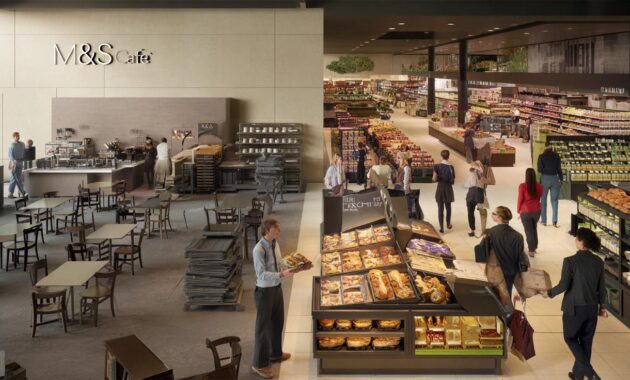
Marks & Spencer is preparing a major overhaul of its estate, shifting money and floor space away from leisurely lattes and towards bigger food ranges, speedier service and online-friendly layouts. For regulars who treat the café as a weekly ritual, the changes will feel personal – but the retailer says the shake‑up is about matching how people actually shop in 2025.
M&S’s £300m rethink: less sitting, more shopping
M&S is ploughing around £300 million into a store revamp that will see a number of in‑store cafés shut or shrink, freeing up room for expanded Foodhalls, grab‑and‑go counters and new collection and returns hubs.
M&S is reallocating some café space to features that turn sales faster: fresh food, hot takeaways and online order services.
The strategy is simple: every square metre has to work harder. Traditional cafés are labour‑intensive, need large kitchens and encourage long visits. In contrast, a compact bakery window or hot counter can serve hundreds of shoppers in the same footprint, with shorter queues and fewer staff.
In a typical mid‑sized branch, that could mean the café shutters come down and, a few weeks later, customers walk into:
- a bigger bakery with warm pastries and fresh loaves
- a prepared-meals zone aimed at quick after‑work dinners
- a click‑and‑collect desk for clothing and home orders
- more self‑checkout tills near the Foodhall entrance
The chain is betting that these changes will increase weekly visits, especially from time‑pressed commuters and families grabbing dinner on the way home.
Which cafés are at risk – and which are likely to stay
M&S is not closing every café. The retailer is taking a selective, store‑by‑store approach based on footfall, layout and local competition.
| Type of store | Likely café outcome | What shoppers may see instead |
|---|---|---|
| Large city flagships | Many cafés retained, possibly refreshed | Full restaurant-style seating, plus bigger Foodhall |
| High-street clothing & food mix | Partial closures or smaller coffee bars | Hot counters, bakery islands, extra grocery aisles |
| Retail park and edge‑of‑town sites | Mixed: café closure where other chains sit nearby | More parking-facing grab‑and‑go, collection zones |
| Compact convenience formats | Little or no café offer | Pure Foodhall focus with limited seating nooks |
Branches that serve as community hubs – for example in market towns where older shoppers treat M&S as their main outing – may keep cafés for longer. In densely built‑up cities with multiple coffee options within a few minutes’ walk, the chain is more likely to repurpose the space.
What the revamp means for your weekly shop
For many shoppers, the most visible change will not be the missing café sign, but how fast the food shop feels.
➡️ To charge your phone, don’t plug the cable into the wall before connecting it to the phone
➡️ The return of the aircraft carrier Truman, a signal badly received by the US Navy facing future wars
➡️ Why raised garden beds require a different watering rhythm than ground soil
➡️ Space sovereignty: can France still keep up with SpaceX and China?
➡️ This classic apple cake becomes unbelievably soft with one surprising ingredient
➡️ The New Airbus Jet Pushes The Limits Of Non‑stop Flight
The company’s goal is a “20‑minute mission”: grab dinner, pick up a parcel, sort a return and be out of the doors again.
Larger Foodhalls will typically mean:
- more fresh produce and bakery choice, including late‑day availability
- a wider ready‑meal and “cook from scratch” range
- separate zones for quick lunches versus full basket shops
- extra self‑checkouts to cut down on queuing
For anyone used to a slow browse and a sit‑down cappuccino, that might feel like the end of a familiar rhythm. Yet for parents doing the school run or workers squeezing in a stop between trains, the change leans towards convenience: less waiting, more food that can be on the table in under half an hour.
Where does that leave your coffee break?
The emotional punch of this revamp sits in the café. For many people, M&S is where they met a friend each Tuesday, shared a scone with their mum, or killed 40 minutes between appointments.
Those rituals will not vanish overnight, but they may shift. Shoppers are already being nudged towards different habits: takeaway coffees from smaller counters, short stops at nearby independent cafés, or informal “picnics” on benches using food from the store.
The trade‑off is clear: fewer porcelain cups, more paper lids – and a high street where grocery and services take priority over lingering.
Some refitted branches still include modest seating areas by the bakery or near the front windows. Others rely on the surrounding town centre for places to sit. For people with mobility issues or those who need a warm, safe space to sit for a while, that shift has wider social consequences, not just retail ones.
How to adapt your visit as stores change
Planning your trip
Because changes are rolling through the estate at different speeds, checking before you go can save frustration.
- Look up your local branch online and see if a café is still listed.
- If you need a sit‑down, identify an alternative coffee shop within a short walk.
- Time your visit: mid‑morning is often quieter for Foodhalls, while late afternoon suits hot food counters.
- Use the retailer’s app for digital receipts and Sparks offers, which pair well with quicker, more frequent trips.
Getting the most from new layouts
Once the refit hits your store, the shopping flow changes. Staff often suggest a “clockwise” route: enter through clothing, pass click‑and‑collect, then sweep through the Foodhall last so chilled items stay cold.
Think of the refitted store as a loop: services at the front, dinner at the back, fast exits on both sides.
For busy workers, the combination of a dedicated returns hub, speedy self‑checkouts and wider meal choice can turn M&S into a once‑or‑twice‑a‑week habit rather than an occasional treat.
Why M&S is making this shift now
Behind the scenes, the numbers are driving this strategy. Cafés face rising wage, energy and ingredient costs. At the same time, shoppers who embraced online orders and quick local top‑ups during the pandemic have kept those habits.
A store that once relied on people lingering now needs to serve customers who want to be in and out between Teams calls, and who treat click‑and‑collect as default. That makes so‑called “service hubs” – counters for parcels, returns, and queries – more valuable space than a row of two‑seater tables.
There is a reputational risk. M&S has built much of its brand on comfort and familiarity. If the changes feel too clinical, shoppers could drift to rivals with cosier spaces. On the other hand, if the refit genuinely improves choice and cuts queuing time, many people will quietly accept the swap.
What this means for the high street
M&S is not the only retailer rethinking cafés. Department stores have already scaled back restaurant areas in favour of beauty halls and branded concessions. Supermarkets are shrinking or outsourcing café space. The trend points to town centres with more small independent cafés and fewer big in‑store dining rooms.
For landlords and councils, that raises questions about seating, shelter and social spaces. If anchor stores no longer offer large warm cafés, public benches, libraries and community hubs may carry more of the load for people who need somewhere safe to pause without buying a full meal.
Practical scenarios for shoppers
Imagine a typical Thursday in a refitted branch. At 5.20pm, a commuter walks in from the station. They head straight to a hot food counter, grab a rotisserie chicken and two sides, use a self‑checkout, collect a parcel from the service hub and step back onto the pavement by 5.32pm. No café in sight, but dinner and an online order sorted in 12 minutes.
Contrast that with a grandparent meeting a friend at 10.30am. Their store has lost its café, so they pick up two pastries from the bakery, grab takeaway coffees from a tiny bar near the entrance and sit on a public bench around the corner. The catch: on a cold or wet day, that “workaround” is far less appealing, and some may simply go less often.
Key terms and what they mean for you
One phrase that comes up repeatedly in retail circles is “space productivity”. It means how much profit each square metre of a shop generates. Cafés tend to score lower than Foodhalls or clothing because they need more staff and have limited turnover per table.
Another is “click‑and‑collect”. This is the service that lets you order online and pick up in store, usually at a dedicated counter. From M&S’s perspective, that visit is gold: customers often buy extra food or clothing when they come to collect. From a shopper’s angle, it can save delivery fees and reduce the chances of missed parcels, especially in shared or busy households.
These concepts sound technical, but they shape what you see the next time you walk into M&S. The café chairs, the hot chicken cabinet, the bank of lockers near the entrance – they are all products of the same question: what keeps people coming through the doors, and how quickly can that space pay its way?