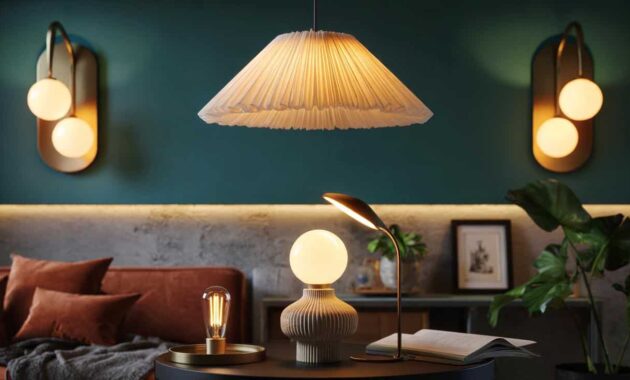
The old “industrial loft” sparkle doesn’t set the mood anymore.
Designers have shifted the spotlight. Bare bulbs once signaled urban cool; this season, rooms ask for warmth, softness, and layered light that flatters both space and skin.
Why filament bulbs lost their magic
Nostalgia fatigue and the end of the loft look
Exposed filaments owned the 2010s. Coffee bars loved them. So did renters with concrete floors, metal shelving, and black cords everywhere. The look felt cinematic and effortless. Then it showed up in every dining room, photo backdrop, and rental staging. The surprise faded.
There’s also a comfort gap. A cluster of bare bulbs can glare. It flattens textures and throws hard shadows. In darker months, that reads cold, not cozy. Energy rules added pressure, too. Many markets now restrict inefficient lamps, and “Edison style” incandescents sit on the wrong side of the watt-hour math.
What decorators want from light now
Rooms need intimacy and shape. Designers reach for diffused glass, pleated shades, handmade ceramics, natural fibers, and small pools of light you can steer. Instead of one harsh centerpiece, they build layers: ambient fill, focused task beams, and subtle accents that graze walls or art.
Big, exposed filaments now signal set dressing. Texture, softness, and dim-to-warm light signal a home you actually live in.
What’s taking over: the new light sources
Decorative led and smart control
Decorative LEDs have grown up. The bulb is no longer a tech part, it’s the look. You’ll see opal bulbs that glow like pearls, softly tinted glass, and slender forms that slip under a shade without hot spots. Many models tune from a candle-like 2200K to a bright 4000K, and some “dim‑to‑warm” drop toward 1800K as you fade the switch. Aim for CRI 90+ so colors don’t wash out.
Control got simpler. Bulbs pair with a phone, a remote, or a wall dimmer. Scenes can shift from dinner to desk time without moving a lamp. Efficiency is the clincher: a typical 8 W LED replaces a 60 W incandescent while keeping a comfortable glow. Lifespans run 15,000–30,000 hours.
Swap ten 60 W bulbs for 8 W LEDs and you can shave roughly £200–£250 / $150–$200 a year, depending on tariffs and hours used.
Statement pendants, sculptural sconces and artisan shades
Fixtures now double as art. Think hand‑blown glass, woven rattan drums, ribbed ceramics, pleated linen, or thin alabaster. Color sneaks back in through the shade, not the bulb: teal, terracotta, smoked amber, or soft mahogany tints. The piece carries the room even when off.
➡️ Day will turn to night: the longest total solar eclipse of the century now has an official date
➡️ Heavy snow according to forecasts expected starting tonight
➡️ Gardeners say watering plants at this precise time of day changes growth dramatically
➡️ A polar vortex anomaly is approaching, and its intensity is almost unheard of in February
➡️ Experts warn dog owners: limiting walks to fast-paced marching creates frustration
Many ceiling and wall lights ship with integrated LED modules. Ask whether the driver or module can be replaced, so you don’t bin a whole fixture in five years. Look for repairable designs and standard parts.
- Living room: retire the bare‑bulb cluster. Hang a wide rattan or linen pendant and add two table lamps with opal bulbs for low glare.
- Hallway: mount ceramic or brass sconces with diffusers. Keep fittings shallow to avoid bumps, and set a warm 2700K scene at night.
- Bedroom: a dim‑to‑warm glass bedside lamp calms the space. Add a pinpoint reading sconce so one person can read without flooding the room.
- Kitchen: run high‑CRI LED strips under cabinets for shadow‑free prep. Use a separate switch from the island pendants for flexible mood.
- Desk zone: pick a task lamp with a low‑glare head, 3500–4000K for focus by day, and drop to 2700K in the evening.
Money, maintenance and the planet
Costs and savings you can feel this winter
A quick comparison at 4 hours a day:
| Type | Typical wattage | Annual energy | Approx. annual cost (UK £0.28/kWh) | Approx. annual cost (US $0.18/kWh) | Lifespan | Best use |
|---|---|---|---|---|---|---|
| Vintage filament (incandescent) | 60 W | 87.6 kWh | £24–£25 | $15–$16 | 1,000 h | Short bursts, props |
| Decorative LED bulb | 6–8 W | 8.8–11.7 kWh | £2.50–£3.30 | $1.60–$2.10 | 15,000–30,000 h | Everyday use |
| Integrated LED pendant | 12–24 W | 17.5–35.0 kWh | £5–£10 | $3–$6 | 25,000–50,000 h | Main ambient layer |
Prices for artisan shades look kinder than you might think. A woven pendant or a small ceramic table lamp often costs less than a designer “industrial” bar, and it lands a fresher silhouette.
Target CRI 90+, 2200–3000K for evenings, and brighter 3500–4000K for chores. Your eyes will thank you.
How to switch without tearing out your ceiling
Fast fixes and small upgrades
Keep the sockets, change the story. Fit E26/E27 opal LEDs with dim‑to‑warm tech and retire the clear glass bulb. Clip a fabric shade onto a pendant cord to soften glare. Add a plug‑in sconce where wiring is tricky. Bring in a floor lamp to light dark corners at eye level, not from above.
Layer the room. One ambient source sets the base. A task light handles reading or chopping. A small accent grazes a plant or a painting. Dimmers help every layer work harder.
Safety and specs to check
- Dimming: match bulbs to the dimmer type (trailing edge usually behaves best with LEDs). Check the minimum load.
- Flicker: look for low‑flicker drivers; many brands list percent flicker or IEEE compliance.
- Bathrooms: choose the right IP rating (IP44 or higher in splash zones). Keep metal parts earthed.
- Marks and rules: seek UL/ETL or CE markings. In the US, new general service lamps must meet 45 lm/W; in the UK/EU, halogen phase‑outs already push efficiency higher.
Buying cues that make the difference
Glass, shade and beam
Opal glass diffuses. Clear glass sparkles but can glare. Ribbed or frosted surfaces hide dots from LED filaments. A narrow beam highlights art; a wide one fills the room. For pendants over tables, keep the bottom edge about 75–85 cm above the surface so faces shine, not squint.
Color that flatters real life
LEDs with CRI 95+ render wood and skin beautifully. If you love deep greens and reds, R9 values above 50 help. Warm tones (2200–2700K) calm a space at night. Daylight‑leaning whites (3500–4000K) keep you alert without the blue cast of 5000K, which can feel clinical at home.
Extra help: quick lumen math and smart scenes
How many lumens do you need?
Start with rough targets. Living rooms feel good around 100–200 lux. Kitchens need 300–500 lux on counters. To estimate lumens for a room, multiply area by target lux, then divide by 0.7 to account for losses.
Example: a 15 m² living room at 150 lux needs about 3,214 lumens (15 × 150 ÷ 0.7). That could be one 1,600‑lumen ceiling light plus two 800‑lumen table lamps.
Set scenes that follow your day
Try three presets: “Morning” at 3500–4000K and 80–100% in kitchen and desk zones; “Evening” at 2700K and 40–60% across the home; “Late” at 2200K and 10–20% with only floor and table lamps on. That rhythm helps sleep and trims bills.
Small swaps—opal LEDs, a shade with texture, a smarter dimmer—deliver warmth fast and cut energy without touching the wiring.
If you still love a hint of vintage, keep one clear bulb as a nod, but let it sit inside a smoked or ribbed shade to tame the glare. Mix with a ceramic table lamp and a soft wall wash, and the room gains depth. The industrial echo fades, the comfort rises.