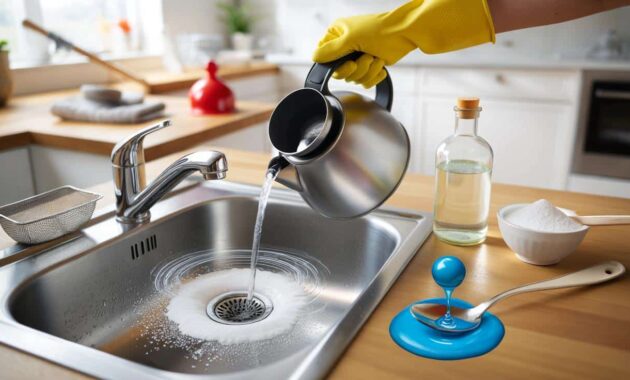
The fix is cheap, quick, and surprisingly close.
Your kitchen and bathroom drains take a daily beating from grease, food bits, hair, and soap films. When they mingle, flow slows to a crawl. Before calling a plumber or reaching for harsh chemicals, a measured, step-by-step home method can restore movement and spare your pipes. Here’s how to get results that last, plus when to switch tactics.
Why drains clog faster than you think
Grease leaves the pan warm, then cools and clings to pipe walls. Soap scum helps that film hold fast. Food particles get trapped in the sticky layer. Hair knots around it. Bacteria set up shop and produce gases that smell like trouble. The longer this stew sits, the more solid it becomes. Early action saves time and money.
Act early: a young clog is soft and movable; a mature clog is dense, smelly, and stubborn.
The pantry method that actually works
The baking soda and white vinegar duo can help, but only if you avoid the usual mistake. Don’t pour them in together. That foamy show looks satisfying yet cancels out much of the cleaning action. Stagger the steps so each ingredient does its job.
- Step 1: Sprinkle about half a cup of baking soda directly into the drain.
- Step 2: Optional boost—add a teaspoon of dish soap to cut grease films.
- Step 3: Wait 10 minutes so the powder can sit on the grime and loosen it.
- Step 4: Pour one cup of warm white vinegar into the drain and let it rest.
- Step 5: After another 10–15 minutes, flush with a full kettle of hot water.
Do not pour baking soda and vinegar at the same time. Sequence them, then finish with a hot rinse.
Why timing matters
Baking soda offers mild abrasion and absorbs greasy residues. Given a few minutes, it loosens films that trap debris. Vinegar follows by dissolving mineral traces and aiding release of softened buildup. If mixed at once, they fizz, neutralize each other too quickly, and rush past the grime without meaningful contact. The final hot water flush carries loosened material away before it resets.
When enzymes beat elbow grease
If the drain still crawls, reach for an enzymatic cleaner. These formulas use enzymes or beneficial microbes to digest organic waste—food, oils, and biofilms—at a molecular level. They shine with slow, sticky clogs and in homes with septic systems. Apply as directed, then leave it overnight so biology can work. Enzymes won’t move a solid object, though. If a bottle cap, cotton swab, or toy is wedged in the trap, no liquid will fix that.
Safety notes and where to stop
Check your pipe materials. Newer PVC tolerates hot water well; very old metal may not enjoy repeated boiling rinses. Go hot, not volcanic. Skip repeated cycles of strong acids or alkalis on fragile lines. And never combine home remedies with bleach or store-bought chemical drain openers.
Never mix any acid or alkali with bleach. The reaction can release toxic fumes and damage metal parts.
➡️ A French physicist claims to have replicated lightning energy in a lab and shocks the world
➡️ This quiet shift in modern yoga practice is changing how teachers approach beginners and injuries
➡️ A gardener explains how planting lavender near windows improves sleep and deters insects naturally
➡️ Astrology predicts a time when karmic lessons finally turn into empowerment and self-respect
If water stands still after several tries, stop. Forcing liquids into a sealed blockage can push filth into joints and gaskets, inviting leaks. At this point, switch to mechanical tools or call a pro.
Mechanical options that save a service call
Many clogs live right in the P-trap (that U-shaped bend). Removing it sounds scary, but the process is straightforward with a bucket under the trap and a towel nearby. Loosen the slip nuts by hand or with adjustable pliers, lower the trap, empty the sludge, then reassemble and hand-tighten until snug. Don’t cross-thread the plastic fittings.
For blockages deeper in the line, use a hand auger (a drain snake). Feed it in gently, rotate to bite the clog, then pull back and flush with hot water. A plunger can also help: seal the overflow with tape, fill the basin enough to cover the cup, and plunge in steady strokes.
- Bucket and gloves: keeps the mess contained and hands safe.
- Adjustable pliers: for stuck slip nuts on metal traps.
- Hand auger: reaches beyond the trap, usually up to several meters.
- Cup plunger: best for sinks and basins with a flat surface.
What works best for which clog
| Method | Best for | Contact time | Risk level | Notes |
|---|---|---|---|---|
| Baking soda + vinegar (staggered) | Grease films, soap scum, light odors | 20–30 minutes | Low | Finish with hot water; repeat weekly as maintenance |
| Enzymatic cleaner | Organic buildup, biofilm | 6–12 hours | Low | Good for septic systems; not for solid objects |
| P-trap removal | Local, chunky clogs near the basin | 20–40 minutes | Medium | Re-seat washers; hand-tighten to avoid cracks |
| Hand auger | Deeper clogs in the branch line | 15–30 minutes | Medium | Rotate gently; avoid scratching chrome finishes |
Keep the clog from coming back
Start at the source. Let cooking fats cool, then wipe the pan with a paper towel and bin it. Scrape plates before rinsing. Fit a mesh strainer to catch noodles, coffee grounds, and vegetable peels. In the bathroom, collect hair from the stopper after each use. Once a week, run a kettle of hot water through the drain to soften fresh films before they harden.
A simple monthly routine
Once a month, apply the baking soda step, wait, add warm vinegar, then flush hot. Note any slowdowns on a calendar. If you see a pattern after particular meals or products, adjust habits—a finer strainer, less oil down the sink, or switching to a milder soap can help.
Small, regular care keeps biofilm from maturing into a hard, smelly plug.
Environmental gains and building-wide wins
Gentler methods reduce corrosive chemicals in your home and in the wastewater stream. Baking soda, vinegar, and quality enzymatic cleaners break down safely in household settings. In shared buildings, consistent guidance—strain food scraps, no fryer oil down the drain, monthly hot flush—cuts maintenance visits and limits harsh products entering the system.
Extra tips that sharpen your diagnosis
If only one basin runs slow, the clog likely sits near that fixture. If multiple drains gurgle or back up, the problem may be in a shared branch or main line. A slow sink that improves when you open a nearby cleanout can hint at venting issues. Odors that fade after a hot flush suggest biofilm; odors that persist may signal a dry trap or a loose seal.
Mind water temperature. For PVC, a kettle of near-boiling water is fine once in a while, yet repeated boiling flushes on aging metal pipes invite trouble. Go hot, not scalding, and space out treatments. If you suspect a foreign object, skip liquids and go straight to the trap or an auger. That choice saves time and avoids pushing the item deeper.