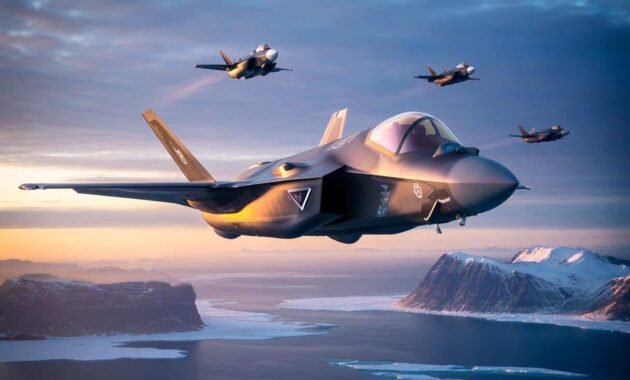
Behind closed doors, Canada’s government is quietly shaping the future of its air force, while juggling US trade friction, domestic industry worries and fierce competition between American and European defence giants.
Canada’s stealth jet saga enters a new phase
Nearly a year ago, Canada signalled it might rethink its flagship purchase of 88 F‑35A fighter‑bombers from US manufacturer Lockheed Martin. That rethink was triggered by a sharp downturn in relations with Washington, fuelled by diplomatic spats and punishing tariffs ordered by US President Donald Trump.
At that stage, Ottawa had already locked in a firm order for 16 F‑35As to replace its ageing fleet of CF‑18 Hornets. Those first jets form the core of a wider modernisation effort for the Royal Canadian Air Force (RCAF), which wants a networked, “fifth‑generation” air fleet able to operate seamlessly with NATO allies.
Yet political pressure, budget anxieties and trade disputes opened the door to fresh lobbying. Europe, and Sweden in particular, spotted an opportunity.
Saab’s counter‑offer: build Gripens in Canada
Swedish aircraft maker Saab lost out in Canada’s 2022 fighter competition, when its JAS‑39 Gripen E/F was beaten by the F‑35A. The company has since returned with an aggressive counter‑proposal aimed squarely at Ottawa’s economic and political concerns.
Saab has told Canadian officials it is ready to assemble 72 Gripen E/F fighters on Canadian soil. On top of that, it is offering six GlobalEye airborne early‑warning aircraft based on the Bombardier Global Express 6000, a business jet with strong Canadian roots.
Saab’s pitch combines combat aircraft, high‑end surveillance platforms and domestic assembly lines in a bid to sway Ottawa.
Public broadcaster CBC reported last month that this Swedish industrial plan has caught the eye of the government led by Prime Minister Mark Carney. His administration has been seeking to diversify Canada’s defence supply chains and soften the blow to local manufacturers hit by US tariffs.
Political interest versus military preference
For now, the government has not formally announced a change of course. One reason is the clear preference of the RCAF, which has consistently argued for sticking with the F‑35.
➡️ Engineers slowed land subsidence by pumping water into empty oil fields for decades
➡️ Goodbye to dark nights on Earth as a California startup plans thousands of space mirrors
➡️ Elon Musk fired so many staff he had a 20-year-old student train an entire AI engineering team
➡️ Farewell to LED bulbs: this lighting technology saves even more energy
➡️ Eclipse of the century: 6 minutes of darkness: when it will happen and where to watch it
➡️ How reducing overstimulation helps your body reset
Leaked internal documents from the fighter competition showed the F‑35A scoring around 95% on pure military capability criteria, translating into 57.1 points out of a maximum 60. That figure reflects its stealth design, advanced sensors, data‑fusion systems and interoperability with other US‑built platforms.
Within the Canadian military, the F‑35 is seen less as a single jet and more as a digital combat node tied into a broader allied network.
Senior air force officers are said to be pushing “strongly” for Ottawa to keep the original F‑35 plan intact. In August, RCAF commander Lieutenant‑General Jamie Speiser‑Blanchet told specialist outlet Flight Global that Canada is building “a very modern fifth‑generation air force” based on technology it has “never had before”.
Quiet spending on 14 more F‑35s
Despite the ongoing review, Canadian media have uncovered financial moves that point toward a deeper F‑35 commitment.
On 10 February, Radio‑Canada reported that Ottawa has already committed funds linked to 14 additional F‑35s. Defence Ministerial offices initially refused to confirm the story, stressing that only 16 aircraft had been purchased so far and that “future acquisitions are under review”.
Behind that cautious language lies a practical problem: production slots and long lead‑time components for the F‑35 are in high demand worldwide.
According to Radio‑Canada’s sources, the money now on the table is meant to secure “critical parts that require long delivery deadlines for 14 aircraft” and to ensure Canada does not “lose its place” to other customers in the queue.
Ottawa is paying to keep the door open: not a full aircraft contract, but enough to reserve hardware and production capacity.
Facing questions in Parliament, Prime Minister Mark Carney eventually acknowledged the move. “Yes, the government is paying a small amount for options,” he said. “This is useful for our defence and for our negotiations with the Americans.”
Canadian daily Le Devoir described this “small amount” as an early sign of where Ottawa is heading on the fighter issue. For military planners, it is interpreted as a quiet vote of confidence in the F‑35 path, even as politicians maintain the appearance of a live debate.
What’s really at stake for Canada
Canada’s fighter choice is not just a question of which jet looks better on paper. It sits at the intersection of alliance politics, Arctic security, industrial strategy and trade retaliation.
- Alliance commitments: As a founding NATO member, Canada is expected to contribute credible airpower to allied operations.
- Arctic defence: With a vast northern territory, Canada needs aircraft that can operate in harsh conditions and plug into North American air defence networks.
- Industrial policy: The government wants jobs, technology transfer and long‑term work for Canadian aerospace companies.
- Trade tensions: US tariffs on Canadian sectors have made dependence on American kit politically sensitive.
The F‑35A offers tight integration with the US and other F‑35 operators, including the UK, Italy, Norway and many more. It also fits naturally into NORAD, the joint US‑Canada air defence command. That compatibility carries real weight at a time of heightened tensions with Russia and growing focus on the Arctic.
Saab’s Gripen package, by contrast, hints at more Canadian control over production and potential export opportunities, given its proposed local assembly and the involvement of Bombardier‑based platforms.
Costs, timelines and operational risk
Securing long‑lead components for 14 extra F‑35s is partly about managing risk. Global demand for the jet is high, and supply chains for specialised parts remain stretched.
If Canada waits too long, it could face delays of several years before new F‑35s reach its squadrons. That would keep CF‑18s in service longer than planned, raising maintenance costs and reducing combat capability.
On the other hand, locking in more F‑35‑related spending makes it politically harder to walk away. Critics argue that these “option” payments effectively nudge Canada towards the US aircraft without a full, transparent debate about alternatives.
The more money Canada puts into F‑35 infrastructure and parts, the more switching paths starts to look like scrapping a half‑built house.
What fifth‑generation means in practice
Both sides of the argument point to “fifth‑generation” capabilities, a term that can sound abstract. In practical terms, it usually refers to a combination of stealth, advanced sensors, high data connectivity and integrated weapons systems.
For a pilot, that translates into seeing threats earlier, sharing that information instantly with other aircraft and ground forces, and attacking from positions where the jet is harder to detect. In complex environments, such as a conflict with a peer adversary equipped with modern air defences, those traits can significantly increase survivability.
Canada’s geography adds another layer. Imagine an F‑35A patrolling the Arctic, quietly feeding a live picture of air and maritime activity back to NORAD command centres while linking up with US and Canadian radar sites. Any intruding aircraft or missile track can be cross‑checked and engaged in minutes, rather than tens of minutes.
A Gripen‑based fleet, fitted with suitable sensors and data links, could provide strong capability as well, particularly if backed by GlobalEye early‑warning aircraft. The difference lies in how tightly that system would be integrated with US networks, and how much custom work Canada would need to do to achieve a similar level of connectivity.
Looking ahead: scenarios for Canada’s fighter fleet
Defence analysts often sketch three broad scenarios for Canada’s next steps:
| Scenario | Core choice | Key consequences |
|---|---|---|
| Full F‑35 commitment | Proceed with 88 F‑35As, including the 14 now being prepared | Maximum interoperability with US and NATO; higher acquisition and sustainment costs; limited industrial flexibility |
| Mixed fleet | Smaller F‑35 core plus Gripen or other types | More industrial diversity; more complex training and logistics; potential capability gaps between fleets |
| Alternative pivot | Cancel F‑35 expansion and adopt Gripen package | Greater domestic assembly and leverage for Canadian industry; tougher integration into US‑centric defence networks |
Each option carries trade‑offs between military performance, sovereignty over supply chains and political relationships with Washington and European partners. For now, Ottawa is signalling that it wants to keep its options alive, even as the balance of evidence points towards a larger F‑35 role in Canada’s skies.