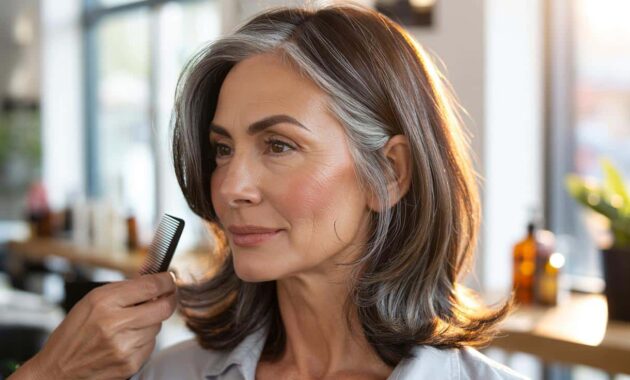
Color pros call it a soft pivot: blend rather than mask, care as much as color, keep life simple between appointments. The goal isn’t to erase silver. It’s to temper contrast, add shine, and let texture look intentional.
Why gray hair changes the face
Gray begins when melanocytes inside the follicle slow down or vanish. Genetics, hormones and oxidative stress drive that shift. Pigment fades, and the fiber changes too. Strands often feel drier, rougher and more porous. They grab light and bounce it back, which makes streaks look brighter than the rest of the hair.
That bright-silver contrast can sharpen facial features. Lines read deeper. Shadows look cooler. Some love that salt-and-pepper authority. Others see a harder edge on camera or at work. This is where softer color care lands: reduce contrast, keep dimension, and skip the heavy upkeep of full-coverage dye.
The real trick isn’t repainting every strand. It’s managing contrast, reflection and texture so light glides rather than catches.
The soft color-care wave
Gray blending at the salon
Stylists weave micro-lowlights and reverse balayage through silver zones to melt them into the base. A root smudge blurs the line at the scalp. A sheer gloss boosts reflection and seals the cuticle. The silver stays, but it sits inside a gradient. Regrowth softens, appointments spread out, and the face looks less stark under daylight or flash.
Gray blending softens demarcation, keeps nuance, and buys time between color sessions.
At-home tints and glosses
Deposit-only masks, pigmented conditioners and glosses sit on the surface. They don’t lighten or open the cuticle. They cancel unwanted tones and add slip. Silver that skews yellow loves violet or blue-violet. Brunettes fighting copper reach for blue. The pigments fade in a few shampoos, so rhythm matters more than strength.
- Brunettes: ash-brown or cocoa tones mute white flashes without a hard edge.
- Blondes: beige or pearl glazes veil contrast and keep brightness clean.
- Natural silver: a purple shampoo once or twice a month cools sun and heat yellowing.
Plant pigments making a return
Cocoa powder carries soft brown pigments that lay down a gentle veil. Mix one tablespoon into a scoop of silicone-free conditioner. Apply on clean, towel-dried hair for 15–20 minutes. Rinse clear. Repeat regularly to build tone. Expect shading, not full coverage. Coffee, black tea, sage and rosemary deliver a similar whisper of tone and nice gloss.
Henna and indigo shift the game. Henna leans warm and grabs hard. Indigo leans blue and deepens. Used alone or layered, they cover gray well but don’t lighten. They linger for months and can complicate a future return to oxidative color. Always strand-test and patch-test. Protect towels, as wet hair can bleed pigment.
➡️ The hidden dangers of reusing ice cream tubs that many people ignore
➡️ Leeds police arrest California woman in multi state credit card fraud investigation
➡️ €42 billion Scandium hidden since 1987 by a Breton family, denounced by a neighbor Support
➡️ NASA captures detailed images of a distant moon covered in methane lakes resembling an alien Earth
Plant pigments suit patience: subtle on day one, better after week two, convincing by week three.
What pros and studies agree on
There’s no reliable way to reverse graying across the head. Rare repigmentation happens in specific medical contexts, and it’s not predictable. The practical win sits in optics. Smooth the surface. Raise shine. Tune tone. Lower contrast around the face where cameras and eyes focus first.
Colorists warn against a flat, dark resize. On fair skin it can look severe. On deeper skin it can flatten shape. Sheer glazes keep transparency so light can pass through. Tiny face-framing foils lift or deepen just enough to balance undertone. A crisp cut multiplies the effect: clean lines, controlled volume, a soft fringe, and ends that reflect light.
Step-by-step plan for a gentle camouflage
1) Map the silver. Note where it clusters: part, temples, hairline, crown. Decide whether you want to mute contrast or highlight it.
2) Pick the tool. At the salon, ask for gray blending with ultra-fine lowlights, a blurred root and a sheer gloss. At home, start with a clear or lightly tinted gloss to test tone, then add a weekly pigmented mask.
3) Try cocoa safely. Blend cocoa powder with conditioner, apply to targeted zones, leave 15–20 minutes, rinse. Repeat two to three times the first week, then weekly.
4) Repair and protect. Hydrate with glycerin or aloe. Replenish lipids with light plant butters or esters. Use small doses of protein if hair feels limp, and heat protection before tools. Add UV filters in summer to protect silver from yellowing.
5) Fine-tune tone. Use purple shampoo sparingly on white or silver. Use blue shampoo occasionally on brunettes with brass. Overuse can dull shine, so rotate with a gentle cleanser.
Choices, limits and costs
Deposit-only care fades with washing. It needs routine. Pigments can transfer onto pillowcases or collars when hair is soaked. Plant-based color gives a soft, cared-for look but won’t blank out a strong white hairline. Henna and indigo grip hard and steer the palette, which suits fans of bold, long-wear results.
Pricing varies by city, but a meticulous gray blend can cost more than a standard single-process. Appointment spacing often doubles, which balances the spend across months. At-home toners and masks are affordable per use, but they reward consistency. The environmental picture improves with fewer retouches and ammonia-free formulas, yet water use and packaging still matter. Refill formats and concentrated products help.
| Option | Coverage on gray | Longevity | Maintenance | Notes |
|---|---|---|---|---|
| Salon gray blending | Medium, natural | 8–12 weeks | Quarterly | Soft regrowth, high finesse |
| At-home gloss/toner | Low to medium | 3–6 washes | Weekly | Shine and tone without lift |
| Plant pigments (cocoa, tea) | Sheer veil | 2–4 washes | 2–3 times weekly, then weekly | Builds subtly, low risk |
| Henna/indigo | High | 6–12+ weeks | Every 1–2 months | Strong direction, hard to lighten |
Style beyond color
Gray hair looks newer with a sharper silhouette. Ask for blunt yet soft edges, movement near the cheekbone, and a fringe that splits light. Define brows to frame the eyes. Calibrate makeup undertone: warmer cheeks lift cool silver; cooler lips balance warm brunettes. Rinse out chlorine and hard-water minerals fast to prevent yellowing. Use a chelating wash monthly if water is mineral-heavy. Keep tension low during brushing to prevent breakage in a stiffer fiber.
Extra tips you can use this week
Run a quick porosity check. Mist a strand and watch: fast absorption signals high porosity and a need for richer conditioners and sealing oils. Slow absorption points to lighter care and more frequent glosses for shine.
Do the color safety trio every time you switch products: a patch test on skin, a strand test for tone, and a towel test to see if pigments bleed when wet. This saves headaches and shirts.
Try this budget plan. Month 1: a pro gray blend with a root blur. Weeks 3–8: weekly at-home gloss and one purple or blue shampoo use as needed. Month 3: a mini-salon refresh around the face only. This cadence lowers cost per month and keeps photos looking current.
Thinking about henna or indigo? Note future moves. Oxidative dyes can react unpredictably on top of plant color. Keep a journal of dates, brands and shades. Bring it to your colorist before any change of path.
Seasonal tweak: summer UV raises yellow in silver and red in brunettes. Add hats, UV sprays and fewer hot-tool passes. Winter heating dries fiber, so boost humectants and seal ends on wash days. Small shifts keep the blend consistent all year.
Youthful hair isn’t a single shade. It’s smart contrast control, steady care and light that moves across the cut.