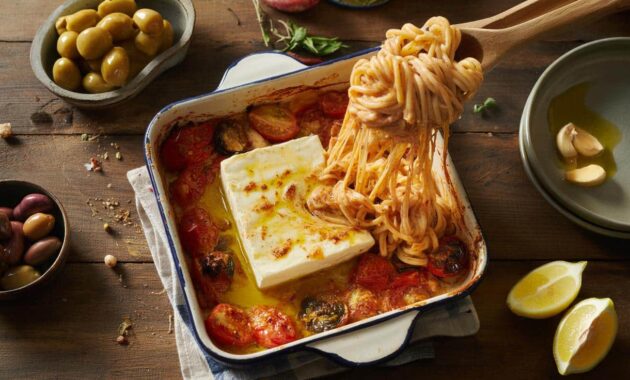
The first time I made baked feta pasta, it was a Tuesday night and I was tired enough to consider cereal for dinner. My phone was propped against a jar of rice, autoplaying yet another video of a bubbling block of cheese drowning in tomatoes and olive oil. I had half a block of feta in the fridge, some wrinkling cherry tomatoes and an open bag of pasta. That was all it took for curiosity to win over laziness.
Twenty-five minutes later, the whole apartment smelled like a tiny trattoria with Greek grandparents. The feta had collapsed into a salty, creamy sauce, the tomatoes had burst into jammy sweetness, and I was eating straight from the pan, leaning on the counter, half in disbelief.
This thing went viral for a reason.
The TikTok pasta that quietly hijacked our weeknights
By the time most people heard the words “baked feta pasta,” TikTok had already moved on to a new obsession. Yet the recipe stayed, like that one friend everyone keeps inviting back because they’re low‑maintenance and fun. There is something almost childishly simple about throwing a block of cheese in a baking dish, surrounding it with tomatoes and garlic, then walking away. No stirring, no hovering, no chef-y skills.
When it comes out of the oven, it looks like a restaurant dish that you somehow… didn’t work for. That’s the magic. You get browned edges on the feta, blistered tomatoes, a glossy puddle of olive oil, and suddenly a basic pantry dinner feels like a tiny Mediterranean holiday squeezed into a busy weeknight.
One woman I spoke to, a nurse working 12-hour shifts, told me she cooked baked feta pasta four nights in a row during the darkest part of winter. Not because she lacked imagination, but because it was the only recipe she trusted to deliver flavor without mental effort. She’d dump the tomatoes and feta in a dish, throw it in the oven, shower, then come back to something that tasted like she’d put in way more work than she actually had.
On social media, people riffed on it like a shared language. Some added spinach, others roasted peppers, a few rebels swapped feta for goat cheese. A college student proudly posted his “first real meal” made in a dorm kitchenette. Older home cooks chimed in with, “We’ve been doing this for years, we just didn’t film it.” That’s the quiet power of a viral dish: it gives you permission to enjoy what has always worked.
Part of the reason this pasta spread like wildfire is psychological as much as culinary. The recipe taps into three deep cravings at once: speed, comfort, and the illusion of travel. In one pan you get the salty tang of Greek feta, the sunny sweetness of tomatoes, the grassy hit of good olive oil, the peppery tickle of basil or oregano.
There’s also the visual factor. Baked feta pasta is insanely photogenic: the big white block, the bright red tomatoes, the glug of golden oil. Social feeds love color and clear shapes, and this dish delivers both. Underneath the aesthetic, though, lies something deeply pragmatic: **this is a pantry dinner disguised as a Mediterranean fantasy**. That’s why people keep coming back to it long after the first wave of likes.
How to nail Mediterranean baked feta pasta every single time
Start with a small, ovenproof dish that feels almost too crowded once you’ve filled it. That snugness helps the tomatoes steam and burst, creating that silky, concentrated sauce. Drop a whole block of feta in the middle, scatter a couple of handfuls of cherry or grape tomatoes around it, and tuck in a few smashed garlic cloves. Then be generous with olive oil. Like, a real drizzle, not a polite one.
➡️ The world’s rarest parrot begins a historic breeding season
➡️ The clever hack for cleaning sticky jar lids with hot water
➡️ The neighbour who reported an illegal electrical hookup saw inspectors arrive the very next day
➡️ $9 billion, 730 missiles: the US–Saudi arms deal sparking fresh controversy
➡️ How often can you dye your hair without damaging it?
Season with salt and a good amount of freshly ground black pepper, maybe a pinch of dried oregano or chili flakes if you like a tiny kick. Slide the dish into a hot oven, around 400°F (200°C), and walk away for 25–30 minutes, until the tomatoes are blistered and the feta is soft and browned at the edges. While that happens, boil your pasta until just al dente. The timing naturally syncs up.
Most home cooks trip over the same small details. The first is salt. Feta is already salty, so if you’re seasoning your pasta water “like the sea,” just dial it back a notch. Your taste buds will thank you later. Another common mistake: baking everything until it’s dry and squeaky. If the tomatoes look a little too juicy at first glance, that’s good news. That liquid is your free sauce.
The second trap is using low‑fat feta. It doesn’t melt the same way, and you end up with a weird, crumbly paste instead of a lazy, creamy sauce. *This is the moment where full‑fat cheese earns its keep.* If you’re nervous about richness, you can always balance it later with a squeeze of lemon juice or a handful of fresh herbs. Mediterranean cooking rarely aims for perfectly “light”; it aims for satisfying.
When everything comes out of the oven, the only work left is to mash and toss. Take a fork and gently crush the softened feta into the tomatoes, swirling in the olive oil and all those garlicky juices. Then fold in the hot pasta, letting the starch help the sauce cling to every curve and edge. A handful of fresh basil or parsley at this point makes the whole dish taste like it came out of a seaside kitchen rather than your slightly chaotic one.
“I started making baked feta pasta during lockdown,” a friend told me, “and it became my ‘I can still handle this’ dinner. It was one small, delicious thing I could control.”
- Use whole cherry or grape tomatoes: they hold their shape and turn jammy instead of watery.
- Choose a block of **firm, full‑fat feta**: it melts into creaminess instead of crumbling into dust.
- Roast hot and fast: high heat gives you blistered skins and deep flavor without babysitting.
- Finish with acidity: a squeeze of lemon or splash of white wine wakes the whole dish up.
- Keep it flexible: add olives, spinach, or chickpeas when you want more Mediterranean vibes.
Why this “lazy” pasta actually feels like self‑respect
There’s a quiet relief in admitting that some of the best meals come from not trying so hard. Baked feta pasta is a recipe that shrugs off performance cooking and leans into pleasure cooking. You throw things in a pan, you wait, you stir, you eat. Let’s be honest: nobody really does this every single day, but the nights when you do, everything feels a bit softer around the edges.
Maybe that’s why people share this particular dish so much. It carries an unspoken message: you’re allowed to care for yourself in ways that don’t look complicated. You’re allowed to have dinner that tastes like a vacation, even if you ate it standing over the sink, scrolling on your phone, pasta spoon in the other hand.
The Mediterranean angle isn’t just about flavors, either. It’s about a slower rhythm hidden inside a fast recipe, a reminder that pleasure can be simple, cheap, and waiting in your pantry. When a recipe goes viral and somehow still earns a quiet place in our regular rotation, that says something. Not about trends, but about what we’re really hungry for.
| Key point | Detail | Value for the reader |
|---|---|---|
| Simple method | One pan in the oven, pasta on the stove, minimal prep | Low stress on busy nights with reliably good results |
| Mediterranean flavors | Feta, tomatoes, olive oil, herbs, optional olives or lemon | Restaurant‑level taste from basic supermarket ingredients |
| Endlessly adaptable | Swap veggies, add protein, change pasta shapes or make it gluten‑free | One core recipe that fits different diets, moods, and seasons |
FAQ:
- Can I use crumbled feta instead of a block?Yes, but a block works better: it bakes more evenly, browns nicely, and gives you that creamy center; if you only have crumbled feta, pack it tightly in the center of the dish so it behaves more like a single piece.
- What type of pasta works best?Short shapes like fusilli, rigatoni, penne, or shells cling to the sauce beautifully, but you can absolutely use spaghetti or linguine if that’s what you have on hand.
- Can I make it without an oven?You can simmer tomatoes, garlic, and feta in a covered pan on medium heat until saucy, then mash and toss with pasta, though you’ll miss a bit of that roasted, caramelized depth.
- Is there a dairy‑free option?Try a good-quality vegan feta that melts, or swap in a thick cashew cream stirred into roasted tomatoes and garlic; the flavor profile changes, but the comfort factor stays.
- How do I add protein to baked feta pasta?Stir in canned chickpeas, grilled chicken, sautéed shrimp, or even leftover roasted veggies right after you mix the sauce with the pasta, letting everything warm through together.