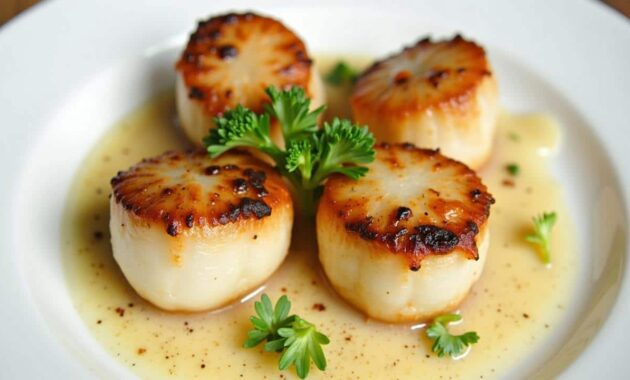
Cooking scallops at home sounds like restaurant territory, yet one simple method can turn a regular dinner into something quietly memorable.
Scallops at home, not just for fine dining
Scallops still intimidate a lot of home cooks. They’re associated with white tablecloths, big bills, and chefs in immaculate jackets. Yet behind the image sits a very short ingredient list and a fast, almost minimalist technique.
The French chef Jean-François Piège has been championing that idea with his “at home” style scallops: cooked in their shells, under a fierce grill, with a fragrant herb butter. The concept is rooted in professional kitchens, but the execution is closer to a weeknight than a banquet.
Good scallops ask for confidence more than skill: high heat, short time, and the courage to stop cooking while they still look slightly underdone.
Understanding the scallop you’re buying
Before any butter hits the bowl, it helps to understand what you’re actually working with. Scallops are bivalve molluscs, related to clams, harvested mainly in the North Atlantic and parts of the Mediterranean. Inside the shell you find two key parts:
- The “noix” (the white muscle): firm, slightly sweet, and the star of the plate.
- The coral (orange roe): a softer, more marine-tasting part that some adore and others quietly set aside.
Both are edible. In French cooking, the white muscle usually gets the attention, especially for this style of preparation, where texture counts as much as flavour.
Season, freshness and why it matters
In France, wild scallop fishing is regulated from October to mid-May, with winter being the high point of quality. In the UK and US, seasons vary by region, but the same principle applies: colder waters tend to mean firmer, tastier shellfish.
When shopping, ask your fishmonger when the scallops were landed. Fresh ones smell clean, slightly sweet, not aggressively briny. If you’re buying them still in the shell, you’re off to a strong start for this recipe.
Fresh scallops should smell of the sea on a cold morning, not of a warm harbour in summer.
➡️ NASA Confirmed It : China Will Slow Down Earth’s Rotation With This Titanic Project
➡️ What garden birds really need you to do this winter besides feeding them
➡️ The USB port on your TV is not useless: here are 4 smart ways to use it
The house-style scallops: cooked in the shell with herb butter
Piège’s approach centres on simplicity: scallops roasted directly in their shells under a grill, bathed in what French menus call a “beurre maître d’hôtel” – a classic parsley butter that gets a lift from extra herbs and lemon.
The herb butter that does most of the work
For five scallops, the proportions are straightforward and forgiving. The butter carries the dish, so use one you’d happily spread on bread.
| Ingredient | Quantity | Role |
|---|---|---|
| Semi-salted butter | 160 g | Rich base, seasons the scallops |
| Flat-leaf parsley | 40 g | Fresh, almost grassy note |
| Cerfeuil (chervil) | 40 g | Anise hint, softens the flavour |
| Estragon (tarragon) | 20 g | Licorice aroma, sharp definition |
| Black pepper | To taste | Heat and backbone |
| Lemon juice | ½ lemon | Acidity to cut the richness |
Herbs should be chopped with a knife, not blitzed. A mixer warms and bruises them, dragging out moisture and muting their brightness. Hand-chopping takes a few minutes more, but it keeps flavour intact.
The herb butter can be made hours ahead and left in the fridge, giving the flavours time to settle into the fat.
Assembling the scallops in their shells
The distinctive detail of this method is keeping the scallop attached to the shell. The little white “nerve” that anchors the muscle stays in place. That connection helps the scallop sit comfortably while the butter melts around it under the grill.
Place each cleaned scallop in its concave shell. Top with a generous spoonful of the herb butter, adjusting to taste. Some cooks prefer just a thin coating; others let the butter puddle in the shell, creating a small, luxurious sauce.
The 90-second cooking window
The biggest trap with scallops is overcooking. Their delicate structure tightens quickly. A minute too long and the flesh turns bouncy and resistant instead of gently springy.
Piège’s guideline is strikingly short: between 1 minute 30 seconds and 2 minutes under a very hot grill. That’s the whole cooking time. You’re aiming for scallops that are just opaque on the outside, slightly translucent at the centre, and very warm rather than raging hot.
The goal is a strange balance: “almost raw and hot at the same time,” soft to the bite yet fully aromatic from the melted butter.
Once they come out of the oven, speed matters. Finish them immediately with a few grains of fleur de sel, a last twist of black pepper, and fine zest of lime. The lime zest lifts the dish, adding a citrus perfume without flooding it with juice.
Serving: from grill to table in seconds
Hot shells are awkward to handle. French chefs often nestle them on a folded napkin or a bed of coarse salt in a platter, which stops them sliding and keeps the butter where it belongs.
On the table, they need almost nothing alongside. A slice of crusty bread to mop up the herb butter is arguably non-negotiable. A simple green salad, dressed lightly, can stand nearby without competing.
Variations without losing the spirit of the dish
The framework is flexible as long as you respect the short cooking time and the basic butter technique. Here are a few tweaks that stay close to the original spirit:
- Swap lime zest for orange or yuzu when you want a softer or more exotic citrus note.
- Add a tiny splash of dry white wine or Noilly Prat to the shell before grilling for a faintly fortified aroma.
- Fold a minced shallot into the butter if you like a gentle onion sweetness.
- Use unsalted butter and season more assertively if semi-salted butter is hard to find locally.
What “maître d’hôtel butter” actually means
The phrase sounds grand, but it refers to one of the simplest flavoured butters in French cooking: soft butter mixed with chopped parsley and a squeeze of lemon. Traditionally, it’s spooned over grilled meat or fish.
In this scallop version, parsley gets help from chervil and tarragon. Those herbs belong to the classic French “fines herbes” family, known for their delicate, fast-fading aromas. They shine in quick-cooking dishes where heat is brief but intense.
Risk zones: what can go wrong and how to avoid it
Two things derail this recipe more often than anything else: temperature and timing.
If the grill is not fully hot, the scallops sit too long in gentle heat. The butter melts slowly, giving the texture time to toughen. Preheating the grill until it’s almost alarming is key; you want the top of the oven roaring.
The second risk is distraction. Ninety seconds is barely enough to refresh your drink, let alone scroll your phone. Standing in front of the oven, watching the butter foam and brown slightly around the edges, is the most reliable way to judge doneness.
How this fits into a wider festive menu
Because the dish is rich but small, it works particularly well as a festive starter. The prep can be done almost entirely ahead: make the butter, clean the shells, assemble everything, then chill. When guests sit down, you only need a couple of minutes of active heat.
In a Christmas or New Year’s menu, it sits comfortably before a lighter main course such as roast fish or poultry. For drinks, dry sparkling wine, a Chablis-style Chardonnay, or a crisp Albariño all stand up nicely to the butter while respecting the shellfish.
Think of these scallops as a short performance at the start of the evening: brief, precise, and gone almost as soon as they arrive.
For anyone still wary of cooking scallops, this approach offers a manageable test. The shells contain the juices and protect the flesh, the butter covers minor timing errors, and the grill does the heavy lifting. The result feels restaurant-level, but the method belongs firmly in a home kitchen.