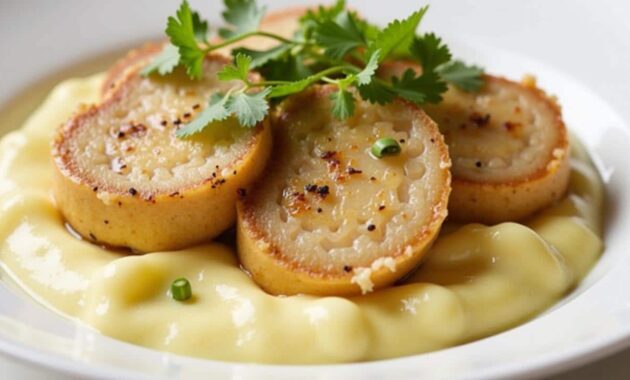
Foie gras is usually associated with restaurant kitchens, chefs in white jackets and frightening price tags. Yet a growing number of French home cooks claim they’re making a silky, festive terrine in an everyday microwave, for a fraction of the cost and with no professional skills at all.
A festive showpiece without chef-level skills
Foie gras terrine has long carried an aura of intimidation. In France, many people simply order it from a traiteur or buy a small packaged block at the supermarket, then wince at the bill. The idea of preparing it at home often feels risky: long oven cooking, tricky temperatures and the fear of ruining an expensive piece of meat.
A simplified method, inspired by popular French recipe platforms, is quietly breaking those barriers. The twist: instead of the traditional bain-marie in the oven, the foie gras is cooked gently in a standard microwave. No thermometer, no specialist gear, and no cordon bleu training.
With the right timing, the microwave becomes a precise tool for gently “mi-cuit” foie gras, even for beginners.
The approach is based on short, controlled bursts of heat. The cook keeps checking both texture and temperature, aiming for that classic result: a smooth, sliceable terrine with visible fat around the edges and a rich, almost buttery centre.
How the microwave method actually works
The starting point is simple: a lobe of raw duck foie gras, around 400–500 g. That size comfortably feeds four to six people as a festive starter, especially when served with bread and chutney.
Preparation: the only “technical” step
The liver is first soaked for roughly an hour in cold water with a handful of coarse salt. This helps clean and firm the flesh. After drying it carefully, comes the stage that scares many beginners: deveining.
In practice, this is less dramatic than it sounds. Using a small sharp knife, you gently open each lobe and trace the main veins, pulling them out without obsessing over perfection. A few remaining fine threads will not ruin the result.
Once cleaned, the foie gras is seasoned. A common ratio is around 3 g of fine salt for 500 g of liver, plus freshly ground pepper. Some cooks add a pinch of sugar or four-spice mix, but that remains optional.
➡️ Meteorologists warn Arctic atmospheric stress is peaking just before March
➡️ New health guidelines for defrosting meat in 2026: what’s really changing in your kitchen
➡️ Day will turn to night: the century’s longest solar eclipse now has an official date
➡️ This small conversational reset helps mid-discussion
The seasoned pieces are then packed tightly into a small terrine dish, with two tablespoons of sweet wine such as Monbazillac or white Port poured over the top. The dish rests in the fridge for at least an hour, then is brought back towards room temperature before cooking.
Cooking by seconds, not by guesswork
The key rule often shared among home cooks is straightforward:
- About 20 seconds of microwave cooking for every 50 g of foie gras
- Cook in short bursts, pausing between each
- Check the centre with a knife: the blade should come out just warm
For a 400 g terrine, that means roughly 2 minutes 20 seconds in total. For 500 g, the time extends slightly, but the cook observes rather than blindly following a timer.
The signal that the foie gras is on track: fat starting to melt gently around the edges, without the middle turning grey or overcooked.
Between each 20-second burst, the terrine is allowed to sit for a few moments so the heat spreads evenly. This cautious rhythm prevents the sudden overheating that can ruin texture.
Why home-made foie gras is far cheaper
Behind the buzz, the financial argument is strong. Buying a raw duck foie gras lobe remains an indulgence, but the cost per person dramatically undercuts most ready-made terrines from delicatessens, especially for Christmas or New Year.
| Option | Approximate cost | What you get |
|---|---|---|
| Shop-bought terrine | High price for a small block | Limited quantity, additives possible |
| Home-made, microwave | Raw foie + salt, pepper, a bit of wine | Generous terrine for several guests |
On top of the savings, the home cook gains full control. They choose the origin of the foie gras, the amount of salt, and whether to avoid extra preservatives. Many appreciate knowing exactly what is on the plate at a time of year when rich food is everywhere.
There is also a psychological benefit: serving a home-made terrine creates a sense of occasion. Guests usually assume the cook has spent hours carefully watching an oven, not a few minutes managing the microwave.
Key gestures for a foolproof result
The method may be simple, but a few precise gestures help avoid disappointment.
- Use a small terrine so the foie gras is well packed and cooks evenly.
- Cut the cooking time into short bursts to prevent overheating.
- Stop as soon as the knife tip feels warm, not hot.
- Press the foie under a light weight once cooked, for a tighter, prettier slice.
- Chill for at least 48 hours before serving.
Patience in the fridge is as crucial as timing in the microwave: those two days transform flavour and texture.
During that rest in the refrigerator, the melted fat rises and solidifies, the seasoning spreads evenly and the overall structure stabilises. The terrine becomes easier to slice neatly, and the taste softens from harshly livery to round and delicate.
Serving ideas that don’t overshadow the terrine
When the big day arrives, the foie gras is usually served in thin slices. Simple accompaniments work best: lightly toasted sourdough or country bread, or for a more luxurious touch, brioche toasted just enough to crisp the edges.
A sweet element often joins the plate: onion confit, fig chutney, or slices of apple gently cooked in butter. They bring acidity and fruitiness that cut through the richness.
For drinks, many follow the classic French pairing with sweet white wines, but a dry sparkling wine or a light red, served cool, also works for those who prefer less sugar.
What “mi-cuit” actually means
The term “mi-cuit” often appears on labels and restaurant menus but can be confusing. It literally means “half-cooked”. In practice, it refers to foie gras gently heated to a core temperature that cooks it enough for preservation and safety, while still keeping a soft, almost creamy texture.
Industrial products are usually sterilised at much higher temperatures, which extends shelf life but can firm up the texture and mute the flavour. The home microwave method seeks that middle ground: safe, yet still luxurious on the tongue.
Risks, limits and when not to cut corners
Even with this simplified method, attention remains necessary. Foie gras is sensitive to temperature. If the terrine is microwaved too long, the fat can separate excessively and the centre can turn grainy. That is why the short-burst approach and knife test matter.
Hygiene also needs care. The liver is handled raw, deveined and seasoned by hand. Clean boards, sharp knives and cold storage are non-negotiable. Once cooked, the terrine should be kept chilled and consumed within a few days.
There is also the broader ethical question. Foie gras production remains controversial, and some consumers prefer to avoid it altogether. For those who choose to eat it, using a high-quality product from a trusted supplier at least gives some control over origin and farming standards.
How this method can reshape a holiday menu
For a host juggling budget and time, the microwave terrine changes the planning. The dish can be made two or three days in advance, freeing the oven for roasts and gratins on the big day. It also offers a relatively stress-free centrepiece: once chilling, it needs no last-minute attention.
Some cooks even turn it into a group activity: an afternoon “foie gras session” with friends, where several terrines are prepared at once, then shared. Each person can tweak seasoning, wine choice or spices, creating variations without increasing difficulty.
For those comfortable with rich, festive fare, this approach offers a rare combination: restaurant-style starter, minimal equipment and a final bill that doesn’t overshadow the rest of the meal. The microwave, usually relegated to reheating leftovers, suddenly earns a place in the Christmas strategy.