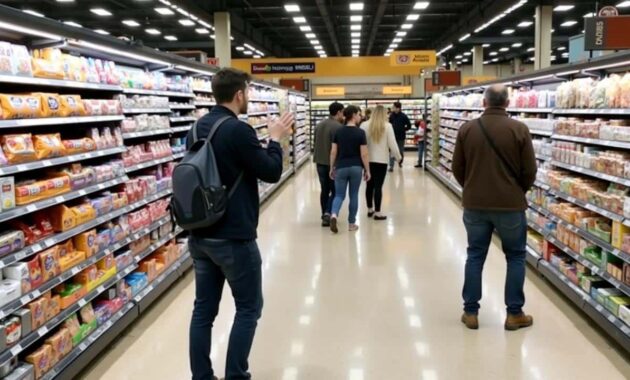
The pasta has migrated, the cereals have swapped sides, and the snacks seem to pop up in new corners every month. Those moving shelves are not a glitch in the matrix, but a carefully calibrated strategy aimed straight at your wallet.
Why your supermarket keeps moving everything around
Most shoppers assume rearranged aisles are a sign of renovation, clumsy management, or a well-meaning attempt at “better organisation”. Retailers are banking on that impression.
Constant reorganisation is a marketing tool designed to break your routine and nudge you into spending more time – and money – in store.
When you know exactly where everything is, your visit becomes a high-speed mission: in, grab, pay, out. Supermarkets dislike that kind of efficiency. They’d rather turn your visit into a small wandering tour, passing by products you never planned to buy.
By shifting the layout regularly, retailers force you to look up, scan shelves, and walk extra aisles. Behavioural studies show that time spent in-store tends to correlate with a bigger basket. Even tiny increases count. When average profit margins hover around a couple of percentage points – around 1.8% in the UK in 2023, according to industry figures – every extra impulse purchase matters.
The psychology of “lost” shoppers
Supermarket strategists know your brain runs on habits. If you always turn right for milk and left for bread, your spending becomes predictable. They want to disrupt that autopilot mode.
- You notice new brands you normally ignore.
- You “reward” yourself with an unplanned treat for the extra effort.
- You add back-up items “just in case” you can’t find your usual one again.
That mild irritation you feel when your favourite yoghurt has moved three aisles away is part of the calculation. Not enough frustration to drive you out of the store, just enough to slow you down and make you look around.
Health rules that reshuffle the shelves
Marketing isn’t the only force behind this permanent game of musical chairs. Public health policy is changing the supermarket map too.
In several countries, including the UK, new regulations push retailers to make less healthy food less visible. That means fewer sugary snacks by the till, fewer promotions on high fat, salt and sugar products, and less prime space for ultra-processed options.
Regulatory pressure is quietly shifting shelf space away from highly processed foods and towards items seen as healthier or more balanced.
➡️ Rheumatoid arthritis: no cure yet, but fresh clues on how to stop it before it starts
➡️ Why placing lemon slices in water overnight creates a refreshing drink with subtle flavor
➡️ After Exercises in the Pacific and Philippine Sea, USS George Washington Returned to Japan
➡️ It Took China Just 2 Seconds To Smash This Hyperloop World Record That Could Redefine Future Trains
When a law says chocolate bars can no longer dominate the checkout area, supermarkets must rethink entire sections. That ripple effect explains why you might find crisps further back, while nuts, fruit, or low-sugar options move forward.
Who wins and who loses visibility?
Look closely and you’ll see a hierarchy on the shelves:
| Type of product | Typical new position | Likely effect |
|---|---|---|
| High sugar snacks | Further from tills, less eye-level space | Fewer impulse grabs |
| Wholegrain, low-sugar options | More central and eye-level | Higher visibility, easier to pick |
| Fresh produce | Front-of-store, bigger islands | Healthier image for the retailer |
| Budget staples | Lower shelves or side aisles | Need more effort to find |
This shift isn’t purely altruistic. Healthier ranges and private-label “light” products often carry attractive margins too. The health argument simply gives retailers a strong public justification for a layout that can also boost profit.
New products need a stage, not a shelf
There’s another reason your familiar brand keeps changing neighbours: launches. Supermarkets are under constant pressure from manufacturers to give new products visibility.
A new cereal, plant-based burger, or premium ready meal doesn’t stand a chance buried on the bottom shelf. It needs a prime spot, at eye level, often near related categories where your gaze already lingers.
When brands pay for presence, that can mean your usual favourites are pushed aside or shifted to a less visible location.
This is why seasonal or trendy items pop up in unexpected places – barbecue sauces in the meat aisle, “limited edition” sweets near the drinks section, vegan options near the fresh produce. Each move is meant to make you think, “Oh, that looks interesting,” and toss it into your trolley.
Why the same store can feel new every month
Retailers track sales data obsessively. If a promotion works well at the end of aisle four, they’ll try similar setups with other products. Poor performers get demoted, pushed lower or further away. Strong sellers may be relocated to help lift weaker items around them.
The result is a quietly shifting landscape. You don’t always notice each change, but together they keep you scanning shelves instead of walking on autopilot.
Stock management and the anti-waste argument
Beyond sales tricks and health laws, there’s a very practical reason products move: stock rotation. Supermarkets handle huge volumes, and unsold goods cost money twice – when they’re bought in, and when they’re thrown away.
To reduce losses, items close to their use-by or best-before date often get pulled forward. You’ll see them on special racks, end-of-aisle displays, or marked-down “yellow sticker” sections.
Reorganising shelves helps push short-dated products in front of your eyes, cutting food waste and protecting margins at the same time.
This anti-waste approach is increasingly used as a green selling point. Chains highlight how many tonnes of food they “save” each year by discounting or redistributing stock before it spoils. For shoppers, it can mean genuine bargains – if you can plan meals around what’s on offer in that section.
Logistics hiding behind the labels
Distribution centres, delivery schedules, and supplier contracts all influence layout choices. A product that suddenly becomes hard to source might be reduced to a smaller area. A brand that secures a big promotion deal could temporarily expand its footprint.
Those behind-the-scenes negotiations turn into visible changes between your Tuesday and your Saturday shop. What feels like chaos is, from the retailer’s point of view, a moving puzzle of pallets, lorries, and margins.
How shoppers can adapt without overspending
You can’t control the layout, but you can blunt its impact on your budget. A few tactics keep the marketing games in check.
- Stick to a written list and rank items as “must-buy” or “if on offer”.
- Avoid “just browsing” entire aisles you don’t need.
- Check the top and bottom shelves, where cheaper or basic ranges often sit.
- Allow yourself one planned treat instead of multiple impulse snacks.
Running a quick mental total as you go also changes behaviour. Shoppers who keep rough track tend to be less swayed by eye-catching displays and relocated products.
Reading the aisles like a pro
Some retail jargon helps decode what you’re seeing:
- Eye-level placement: the most coveted position, often sold to brands for a premium fee.
- Endcaps: displays at the end of aisles, designed for quick grabs and seasonal pushes.
- Planogram: the blueprint that dictates exactly where each product should sit on the shelf.
- Impulse zone: areas near tills or entrances where last-minute temptations are concentrated.
Once you recognise these patterns, the store feels less like a maze and more like a board game in which you’re no longer a passive piece.
One simple scenario illustrates the stakes. Imagine you go in needing bread, milk and pasta, budgeted at £6. You find none of them in their usual spot. You circle, passing promotional endcaps and a bright new dessert range. You add a fancy yoghurt and a snack pack “since you’re here anyway”. At the till, your £6 trip has turned into £11. For the supermarket, that kind of small, repeated gain is exactly what the moving aisles are designed to achieve.