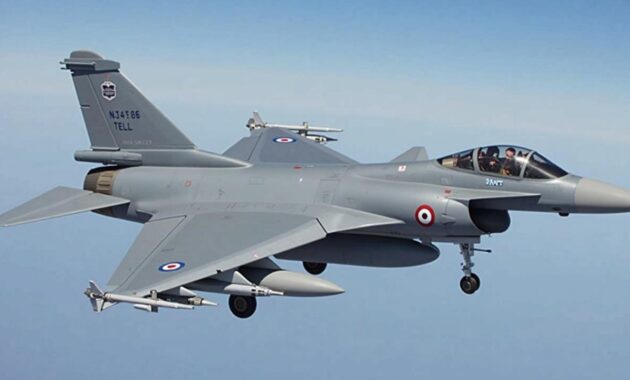
Behind closed doors, Ottawa is weighing a fighter jet proposal that promises jobs, radars and headaches in equal measure.
At the centre of the debate sits Saab, the Swedish defence giant, pitching a made‑in‑Canada production line for its Gripen fighter and GlobalEye surveillance aircraft. The offer is tailor‑built for Canadian politics, but it is also testing patience inside NATO and stirring arguments over cost, sovereignty and industrial risk.
What Saab is putting on the table
Saab’s proposal revolves around two flagship products: the JAS 39 Gripen fighter and the GlobalEye airborne early warning and control (AEW&C) system. The package being floated to Ottawa would see 72 Gripen fighters and 6 GlobalEye radar aircraft assembled or extensively manufactured on Canadian soil.
Saab is pitching not just aircraft, but a new Canadian aerospace hub capable of designing, building and supporting front‑line combat jets and high‑end surveillance platforms for decades.
At its core, the plan offers three selling points:
- Full or near‑full production of the Gripen E/F in Canada
- Industrial participation for Canadian firms across radar, avionics and mission systems
- Access to GlobalEye, a long‑range sensor platform prized for Arctic and maritime surveillance
Saab argues that this approach would give Canada unusually deep control over its fighters, from software and weapons integration to maintenance and upgrades. In a market dominated by the US‑built F‑35, that pitch carries a clear political edge: more sovereignty, less dependence on Washington.
How the plan clashes with NATO expectations
NATO planners have been urging allies to standardise on certain platforms, particularly the F‑35, to simplify logistics, training and joint operations. Canada is already a long‑standing partner in the F‑35 programme and has committed to buying the jet.
Saab’s push for Gripen runs against that current. Some allies see it as a fragmentation risk at a time when the alliance wants smoother interoperability in Eastern Europe and the Arctic.
While Ottawa focuses on jobs and sovereignty, several NATO capitals are focused on shared spare parts, common tactics and unified software baselines.
Defence officials in Europe who favour the F‑35 point to recent operations where common fleets reduced costs and improved coordination. They warn that adding another advanced fighter type into NATO’s already mixed inventory could require extra tanker support, distinct munitions stockpiles and bespoke training pipelines.
➡️ Venezuela’s opposition says party leader kidnapped hours after being freed
➡️ Gardeners who track soil temperature make better planting decisions
➡️ This is why sitting still all day can feel more exhausting than moving
➡️ In the frozen Arctic, a brutal new answer to climate change pits survival against morality
Saab counters that Gripen already flies with several NATO members and partners, including the Czech Republic and Hungary, and that its systems are fully compatible with alliance data links and standards. The company also stresses that GlobalEye, even if non‑US, would feed directly into NATO’s broader air surveillance picture.
Why Canadian taxpayers are divided
On paper, Saab’s offer ticks boxes that politicians love: domestic jobs, high‑tech manufacturing, and a visible industrial legacy. The company has framed its plan as a long‑term partnership that would create thousands of skilled roles across multiple provinces.
Yet Canadian taxpayers have fresh memories of previous big defence procurements that ran late, cost more and underdelivered on industrial promises. This colours the debate around any new, ambitious package.
| Key concern | What supporters say | What critics fear |
|---|---|---|
| Cost | Local production spreads spending across the economy | Upfront investment and delays drive the final bill higher |
| Jobs | Thousands of high‑skilled posts in aerospace and engineering | Positions may prove fewer or shorter‑lived than advertised |
| Sovereignty | Control over software, upgrades and data | Risk of isolation from US supply chains and funding |
| Strategic alignment | Diversified suppliers reduce dependence on one nation | Mismatch with NATO standardisation around the F‑35 |
Polling and commentary show a split: some Canadians welcome the idea of a major new manufacturing base that could echo the shipbuilding and automotive sectors of the past. Others question whether niche fighter production is the best use of public money in a country also grappling with housing, healthcare and climate adaptation costs.
Gripen versus F‑35: two visions of Canada’s airpower
The debate around Saab’s plan cannot be separated from the broader contest between Gripen and the F‑35 for Canada’s skies. Each aircraft symbolises a different approach to defence and industry.
Gripen: flexibility and local control
Saab’s Gripen is often described as a smaller, more agile aircraft optimised for quick turnarounds and harsh conditions. It operates from dispersed, rough bases in Sweden, which appeals to planners thinking about Canada’s remote northern airfields.
For advocates, Gripen’s main attraction is not stealth, but the promise that Canada could actually shape the aircraft’s future development rather than simply buy into it.
Supporters highlight several points:
- Potential for deeper technology transfer and local software work
- Ease of operating from shorter or less prepared runways
- Designed with cost‑conscious, smaller air forces in mind
- Previous record of integrating a wide variety of non‑US weapons
These elements create a narrative in which Canada acts as co‑producer rather than just a customer, gaining engineering expertise that spills over into civil aerospace and other sectors.
F‑35: stealth and alliance integration
By contrast, the F‑35 represents the mainstream NATO choice and a heavy bet on stealth and advanced networking. The aircraft is built around data fusion, pulling information from multiple sensors and sharing it instantly with other jets and ground forces.
For Washington and several European capitals, a Canadian shift away from the F‑35 line would sit awkwardly with combined planning for deterrence and air defence. A shared platform makes multinational exercises easier and allows allies to plug into US upgrades at scale.
Critics of Saab’s plan point out that Canada already invests in F‑35 components through industry participation, and that a parallel Gripen line could dilute those gains. They also note that the US defence budget underwrites much of the F‑35’s future technology roadmap, something Canada would not need to fund alone.
GlobalEye: the radar plane at the heart of the proposal
The six GlobalEye aircraft are not a side note; they are central to Saab’s pitch. GlobalEye is a modified business jet loaded with powerful radar and electronic sensors able to track aircraft, ships and, in some configurations, even slow‑moving ground vehicles.
For a country with vast Arctic airspace and three ocean coasts, GlobalEye offers a rare chance to stitch together a continuous picture from sky to sea.
Canadian defence planners face growing Russian activity in the High North and an increasingly busy Pacific. An AEW&C platform like GlobalEye could patrol these areas, detect intrusions early and share data with both Canadian and NATO units.
That said, adding GlobalEye would require Ottawa to decide how it interfaces with existing US‑Canadian arrangements, notably NORAD, which has traditionally leaned on American air surveillance aircraft and ground radars. Integrating a new, non‑US AEW&C fleet into those systems would demand both technical and political agreements.
Industrial gamble or strategic opportunity?
Viewed through an economic lens, Saab’s offer is part defence sale, part industrial strategy. A new fighter and AEW&C line could anchor clusters of small and medium‑sized Canadian suppliers in areas such as composite materials, advanced electronics and mission software.
These capabilities often have dual‑use value. Companies involved in radar modules, secure communications or sensor fusion can pivot into civil aviation, telecoms or even autonomous vehicles. Politicians in provinces hungry for high‑tech investment see the Gripen‑GlobalEye package as a potential magnet for talent and foreign capital.
The risk lies in scale. Fighter production lines live and die by export orders. If Canada becomes a major Gripen hub but Saab fails to win enough overseas customers, the long‑term workload may fall short, leaving governments to prop up capacity or watch it fade.
On the strategic side, greater autonomy over aircraft software and data is attractive in an age of cyber risk and contested information. Yet autonomy brings responsibility: Ottawa would have to fund its own upgrades, threat libraries and electronic warfare tools rather than depending on US updates as part of a larger user community.
Key terms and concepts that shape the debate
Two expressions crop up repeatedly in discussion of the Saab plan: “sovereign capability” and “interoperability”. Both sound technical, but they anchor many of the arguments on all sides.
“Sovereign capability” refers to the ability of a country to operate, modify and maintain critical military systems without external permission or oversight. In practice, it can mean access to source code, local manufacturing rights and the legal freedom to integrate national weapons or sensors.
“Interoperability” describes how smoothly a nation’s forces can work with allies during joint operations. It covers everything from compatible radios and common data formats to shared tactics and training syllabi. NATO’s drive toward interoperable air fleets reflects recent experience in coalition campaigns where unified systems cut confusion and delay.
Saab’s Canadian proposal sits right at the tension point between those ideas. A locally controlled Gripen and GlobalEye fleet would strengthen sovereign capability. A move away from the alliance’s dominant aircraft type could place slightly more strain on interoperability, even if basic technical standards remain aligned.
Possible futures for Canada’s air and radar fleets
Several scenarios are now being floated by analysts and former officials. One imagines Canada proceeding with its planned F‑35 purchase, while adding a smaller number of Gripens for roles such as northern patrols and training, alongside a GlobalEye buy purely for surveillance. That route would spread risk but also increase complexity.
Another scenario sees Ottawa use the Saab proposal as leverage to extract better industrial offsets from existing suppliers, then stick with a single‑platform fighter fleet and perhaps pursue AEW&C solutions more closely tied to US systems. This would align Canada tightly with NATO standards but offer less domestic control over technology.
For Canadian taxpayers, the stakes go beyond aircraft counts. The decision will shape industrial policy, relations with Washington and NATO, and the balance between domestic autonomy and alliance cohesion for a generation. For Saab, it is a rare chance to secure a major partner outside Europe at a time when defence spending is rising and supply chains are being redrawn.