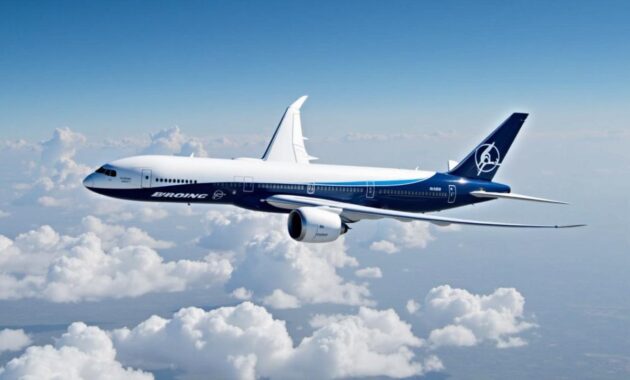
Two giants of long-haul aviation are edging toward a direct clash, as airlines weigh up fresh bets on the next generation of big jets.
The Boeing 777-9 and the Airbus A350-1000 are moving from PowerPoint slides and airshow flypasts to the hard reality of airline fleet plans. Behind the glossy brochures sits a brutal question: which wide-body will shape long-distance flying for the next two decades?
New phase in a decades-old rivalry
Boeing and Airbus have fought for long-haul supremacy since the 1990s, trading blows with the 747, A340, 777 and A380. That contest is now narrowing to two flagships: Boeing’s 777-9, the first and largest member of its 777X family, and Airbus’s stretched A350-1000.
Both target a similar market: airlines flying dense routes between global hubs where every seat, tonne of fuel, and minute of downtime affects profit. Yet the two jets come from very different design philosophies.
The 777-9 leans on size and capacity, while the A350-1000 focuses on efficiency, lighter structure, and operational flexibility.
What sets the 777-9 apart
The 777-9 is Boeing’s bet on big twin-engine aircraft replacing older 777-300ERs and, in some cases, former 747 routes. It features a composite wing with distinctive folding wingtips, GE9X engines, and a reworked cabin.
- Typical seat count: around 400+ in a standard long-haul configuration
- Range: roughly in the 13,500 km (7,300+ nautical mile) bracket, depending on layout
- Key design goal: move many passengers on high-demand routes with lower seat-mile costs
The folding wingtips are perhaps its most eye-catching feature. On the ground, they fold upwards so the aircraft fits into the same airport gate footprint as today’s 777, keeping compatibility with existing infrastructure. In flight, the tips are deployed, giving the jet a long, efficient wingspan for better aerodynamic performance.
The 777-9’s combination of size and updated aerodynamics targets airlines that still believe in large, dense trunk routes between megacities.
Yet delays have weighed on the programme. Certification has been pushed back several times amid closer regulatory scrutiny following Boeing’s broader safety challenges. Airlines that ordered the type years ago have had to reshuffle their long-haul plans or hold onto older aircraft longer than expected.
Why the A350-1000 is gaining attention
Airbus positions the A350-1000 as a slightly smaller but very efficient alternative. Built largely from carbon-fibre reinforced plastic, it is lighter than older metal-heavy designs and uses Rolls-Royce Trent XWB-97 engines tailored for the stretched model.
➡️ Why boiling vinegar and water can remove limescale from kettles
➡️ “I thought I lacked focus,” this habit showed me otherwise
➡️ After six years of trials, Iceland’s four?day week now appeals to 90% of workers
➡️ Is eating meat-free actually healthy? A centuries-old diet debate returns
Typical configurations come in around 360–380 seats, though airlines can configure cabins in many ways. Its range competes directly with the 777-9, allowing it to cover major intercontinental routes, from Europe–Asia to US–Australia with room for full cargo holds.
Compared with earlier wide-bodies, the A350 family offers lower fuel burn per seat, more humidity in the cabin, larger windows, and a quieter ride. Airlines already operating the smaller A350-900 can gain training and maintenance efficiencies by adding the -1000 variant to their fleets.
The A350-1000 trades a bit of capacity for lower fuel burn and lighter structure, attracting airlines wary of over-committing to very large aircraft.
Airlines split between capacity and flexibility
Fleet planners now face a strategic choice. On slot-constrained routes like London–Dubai or Hong Kong–Los Angeles, the 777-9’s extra seats can boost revenue provided demand is strong and stable. On thinner or more volatile routes, the A350-1000’s flexibility becomes a selling point.
| Factor | Boeing 777-9 | Airbus A350-1000 |
|---|---|---|
| Core emphasis | Maximum capacity, trunk routes | Fuel efficiency, operational versatility |
| Entry into service | Still undergoing certification, delayed | In service with multiple airlines |
| Primary materials | Metal fuselage with composite wings | Largely composite fuselage and wings |
| Cabin size | Wider cabin, more seats across | Slightly narrower, lighter structure |
For Gulf carriers that thrive on connecting heavy flows of passengers between Asia, Europe and the Americas, the 777-9 fits long-term plans to concentrate traffic through big hubs. For European and Asian airlines that want flexibility between hub-to-hub and secondary long-haul routes, the A350-1000 can look more attractive.
Regulatory pressures and timing risks
One of the biggest questions around the 777-9 is timing. The longer an aircraft takes to reach service, the more airline strategies shift. Post-pandemic travel has rebounded strongly, yet traffic patterns have changed. Ultra-long routes have grown, while some business-heavy markets remain uneven.
Regulators are now digging deeper into documentation, test data and systems safety than in past programmes. Boeing has redesigned aspects of its certification approach, which adds assurance but also time. Until the 777-9 secures final approval, airlines cannot lock in precise fleet rotations, maintenance slots and crew training schedules.
Every delay pushes airlines closer to ordering aircraft already flying, giving Airbus an advantage with the A350-1000 in the near term.
Airbus, on the other hand, faces pressure on engine reliability and production slots. Rolls-Royce’s Trent XWB engines have shown strong fuel performance, yet global supply chain strains mean spares, overhauls and new-build engines must be carefully managed to avoid aircraft sitting on the ground.
Passenger experience and cabin economics
Both aircraft promise quieter cabins, larger overhead bins and higher humidity than older jets, which should reduce jet lag and fatigue on long sectors. Yet airlines can use the extra width of the 777 to fit either more comfort or more seats. In economy class, 10-abreast seating is already standard on many 777-300ERs. The 777-9 can go further, offering dense layouts that cut unit costs sharply.
The A350-1000, slightly narrower, tends to encourage nine-abreast seating in economy, which many passengers find more comfortable on long flights. For premium cabins, both types can host large business-class suites, premium economy zones and spacious galleys, but the way airlines deploy that space changes the feel dramatically.
From a financial view, a full 777-9 can generate huge revenue on a peak holiday or business travel day. Off-peak, that extra capacity can become a burden if too many seats go unsold or are discounted heavily. The A350-1000 offers a lower break-even load factor, which appeals to airlines in markets with seasonal swings.
Strategic bets and future scenarios
Imagine a major airline planning its fleet for 2040. One scenario leans into mega-hubs, with waves of connecting flights and high-density services on key corridors. In that case, a large subfleet of 777-9s could make sense, anchoring prime routes where demand rarely dips.
Another scenario assumes more point-to-point flying, where passengers bypass hubs on medium-density routes. Here, a mixed fleet where the A350-1000 sits alongside smaller long-haul jets like the A350-900 or Boeing 787 might be more attractive, providing a range of capacities to match shifting demand.
There are risks on both sides. A spike in fuel prices would push airlines towards the most efficient aircraft available, potentially favouring the lighter A350-1000. A sustained boom in global travel, especially in Asia and Africa, could reward carriers that locked in high-capacity 777-9 fleets early.
Key terms that shape the debate
Two expressions appear again and again in conversations about these jets:
- Seat-mile cost: the cost of flying one seat one mile, whether or not it is filled. Lower numbers mean cheaper operations.
- Load factor: the percentage of available seats that are actually sold. High-capacity jets need high load factors to earn strong profits.
A large jet like the 777-9 can show an impressive seat-mile cost on paper, but only if the airline keeps load factor consistently high. The A350-1000 offers slightly higher seat-mile cost in some layouts, yet it can maintain profitability at lower load factors, giving room to adjust capacity without deep losses.
What this means for travellers and investors
For travellers, the showdown affects where non-stop routes open, how crowded cabins feel, and which hubs dominate international traffic. Airports that attract 777-9 operations may see waves of passengers arriving at once, pushing terminals, baggage systems and border control to their limits. Airports anchored by the A350-1000 might see a higher number of slightly smaller flights, smoothing peaks.
For investors and staff across the aviation ecosystem, the outcome shapes factory output, maintenance jobs, pilot training demand and engine overhaul networks for years. Leasing firms, which own a growing share of airline fleets, also lean towards types that can be easily placed with multiple carriers. That flexibility has quietly become one of the A350-1000’s strongest selling points while the 777-9 waits for final approval.
As the 777-9 edges closer to certification and the A350-1000 builds its track record, the real contest will not be decided at airshows. It will play out in airline boardrooms, fuel bills, load sheets and passenger choices, one long-haul flight at a time.
Originally posted 2026-03-09 11:00:00.