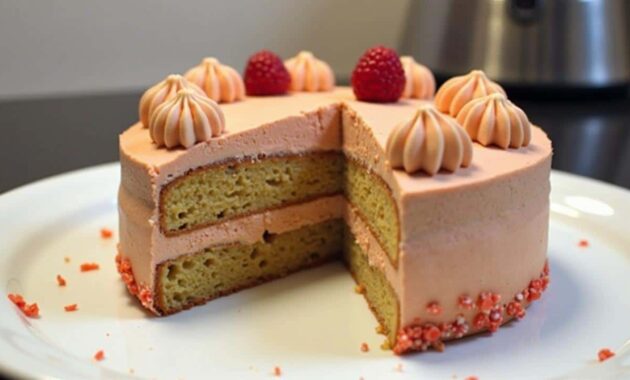
Across French social media, a new “emergency cake” is going viral: three ingredients, no oven, and a cooking time closer to making toast than baking. The promise is simple — a soft chocolate cake for six people, ready in the time it takes to lay the table.
The three-ingredient cake everyone is talking about
This ultra-fast dessert sits somewhere between a brownie and a fondant. No butter, no sugar scales, no half-empty baking cupboard required. The base is a supermarket classic: chocolate-hazelnut spread, the type many people already keep on a shelf “for the kids” — or for late-night spoonfuls.
A jar of chocolate spread, two eggs and a little self-raising flour are enough to bake a family-sized cake in 10 minutes, including cooking.
The method is aimed at people who usually say, “I don’t bake.” Everything happens in one bowl, with a microwave doing the heavy lifting. Yet the end result has a surprisingly soft crumb and strong chocolate aroma.
Ingredients and equipment: what you actually need
The base recipe for 6–8 portions
- 240 g chocolate–hazelnut spread (Nutella-style, or any similar brand)
- 2 medium eggs
- 60 g self-raising flour (or plain flour plus about 1 teaspoon baking powder)
Basic tools in most kitchens
- Microwave-safe cake mould (silicone works best, glass is fine too)
- Large mixing bowl
- Whisk
- Flexible spatula
- Small knife or skewer for checking doneness
Nothing here requires specialist kit. That is one reason this recipe circulates so quickly on digital platforms: it fits student flats, holiday rentals, and cramped city kitchens.
Step-by-step: from jar to plate in 10 minutes
1. Mixing the chocolate base
Spoon the 240 g of chocolate spread into a large bowl. If it feels too stiff to whisk, give it a short burst in the microwave — around 15–20 seconds — just until it softens. The aim is a creamy texture, not a hot liquid.
Crack in the first egg and whisk firmly. Once blended, add the second egg. Keep whisking until the mixture looks glossy and uniform. Scrape around the sides with the spatula so no streaks of spread remain. The colour should lighten slightly, a sign that the eggs are fully incorporated and air has started to build a bit of volume.
2. Adding the flour and cooking in the microwave
Sprinkle the 60 g of self-raising flour over the surface of the mixture. If you own a sieve, sift the flour in to avoid lumps. Fold gently with the spatula rather than stirring wildly. Stop as soon as no visible flour remains. Over-mixing can flatten the result and make it dense.
Transfer the batter into a greased or silicone mould, roughly 18–20 cm in diameter. Smooth the top for even cooking. Place the mould in the centre of the microwave turntable.
➡️ One simple plant choice turned my front door into the most admired on the street
➡️ Why Do Crocodiles Not Eat Capybaras ?
At about 800–900 W, the cake cooks in 4 to 5 minutes; lower-powered microwaves might need around 6 to 7 minutes, checked in short bursts.
Start with 4 minutes on full power. Insert a knife or skewer into the middle. If it comes out clean or with a few moist crumbs, the cake is ready. If it emerges coated in wet batter, continue cooking in 30-second intervals, checking each time.
Once cooked, leave the cake to rest in the mould for 4 to 5 minutes. This brief pause allows the structure to firm up. Turn out gently onto a plate. The aroma of warm chocolate-hazelnut should be immediate and intense.
How a chocolate spread turns into a cake
From a technical point of view, the recipe stands on a simple balance of three roles: fat and sugar from the spread, structure from the flour, and lift from the eggs and raising agent.
| Component | Main role in the cake |
|---|---|
| Chocolate spread | Provides fat, sugar and cocoa; gives flavour and moisture |
| Eggs | Bind ingredients and trap air, helping the cake rise |
| Self-raising flour | Creates structure so the cake holds its shape |
Microwave cooking speeds up the process by directly exciting water and fat molecules in the batter. Instead of slowly heating air in an oven, the cake cooks from the inside out in minutes. That fast action locks moisture in, which explains the soft, almost pudding-like crumb.
Serving ideas that keep it simple
The cake tastes best slightly warm, when the centre is still extra tender. Many home cooks pair it with cold toppings for contrast:
- Vanilla ice cream, which melts against the warm slice
- Lightly whipped cream, unsweetened, to balance the sugary spread
- A glass of cold milk for children
- A short espresso for adults, whose bitterness cuts through the richness
The recipe also lends itself to last-minute decoration. A dusting of cocoa, a handful of chopped hazelnuts or a drizzle of melted dark chocolate can make it look closer to a pâtisserie dessert without adding time.
Quick variations for different tastes
Simple twists without complicating the method
- Slip one or two squares of dark chocolate into the centre of the batter before cooking for a soft, molten heart.
- Add a pinch of flaky sea salt to highlight the hazelnut and cocoa flavours.
- Stir in a few drops of vanilla extract, almond essence or a pinch of instant coffee powder to deepen the taste.
- Use a gluten-free self-raising flour blend to adapt the cake for intolerances.
- If your microwave maxes out at 700 W or less, extend the cooking time and test carefully with a knife.
Because the base relies on a spread that is already sweetened and flavoured, small additions have a noticeable impact without demanding extra work or washing up.
Why ultra-fast baking resonates right now
This kind of recipe sits within a broader trend: “emergency desserts”. Mug cakes paved the way by promising a personal pudding in a single cup. The three-ingredient chocolate cake simply scales that logic up to a sharing format suitable for families or flatmates.
The recipe fits busy weeknights, student dinners, and those late Sunday afternoons when hunger hits just as bakeries close.
Time pressure plays a part, but so does energy cost. Using a microwave for under seven minutes consumes less electricity than preheating and running a conventional oven for half an hour. For households watching bills, that matters.
The recipe also breaks down the psychological barrier of baking. No weighing multiple ingredients, no fear of complicated techniques. For people who grew up thinking of baking as something for experts, this can act as an accessible entry point.
Things to watch: sugar, portions and microwave safety
As with many chocolate desserts relying on spreads, the sugar and fat content is high. A small slice is usually enough. Serving it with fresh fruit, such as orange segments or berries, can stretch portions and bring some freshness.
Microwave safety also deserves attention. Only use containers clearly labelled as microwave-safe. Metal moulds are not suitable. For glass dishes, check for cracks before use, as sudden temperature changes can cause breakage.
Practical scenarios where this cake really helps
Picture a weekday evening: children have finished homework, someone remembers tomorrow’s bake sale, and the shops are already closed. Assuming there is a jar of spread and a couple of eggs in the fridge, this cake can be ready before bedtime.
Another common case: students in halls, with nothing but a microwave and a tiny worktop. Traditional sponge cakes are hard to manage in such settings. This recipe turns shared kitchen chaos into a low-effort treat that still feels homemade.
Related kitchen habits that build on this recipe
Getting used to this three-ingredient method can encourage smarter pantry stocking. Keeping a small reserve of self-raising flour, eggs and a versatile spread means desserts stop being an elaborate project and become a realistic option on busy days.
The same principle — leaning on one “complete” product like a spread or a biscuit to replace several ingredients — appears in other shortcuts, such as cheesecakes made with crushed biscuits and melted butter, or ice creams made from sweetened condensed milk and cream. For time-poor households, these strategies provide a way to keep home baking alive without needing an entire afternoon in the kitchen.