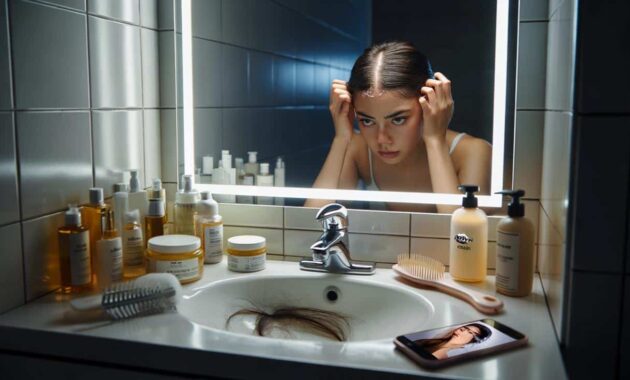
On a Tuesday night in a small bathroom lit by a harsh LED mirror, Emma balances her phone on the sink. Steam curls around a ring light as she scrolls through TikTok, pausing on yet another “scalp spa at home” tutorial. The girl on screen has impossible hair: glassy, waist-length, parted to reveal a perfectly pink scalp. “Three weeks of this,” she swears, “and my hair literally exploded with growth.” Emma glances at her own thinning part, at the loose strands stuck to the drain. Her cart is already full of scalp scrubs, serums, brushes she didn’t know existed last month.
She hits “Buy now” anyway.
Somewhere between self-care and self-doubt, a line is being crossed.
When “self-care” turns into a scalp obsession
The at-home scalp spa trend promises a miracle: thicker hair, faster growth, a rebirth in 21 days if you just massage, exfoliate, oil, repeat. The videos are hypnotic. Close-ups of shimmering oils sliding across scalps, foam bubbling under manicured fingernails, slow-motion shots of brushes gliding through wet hair. It looks soothing, almost spiritual.
What we don’t see in the frame is the creeping anxiety offscreen. The “What if my hairline goes back further?” and “What if I’m not doing enough?”
Scroll a little and the pattern jumps out. Young women filming “wash day” routines that last two hours. Mothers of toddlers waking up at 5 a.m. to do a 10-step scalp ritual. Influencers casually holding up a $95 “micro-exfoliating scalp scrub” like it’s toothpaste. One viral scalp brush sells out overnight after a popular creator claims she gained “4 cm of growth in a month.”
No one mentions that normal hair grows about one centimeter every four weeks. No one pauses to say, “Wait, that math doesn’t add up.”
The logic behind the trend sounds science-y enough to be persuasive. Better blood circulation equals better follicles equals better hair, right? Brands latch onto this half-true idea and stretch it until it squeaks. A little gentle massage becomes daily aggressive scrubbing. A simple clarifying wash becomes a multi-product ritual that “detoxes” your scalp of imaginary build-up.
And underneath the suds and serums lies something more raw: the old fear that a woman’s worth is braided into the length and density of her hair.
The hidden dangers under the foam and filters
Dermatologists are quietly seeing the fallout. Over-exfoliated scalps, raw patches from too-harsh brushes, contact dermatitis from essential oil cocktails. Hair that actually breaks more because the scalp barrier is constantly being disturbed. Our scalps already have their own fragile ecosystem: sebum, microbes, delicate skin cells that renew on their own rhythm.
Turn that into a daily battlefield of scrubs, oils, and friction, and it starts to rebel.
The other danger is more invisible, but just as real: financial drain. One “affordable” routine can easily stack up to $200 when you count the pre-wash oil, exfoliating scrub, scalp mask, growth serum, detox shampoo, clarifying shampoo, silk towel, scalp massager, and weekly “booster ampoules.” Brands promise “investment in yourself” while launching a new essential product every three weeks.
Let’s be honest: nobody really does this every single day. Yet the marketing plays on the guilt of feeling like you should.
There’s also the psychological toll. When your scalp becomes a project to fix rather than a part of your body to care for, every shed hair feels like failure. Women start taking photos of their part lines every week, zooming in, comparing, panicking. Online forums are full of posts that sound less like beauty tips and more like distress signals.
This isn’t just about hair. It’s about a beauty culture that plants a quiet seed: your natural pace of hair growth is not enough, and neither are you.
How to care for your scalp without losing your mind or your money
If you strip the trend of the drama and filters, what’s actually helpful is surprisingly simple. A gentle massage while you shampoo, using the pads of your fingers and not your nails, already boosts local circulation without trauma. Washing your hair regularly enough that sebum and product don’t build up like a sticky film is often plenty. For most people, that means every 2–4 days, not every day and not twice a week with six products.
Your scalp likes consistency far more than spectacle.
Where things go sideways is in the “more is better” spiral. Doubling the pressure of your scalp brush won’t double your hair growth. Layering three different growth serums can cause irritation, not miracles. Many essential oils promoted for “regrowth” are heavily fragranced, and on sensitive scalps, they burn. You’re not failing if your routine is basic. You’re not lazy if your wash day fits into an actual day.
We’ve all been there, that moment when a before-and-after video makes your own mirror feel brutal.
Sometimes the healthiest thing you can do for your hair is to stop treating it like a constant emergency and start treating it like a living part of you that doesn’t have to earn its place.
➡️ The unusual ingredient that makes chocolate cookies taste deeper and richer
➡️ Tennis ball trick for cars: Why the internet loves it – and what really works
➡️ Future war: the French Army wants troops to fly… a comeback for a forgotten device?
➡️ UK Ends Retirement at 67 Historic Shakeup New Pension Age Officially Announced
- Start with one gentle shampoo you like, and use it consistently for a few weeks before adding anything else.
- Use a soft, silicone scalp massager once or twice a week, not every day, and stop if you feel soreness or burning.
- Skip any product that promises “instant regrowth” or “3x faster growth”; hair biology simply doesn’t work at that speed.
- Protect your budget: set a monthly limit for beauty spending and screenshot your products before buying, then wait 24 hours.
- If hair loss is rapid, patchy, or stressing you out daily, a dermatologist or trichologist will do more for you than any trending serum.
Rethinking what “good hair” really means
The scalp spa trend says the path to confidence runs through a perfect, poreless scalp and inches of new growth. Yet some of the most grounded women quietly admit their turning point wasn’t a product, it was a mindset shift. Accepting that hair sheds. That stress, hormones, pregnancy, genetics all play a role no scrub can erase. That thinner hair, curls that changed, or edges that never fully came back after childbirth do not cancel out your beauty.
A clean, calm scalp is great. A calm mind about your scalp is better.
It’s worth asking who really benefits when you feel panicked about every strand: your mirror, or the brands selling you fixes for fears they helped create. Next time a video promises “miracle growth” from a ten-minute ritual, notice the language. Notice the affiliate links. Notice how you feel about yourself in the seconds right after. You can still enjoy a warm oil scalp massage on a Sunday night, as a small act of care rather than a desperate investment.
Your hair is allowed to grow at a human pace.
| Key point | Detail | Value for the reader |
|---|---|---|
| Marketing preys on insecurity | Scalp spa trends exaggerate growth claims and link self-worth to hair thickness | Helps you recognize manipulative messaging and step back emotionally |
| Over-treatment harms scalp health | Frequent scrubs, harsh tools, and layered serums can cause irritation and breakage | Encourages a gentler routine that protects both scalp and hair |
| Simple routines work best | Consistent washing, light massage, and realistic expectations support natural growth | Gives you a sustainable approach that saves time, money, and mental energy |
FAQ:
- Question 1Do at-home scalp spa routines really make hair grow faster?
- Question 2How often should I exfoliate my scalp without damaging it?
- Question 3Are scalp massager brushes safe to use every day?
- Question 4What are signs that my scalp products are too harsh?
- Question 5When should I stop DIY routines and see a professional about hair loss?
Originally posted 2026-03-09 04:45:00.