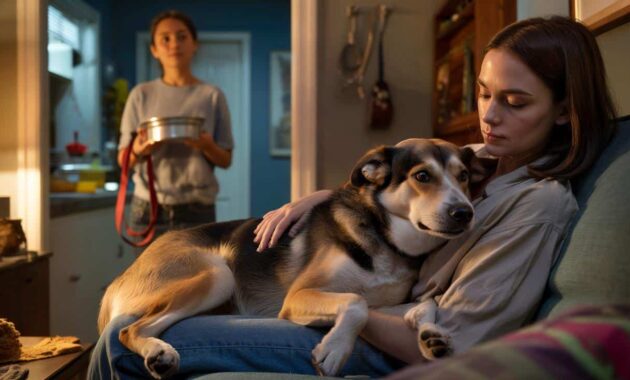
The first time I noticed, it was a Tuesday night. Same routine as always: my friend dropped by with takeout, kicked off his shoes, and ten seconds later my own dog, who sleeps on my feet, had abandoned me for his lap. Tail helicoptering, eyes soft, that deep doggy sigh of total devotion. I was left holding the soy sauce packets, feeling like the side character in my own living room.
If you live with a dog, you’ve probably asked yourself in a half-joking, half-serious way: “So… who’s your favorite, huh?”
The uncomfortable truth is that most dogs already have an answer.
Yes, your dog probably has a favorite person
Spend a whole day just watching a dog at home and the pattern starts to show. Who do they follow from room to room, even when nothing interesting is happening there. Who gets the slow blinks from the dog bed, the excited stretch when the keys rattle in the door, the deep snuggle on the couch when the movie starts.
It’s rarely about who bought the toys or who posts the most photos.
It’s about whose presence their body relaxes around without thinking.
Ask any multi-person household and you’ll hear the same story, told with a mix of pride and mock jealousy. The parent who walks, feeds, trains, schedules vet visits… watching the dog sprint past them to greet the teenager who barely remembers where the leash is. Or the couple where the dog *technically* belongs to one person, but sleeps with its spine pressed into the other one every single night.
Researchers who study human–animal bonds see this pattern too. Dogs show higher heart-rate variability (a sign of feeling safe) near specific humans, even when several familiar people are present.
Their nervous system quietly votes.
The logic behind this “favorite human” choice is both simple and slightly brutal. Dogs are social specialists: in a mixed group, they attach most strongly to the person who consistently feels predictable, safe, and rewarding. Not the loudest, not the nicest on paper, but the one whose signals their brain can decode fastest.
Think of it like a Wi-Fi network. They’ll still “connect” with everyone at home, but one person’s signal is just stronger, cleaner, always available.
That’s the human they’ll turn to when they’re scared, tired, or overwhelmed.
How dogs decide who gets the crown (and how you can win it)
The first big factor is timing: who was most present in the early weeks or months. Puppies and newly adopted dogs build mental maps fast. The person whose smell, voice, and touch filled those first days often gets hardwired as “home base”. Short, frequent, calm interactions matter more than the occasional epic play session.
➡️ The subtle impact of daily rhythms on emotional balance
➡️ Harvard psychologist: Couples who truly trust each other use 7 phrases
➡️ This economical use of wood ash is winning over more and more French households: a real home trick
➡️ Astrology: 4 emotional signs will have to face a major inner upheaval in 2025
A lot also comes down to body language. Dogs read micro-movements like we read headlines. The human whose energy stays soft and readable, whose movements are clear instead of jerky or chaotic, tends to feel safe to them.
Safe beats fun, almost every time.
Then there’s the reward economy, and this is where it stings a little. The “favorite” is often the one unintentionally running a tiny, constant casino of good things: a piece of cheese here, a quiet scratch there, a gentle “good dog” exactly when the dog lies down by their feet. Not bribery, just a steady drizzle of pleasant experiences linked to one person.
Picture the classic scene: one roommate throws the ball obsessively on weekends. The other quietly drops a bit of egg on weekday mornings and says their name in a soft, happy tone.
Guess whose voice that dog will hear in their sleep.
The flip side is also true: dogs drift away from the people whose presence feels confusing or tense. The owner who calls them in a singsong voice, then scolds when they arrive. The partner who tries to hug the dog when they’re actually signaling “I’m tired, give me space”. Over time, the dog learns, “Around you, I’m never quite sure what’s coming next.”
Let’s be honest: nobody really does this every single day. We all get impatient, distracted, inconsistent.
But the human who strings together more good, predictable interactions than bad ones… that’s the one the dog’s nervous system quietly promotes to Favorite.
Turning into your dog’s favorite (without forcing it)
If you want to climb the rankings a bit, start small and boring. Sit in the same room and simply be there, phone down, body relaxed. When your dog glances over, toss a tiny treat or invite them for a short scratch, then let them walk away if they want. Five calm minutes, twice a day, will do more than one overly intense “bonding” marathon on the weekend.
Dogs trust rhythms more than grand gestures.
*The goal isn’t to impress them, it’s to become the safest background noise in their life.*
A common mistake is trying too hard on the “fun” side while ignoring the emotional temperature. We throw more toys, talk louder, push more cuddles… and the dog quietly leans away. If a dog turns their head, licks their lips, or freezes when you reach out, that’s not shyness, that’s “I need a bit more space right now.”
There’s no shame in realizing you’ve been missing those signals. We’ve all been there, that moment when you replay an interaction and think, “Oh. They were asking me to stop.”
Backing off on demand builds a kind of trust no treat can buy.
Sometimes the most loving thing you can do for a dog is to be someone they never have to brace themselves around.
- Create tiny rituals
One specific word before meals, one same gentle touch on the chest before bed. Rituals anchor you in their day. - Reward calm, not just excitement
Slip in a treat when they lie quietly near you, not only when they jump or bark for attention. - Respect their “no”
If they shift away, yawn, or avoid eye contact, pause. Space today means more trust tomorrow. - Keep your voice consistent
A soft, stable tone beats constant chatter. Dogs replay tones more than words. - Be the boring constant
Walk them, feed them, sit with them when nothing special is happening. That’s where deep attachment grows.
Living with the fact your dog loves someone “more”
Once you see it, you can’t unsee it: the tiny preference, the slightly brighter tail wag, the extra second of eye contact with one specific person. That can sting, especially if you’re the one paying the food bills or doing the late-night vet run. Yet there’s something strangely freeing about accepting that dogs, like humans, have their own quiet hierarchies of comfort.
The real win is not being The Favorite at all costs.
It’s being someone your dog can fully relax around, whether you come first, second, or third in their secret ranking.
| Key point | Detail | Value for the reader |
|---|---|---|
| Dogs choose favorites through daily patterns | Calm presence, predictable reactions, and gentle routines weigh more than big gestures | Helps you focus on what truly strengthens your bond |
| Body language and emotional safety matter | Reading and respecting stress signals builds deep trust over time | Lets you avoid unintentional pressure or fear |
| Anyone can move up the “favorite” ladder | Small rituals, quiet rewards, and consistency gradually reshape attachment | Gives practical ways to feel closer to your dog |
FAQ:
- Question 1Can a dog have more than one favorite person?
Yes. Many dogs form a primary attachment plus one or two “secondary favorites”. They may sleep near one person, but seek comfort from another during storms or stress.- Question 2Can I become my dog’s favorite if I’m not right now?
You can absolutely strengthen your bond. With consistent, calm interactions, respectful touch, and daily mini-rituals, many dogs slowly shift who they turn to first.- Question 3Does my dog love me less if I’m not their favorite?
Not at all. Dogs can love several people deeply while still having a go-to human. Being “second” in preference doesn’t mean being second in affection.- Question 4Do certain breeds pick favorites more strongly?
Some breeds bred for close partnership (like herding or working dogs) often show sharper preferences, yet individual personality and experience still matter more than breed label.- Question 5Could my dog’s favorite person change over time?
Yes. Big shifts in routine, caregiving, or household dynamics can tilt the balance. Illness, new jobs, or moves sometimes nudge dogs to rely more on a different human.
Originally posted 2026-03-09 07:06:00.