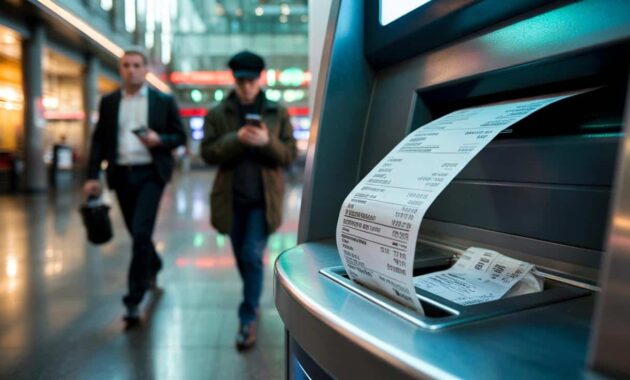
It isn’t. The real trap often starts with a scrap of paper.
Across towns and travel hubs, criminals mix small data points with persuasive talk. A minor detail from your last withdrawal can power a convincing scheme within hours.
Why a crumpled receipt fuels convincing scams
An ATM receipt looks harmless. It isn’t. Beyond the amount and balance, it often shows the last digits of your card, the exact time and date, the ATM ID, and sometimes partial account markers. Each item alone seems dull. Together, they give a scammer context, timing, and confidence.
- Time stamp and location: proves where and when you used your card.
- Masked card number: enough to sound credible on a call.
- Balance or account hints: guides the value of the attack.
- ATM identifier: lets the caller “confirm” details you recognize.
Fraud crews buy and sell these fragments. Others use them on the spot. They call you, cite the exact time of your withdrawal, and pretend to “verify a security alert.” The precision disarms you. Then they ask for one-time codes or try to steer you to a fake page.
Specific details — amount, minute, ATM ID — make a stranger sound like your bank and lower your guard fast.
The common mistake at the ATM
People leave the receipt in the slot. They toss it in the small bin beside the machine. They drop it in a nearby planter. That trash can acts like a bulletin board for crooks. Some even wait a few steps back and collect the paper trail during busy hours.
Simple habits that shut the door
- Take the receipt every time or choose “no paper.”
- If you print it, tear it into many pieces before discarding.
- Prefer digital proof in your banking app, email, or SMS.
- Keep the area tidy; don’t leave documents on the shelf or keypad.
| Action | Impact |
|---|---|
| Go paperless | Removes a physical clue that fuels social engineering |
| Tear or shred receipts | Breaks the timeline and card details a scammer needs |
| Empty the slot | Stops “free data” pickups by dumpster divers |
| Check surroundings | Prevents shoulder surfing and device tampering risks |
Stay alert after the cash withdrawal
Don’t stop at the machine. Keep watch on your account for the next day or two. Many fraud attempts start with tiny test charges. Those micro-debits gauge whether you notice.
Turn on instant alerts in your banking app. Set push notifications for withdrawals, card payments, and transfers. A timely buzz can block a bigger hit.
Speed matters: fast alerts let you freeze a card before a fraudster scales up.
What to do when something looks off
- Use official channels only: the number on your card or the app’s secure chat.
- Ask to lock or freeze the card; request a new one if needed.
- Note times, amounts, and authorization codes you received.
- Save screenshots of alerts and any suspicious messages.
- Report quickly. Banks usually protect customers who act without delay.
How fraudsters use your receipt in social engineering
Here’s how a call might unfold. The phone rings. A calm voice says your first name and quotes the exact minute of your ATM visit. They warn of a “duplicate transaction” and ask you to “confirm a code we’re sending right now.” That code actually approves a payment. Their details feel real because they are — they came from your discarded slip.
➡️ Leeds police arrest California woman in multi state credit card fraud investigation
➡️ A chemist explains how solid-state batteries eliminate fire risks and double electric vehicle range
➡️ NASA captures detailed images of a distant moon covered in methane lakes resembling an alien Earth
➡️ Drivers warned as final days approach until new 5 mph speed limit law goes into effect
➡️ Why you should always keep a stick of white chalk in your kitchen drawers
➡️ This heat-loving, no-water plant transforms any yard into a butterfly haven
Red flags you should never ignore
- Urgency and pressure: “Act now or funds will leave your account.”
- Requests for PINs, full passwords, or one-time codes.
- Links in texts that lead to lookalike pages.
- Unexpected outbound contact from “the bank.” Call back using the number on your card.
Your bank will not ask for your PIN or one-time codes by phone, text, or email. Refuse and hang up.
Safer ATM routine beyond the receipt
Take ten seconds to scan the machine. Loose card slots, bulky bezels, shaky keypads, or odd glue marks can signal skimmers. If anything feels wrong, walk away and alert staff.
Cover the keypad with your spare hand while you enter the PIN. Stand close to the terminal. Watch for strangers who offer help or create distractions. Choose machines inside branches or well-lit places with cameras when you can.
Extra context that helps
Cardless cash can cut risk in busy areas. Many banks let you pre-stage a withdrawal in the app and use a one-time QR or code at the machine. That removes the card swipe and reduces skimmer exposure. Digital receipts complete the loop and leave no paper trail.
Set transaction limits that match your week. Lower daily withdrawal caps shrink the ceiling for fraud. Pair that with travel notices in the app so genuine activity still runs smoothly when you’re abroad.
Old receipts at home still carry value to thieves. Treat them like mini-statements. Shred them with cross-cut blades, not a single tear. If you store any for budgeting, keep them in a sealed envelope and purge them monthly.
Want a quick self-check? Simulate a scam call with a friend. Hand them only what’s on a typical receipt: time, amount, last four digits, and ATM location. Let them try to coax a one-time code from you. This exercise shows how believable a script can sound when it leans on precise details.
One more angle: virtual cards for online payments. They generate fresh numbers that expire or lock to a merchant. That won’t change your ATM routine, but it reduces spillover risk if social engineering jumps from cash withdrawals to web purchases.
Trim your data footprint: fewer paper traces and tighter alerts leave scammers with nothing to exploit.
Originally posted 2026-03-10 20:26:00.