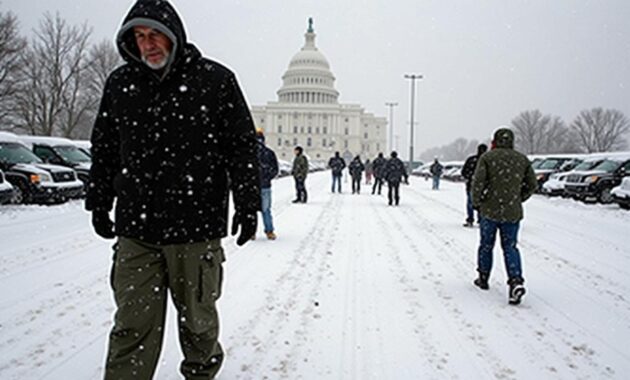
Early March forecasts over the Arctic are raising eyebrows among weather specialists, hinting at a shift that could echo far beyond the polar circle.
From jet stream kinks to unusual temperature spikes, several meteorological indicators suggest the atmosphere above the Arctic may be heading toward a new phase. Some scientists fear this could lock in more chaotic weather patterns for the northern hemisphere, while others caution that the narrative has raced ahead of the data.
Early March on watch: why forecasters are nervous
Weather centres in Europe and North America are tracking a cluster of signals over the high Arctic for the first half of March. Ensemble models, which blend many different simulations, point to unusually warm air pushing into the polar region at high altitudes. At the same time, sea-ice extent looks fragile along key zones north of Scandinavia and Siberia.
These are not unprecedented events taken one by one. What stands out this year is their combination and timing. Meteorologists see a potential tipping moment for how the Arctic atmosphere behaves through spring and possibly into next winter.
Early March could mark a shift from a relatively contained polar climate to one that leaks its instability farther south more often.
That prospect worries energy planners, farmers, and transport operators. When the Arctic atmosphere changes character, the jet stream that guides storms thousands of kilometres away tends to respond.
What “Arctic atmospheric stability” actually means
When experts talk about stability over the Arctic, they usually refer to the strength and shape of large-scale circulation patterns. Two features matter especially:
- The polar vortex, a vast pool of cold, cyclonic air spinning high above the pole.
- The polar jet stream, a fast-moving river of air in the upper atmosphere surrounding that cold region.
In a stable set-up, the vortex is tight and strong. The jet stream circles the Arctic in a relatively smooth band. Cold air stays mostly bottled up near the pole, while mid-latitude weather follows a more predictable rhythm of passing lows and highs.
In a less stable configuration, the jet stream bends, slows and sometimes breaks apart. Lobes of polar air spill southwards, while unusual warmth pushes into the Arctic itself. This pattern, now familiar to many as “weather whiplash”, can bring a mild spell in one region and a historic cold outbreak in another.
Why early March is such a crucial window
Early March sits at a crossroads for the northern hemisphere climate system. The sun returns rapidly to the Arctic sky. Snow cover starts to change. Sea ice reaches, or comes close to, its maximum extent for the year.
➡️ Scientists confirm an unexpected discovery that challenges what we thought we knew
➡️ The unexpected trick of mixing banana into pancake syrup for natural sweetness
➡️ The 4-ingredient banana dessert that tastes like ice cream but needs no machine
➡️ Why rubbing flour on greasy stovetops can absorb oil quickly
Small shifts during this period can strongly influence how fast the Arctic warms through spring. They also steer the decay of the winter polar vortex. If that vortex weakens in an unusual way, the atmosphere can lock into a pattern that persists for weeks or months.
Think of early March as the moment the atmosphere “writes the script” for the rest of the season.
What the current forecasts are showing
Several operational models point toward three key developments in early March:
| Signal | What it means |
|---|---|
| Unusual upper-level warmth over the Arctic Ocean | Hints that the polar vortex could weaken or displace |
| Persistent low pressure near the North Atlantic gateway | Encourages storms and warm air intrusions into the Arctic |
| Fragile sea-ice conditions along the Eurasian side | Makes it easier for ocean heat to warm the lower atmosphere |
Put together, these elements could reduce the temperature contrast between the pole and mid-latitudes. That contrast powers the jet stream. When it weakens, the jet tends to wobble, producing blocking highs, stalled storms, and sharp local contrasts in temperature and precipitation.
Fears of a “major turning point”
Some meteorologists argue that this March may stand out compared with previous years. They point to the long-term trend of rapid Arctic warming, often labelled Arctic amplification. Sea ice has shrunk dramatically since the late 1970s, and the atmosphere over the region is now more prone to moisture and clouds.
In that context, a strong early-March disturbance could act like a shove to an already unstable structure. It might lock in new feedback loops, where thinner ice and warmer air reinforce each other, making future winters less able to rebuild the old stability.
One concern is that we are shifting from an Arctic that occasionally misbehaves to one that habitually sends shocks southward.
Such a step change would not happen overnight, but early March events can plant seeds that grow over several seasons. A weaker polar vortex next winter, for example, could trace its roots back to disturbances happening this year.
Voices calling the scare exaggerated
Not everyone in the climate and weather community agrees with the “turning point” framing. A number of experts caution that short-term forecasts are being fused too eagerly with long-term climate storylines.
They make several arguments:
- Global climate models still struggle with fine-scale Arctic processes like cloud formation and sea-ice ridging.
- The polar vortex and jet stream naturally vary from year to year, even without human-driven warming.
- Past warnings of imminent “jet stream collapse” have not played out as feared.
Some specialists stress that highly emotive language around tipping points can blur the picture. They prefer speaking in probabilities and ranges. A disturbed March may raise the odds of more erratic weather, they say, but does not guarantee it.
There is also concern that dramatic headlines could polarise the public debate. If a widely publicised March event turns out less extreme than advertised, trust in climate communication may erode.
What this could mean for the UK, Europe and North America
Even with uncertainties, early-March behaviour over the Arctic often ripples into populated areas. A weaker, wavering jet stream tends to favour three broad outcomes for mid-latitudes:
- More blocking highs that cause stagnant weather patterns.
- Sharper north–south contrasts in temperature over short distances.
- Increased chance of heavy precipitation events where air masses clash.
For the UK and western Europe, that might translate into back-and-forth swings between mild, wet spells and brief but intense cold snaps. For parts of North America, especially the central and eastern regions, the risk leans toward late-season snowstorms or cold plunges interrupting early spring warmth.
Energy systems feel these swings quickly. Surges in heating demand can strain grids. Transport networks may see more frequent disruption from high winds, icy roads, or flooding rain. Agriculture faces its own headaches, as plants coaxed into early growth by mild weather become vulnerable to a sudden freeze.
Why scientists disagree – and why that is normal
The split between those warning of a turning point and those urging caution does not mean the science is broken. It reflects different ways of weighing evidence and risk.
Some researchers give more weight to precaution. If a pattern could lead to strong impacts, they argue that early communication is justified, even if uncertainties remain large. Others prioritise statistical robustness and worry that overstating risks could backfire.
Scientific debate on the Arctic is a sign of a fast-changing system being probed from many angles, not a sign of ignorance.
The challenge for meteorologists is translating complex, evolving data into messages that policymakers and the public can act on without sliding into either complacency or panic.
Key terms worth understanding
Several technical phrases appear frequently in this debate. A few are especially helpful:
- Arctic amplification: The tendency for the Arctic to warm faster than the global average, mainly due to melting ice and changes in energy exchange between the surface and the atmosphere.
- Sudden stratospheric warming (SSW): A rapid temperature spike in the upper atmosphere above the pole that can weaken the polar vortex and reshape winter weather patterns weeks later.
- Blocking high: A large, slow-moving high-pressure system that diverts the jet stream and can lock a region into prolonged warmth, cold, drought, or rain.
Forecasts for early March are being scanned for hints of these phenomena. A full-blown SSW is not guaranteed, but smaller disturbances can still reorganise the circulation.
How simulations and scenarios guide expectations
Climate and weather centres run large suites of simulations to gauge what might unfold. These ensemble runs produce a spread of outcomes rather than a single deterministic forecast. When many runs cluster around a certain pattern, confidence grows.
Current ensembles lean toward a weaker, more distorted polar circulation, though with substantial variation in how far those distortions spread. Scenario testing also looks at how different sea-ice states or North Atlantic ocean temperatures might shape the atmospheric response.
For city planners or national grid operators, the most useful information often comes from these ranges. Instead of one predicted outcome, they get a set of plausible futures with assigned probabilities. That allows for contingency planning: stockpiling grit, reinforcing flood defences, or adjusting maintenance schedules for power infrastructure.
Practical ways this affects everyday life
For individuals, the Arctic’s shifting mood can feel abstract, yet its fingerprints show up in familiar places. A stalled high-pressure system can mean unseasonably dry weather, stressing reservoirs. A twisted jet can steer a heavy rain band repeatedly over the same region, raising flood risks.
People who work outdoors, from farmers to construction crews, are particularly exposed to these swings. Unusual warmth may encourage earlier planting, only for a late Arctic outbreak to damage crops. Ski resorts can face erratic snow cover, alternating between deep dumps and bare slopes.
Insurance companies are also paying close attention. Changes in the frequency of cold outbreaks, storms, and floods shape premiums, risk models, and the cost of cover for homes and businesses. What looks like an abstract early-March signal in the Arctic can end up on a household budget line a few months later.
As early March approaches, meteorologists will refine their assessments daily. The debate between those ringing alarms and those urging restraint will likely continue, shaped by each new run of the models and each fresh satellite image over the pole.