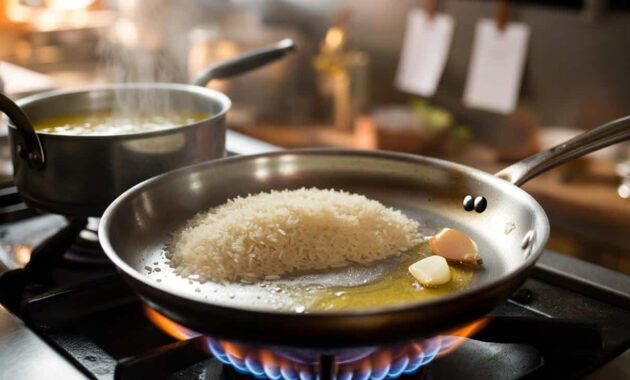
The first time I heard rice crackling in a pan, I thought the chef had messed up. It was a tiny restaurant kitchen, already too hot, with a line of orders pinned above the stove. Instead of pouring stock straight into the pot, the chef tossed the dry grains with a knob of butter and a clove of garlic, stirring until they turned faintly golden and nutty. The smell hit first: warm, toasty, almost like popcorn meeting fresh bread. Plates were piling up, the phone was ringing, nobody was talking about “technique”. They were just doing it, like breathing.
Then the chef looked at my face and said, “You never cook rice cold.”
The grains hissed, the stock went in, and the whole thing suddenly made sense — though I couldn’t explain why.
Not yet.
What really happens when chefs toast rice first
Watch a professional kitchen for ten minutes and you start to notice the same quiet ritual. Pan on. Fat in. Rice goes down dry, a little sizzle, a patient stir. No drama, no recipe card taped to the wall. Just this small, almost invisible step before the “real” cooking begins.
It doesn’t look like much. A few extra minutes, a soft change in color, a different smell in the air. Yet this is where flavor is quietly negotiated, where texture starts to form. Chefs talk fast about plates and tickets and timing, but their hands slow down when that rice hits the pan.
They’re not just heating it. They’re rearranging its destiny.
Picture a busy Tuesday night: one pot of rice for staff meal, another for guests ordering silky risotto at the bar. The same ingredient, two separate pans, two very different outcomes. In one corner, the line cook dumps raw rice straight into boiling water. The grains clump, the surface gets chalky, and everyone still eats it because, well, it’s staff food.
On the other burner, the risotto rice is toasted gently with onions until it sings quietly against the metal. A regular at the bar leans forward when the steam rises, almost instinctively. Toasting creates that moment. It builds a deeper aroma that reaches people before the spoon does. That’s not poetry; that’s chemistry meeting hunger.
You can taste the few minutes that came before the liquid.
What’s really going on is surprisingly simple. Each grain of rice is covered in starch, like a fine powdery jacket. When you toast it in fat, that outer layer lightly coats and seals, so the grains hold their shape better and cook more evenly. Some of those surface sugars start to brown, which unlocks roasted, nutty notes you just don’t get from a cold start.
The heat also wakes up whatever you cook the rice with: garlic, onions, spices. They bloom in the fat, cling to the grains, and stay with them even after you pour in broth or water. So the rice doesn’t just sit in flavored liquid; it carries the flavor inside its own skin.
That’s why toasted rice tastes like a dish. Untoasted rice often tastes like a side.
How to toast rice like a chef at home
The basic gesture is surprisingly accessible. Start with a wide pan or pot, something that gives the grains room to move. Add a spoonful of oil, butter, or ghee over medium heat, then toss in aromatics if you want: a crushed garlic clove, a slice of onion, a bay leaf. Let them soften and lightly perfume the fat.
Now add your rice, still completely dry. Stir slowly, letting each grain get a light coat. You’ll hear a soft crackle, see the color shift from chalky to slightly translucent with a hint of gold. After 2 to 4 minutes, it should smell like warm cereal or toasted nuts, not like burning.
That’s your cue to pour in the liquid. From there, the recipe is yours.
Plenty of home cooks skip this step and still eat well. Let’s be honest: nobody really does this every single day. There are nights when a bag of microwave rice is all that stands between you and ordering takeout. That’s real life.
Where things go wrong is when people rush the toasting or turn the heat too high. The grains scorch, the kitchen fills with that bitter, acrid smell, and suddenly “toasting” feels like a fussy chef trick instead of what it is: controlled, gentle browning. The other common slip is adding wet rice or rinsing and not drying it enough. Then the grains steam instead of toast, and you lose the point of the step.
You want dry grains, patient heat, and the courage to wait for that nutty smell.
Chefs rarely talk about toasting rice as a “secret”. For them, it’s more like putting on shoes before leaving the house: so normal it barely counts as a decision.
- Toast over medium heat
High heat will brown the outside too fast and leave the inside stubborn and undercooked. - Use enough fat to lightly coat the grains
They shouldn’t swim in oil, but they shouldn’t look dusty or dry either. - Stop at pale gold, not deep brown
You’re aiming for a subtle nutty aroma, not a dramatic color change. - Season during toasting
A little salt at this stage helps the grains absorb flavor more evenly later. - *Listen as much as you look*
That faint, steady crackle is a better guide than any timer on your phone.
When a tiny step changes how you taste everything
Once you notice toasted rice, you start seeing it everywhere: in paella, where the base layer clings to the pan and forms that prized socarrat; in pilaf, where each grain stands on its own instead of collapsing into a sticky mound; in certain fried rice recipes that ask you to “par-cook” the grains first. You realize this isn’t a niche Italian risotto thing. It’s a quiet, global habit.
We’ve all been there, that moment when you wonder why the same rice tastes flat at home and somehow richer at that restaurant you love. Often, the difference is just those three or four minutes before the water hits the pot. Not fancy stock. Not hidden ingredients. Just a bit of toasting, repeated night after night until it becomes invisible.
There’s something oddly comforting about that. The idea that a simple, almost boring step can have such a big impact runs against how we talk about “chef genius” online. No viral hack, no secret sauce, no rare spice only sold in one market in Tokyo. Just grain, heat, and fat doing what they naturally do when you give them time.
Maybe that’s why this technique spreads so quietly from kitchen to kitchen. You see it once, taste the result, and your hands almost refuse to cook rice any other way again. Not out of guilt or rules, but because suddenly the plain version feels like a missed opportunity. A small empty space where flavor could have lived.
The next time you cook rice, you might still be tired, distracted, scrolling through your phone between stirs. Life won’t pause because you decided to toast grains like a pro. Yet that one extra minute with a wooden spoon, listening for the soft crackle, could shift the whole feel of the meal. Rice doesn’t need saving. It doesn’t ask for technique.
But when chefs toast it before adding liquid, they’re quietly voting for depth over speed. They’re saying: if we’re going to eat this anyway, why not let it taste like something someone cared about. And once you’ve heard rice toast in your own kitchen, smelled that gentle nuttiness rise up out of an ordinary pan, it’s hard not to care a little more too.
➡️ The Crispy Chicken Parmesan Shortcut That Saves 30 Minutes in the Kitchen
➡️ Major capital raise seeks $450 million to “lead New Zealand’s renewable energy future”
➡️ “I work in performance monitoring, and my income grew without extra hours”
➡️ The psychological reason some people feel emotionally older than their actual age
| Key point | Detail | Value for the reader |
|---|---|---|
| Toasting builds flavor | Gentle heat browns surface starches and amplifies nutty, roasted aromas | Helps everyday rice dishes taste closer to restaurant quality |
| Better texture | Fat-coated grains hold their shape and cook more evenly | Reduces stickiness and mush, especially in pilaf, risotto, and paella |
| Simple, repeatable step | 2–4 minutes of stirring dry rice in hot fat before adding liquid | Low-effort habit that consistently upgrades meals without special tools |
FAQ:
- Do I have to rinse rice before toasting it?If your rice is very dusty or starchy, a quick rinse helps, but dry it well first. Damp grains won’t toast properly; they’ll just steam.
- Which types of rice benefit most from toasting?Medium and long-grain varieties used for pilaf, risotto, paella, or flavored rice shine with toasting. Very sticky rice meant for sushi or desserts is usually better without.
- What fat should I use for toasting?Neutral oil, olive oil, butter, ghee, or a mix all work. Butter and ghee give a richer, rounder flavor; oil handles higher heat more safely.
- How do I know if I’ve toasted the rice too long?If the grains turn dark brown, smell bitter, or you see black flecks, you’ve gone too far. Light gold and a gentle nutty aroma are the sweet spot.
- Does toasting change the cooking time or water ratio?Not dramatically. You might add a splash more liquid if the rice seems firm at the end, but the usual ratios still apply for most recipes.
Originally posted 2026-03-09 22:56:00.