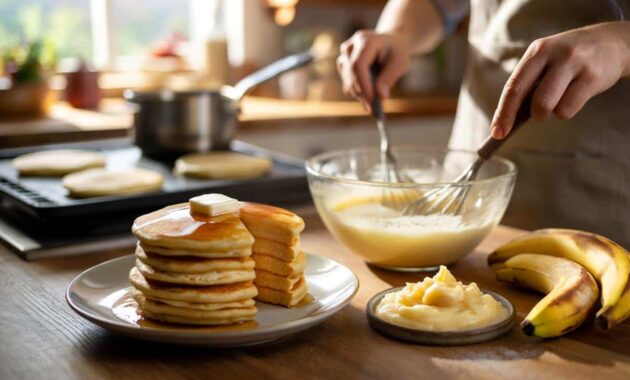
The first time I saw a chef slip a spotted banana into pancake batter, I honestly thought he’d grabbed the wrong bowl. It was a busy Sunday brunch in a tiny open kitchen, plates flying out, steam on the windows, that soft hum of cutlery and low conversations. He peeled the banana with one hand, mashed it with the back of a ladle, then quietly folded it into a vat of silky batter as if it were the most natural thing in the world.
When the pancakes hit the plate, they looked normal. Golden, fluffy, stacked in threes. But the first bite was… different. Softer, almost pillow-like, with a tenderness that held together without feeling doughy.
He caught my puzzled look, smiled, and just said: “Banana. Not for the taste. For the texture.”
The hidden power of a single mashed banana
Once you notice it, you start seeing this quiet trick everywhere. A blackened banana next to the mixer in a brunch spot. A pastry chef smashing fruit into a metal bowl behind the bar. A line cook scraping what looks like baby food into a stainless-steel bucket just before service. None of it is written on the menu, and nobody announces it at the table.
But the pancakes? They’re the ones people photograph. They’re the ones that trigger that little “wait, why are these so soft?” moment that keeps customers coming back without quite knowing why.
One Paris-based chef told me he started doing it out of pure desperation. His American-style pancakes kept coming out dense during the morning rush, when the griddle was crowded and the batter overworked. He had overripe bananas lying around from a smoothie experiment, so he mashed one in as a test.
Guests that day asked if he’d changed suppliers. Someone said the pancakes felt “cloudy but not fragile.” A food blogger posted a photo with the caption: “Best texture I’ve had in months.” The funny thing? Very few people actually picked up on the banana flavor. What they noticed was the tenderness.
So what’s going on in that mixing bowl? A banana carries natural sugars, pectin, and a bit of starch, all of which interact with flour and liquid like a tiny support system. The fruit traps moisture and helps the batter stay hydrated, even on a hot pan. At the same time, it gently “loosens” the gluten network, so the pancakes don’t tighten up as they cook.
The result is this subtle, almost invisible effect: pancakes that spring back when you press them, not crumble. That’s the quiet promise of one mashed banana.
How chefs actually use banana in their batter
The method most pros use is surprisingly simple. They start with their usual pancake base: flour, eggs, milk or buttermilk, a little sugar, baking powder, maybe a pinch of salt. Then, instead of reinventing the recipe, they just slide in half to one whole very ripe banana for every 8–10 pancakes.
➡️ Another fascinating military intelligence job you didn’t know: digital media investigator
The banana isn’t chopped. It’s fully mashed into a smooth paste, almost like a thick cream. That paste is whisked into the wet ingredients first, so it dissolves into the liquid before meeting the flour. This way, the banana disappears visually, but its softening effect stays from the first pour to the last pancake.
At home, the instinct is to overcomplicate it. We start googling new recipes, switching flours, adding yogurt, whipping egg whites, then wondering why the kitchen looks like a lab. Let’s be honest: nobody really does this every single day.
The banana trick sits at the opposite end of that spectrum. It’s one gesture, one fruit, one bowl. No need to change timings or pan temperature. Just mash, mix, and cook as usual. For tired mornings, or when you’re feeding kids who notice every texture, that kind of low-effort upgrade feels almost like cheating.
There are a few traps people fall into, and chefs talk about them with a kind of gentle amusement. The first one is using a banana that’s not ripe enough. A pale yellow banana adds almost no sweetness and barely helps the texture. You want those brown freckles, that slightly slumped feel in your hand. The second trap is adding too much and turning the batter into banana bread on a pan.
“Think of the banana as a softening tool, not a flavor bomb,” says one London brunch chef. “If you can clearly taste banana in every bite, you probably used more than you needed.”
- Use 1 small very ripe banana for about 8–10 pancakes.
- Mash it completely until no chunks remain.
- Stir it into the wet ingredients only, before adding flour.
- Reduce sugar slightly, since banana brings natural sweetness.
- If the batter feels too thick, add a splash of milk to loosen it.
Why this tiny trick feels bigger than pancakes
There’s something oddly comforting about the idea that your softest pancakes might come from a banana that looked ready for the trash. We spend a lot of time chasing perfection in the kitchen, yet this little chef secret is built on using what’s already there, slightly bruised, slightly forgotten. It almost feels like a rebellion against those hyper-polished recipe videos.
When you fold that mashed banana into your batter, you’re not just hacking texture. You’re also stretching your ingredients, cutting food waste, and quietly learning how ingredients behave rather than just following steps. *Once you’ve felt the difference in softness, you start noticing other places where a leftover piece of fruit or a small adjustment can quietly transform a dish.*
| Key point | Detail | Value for the reader |
|---|---|---|
| Mashed banana softens texture | Pectin, sugars, and starch trap moisture and relax gluten | Pancakes stay tender and fluffy without turning gummy |
| Use very ripe fruit | Brown-spotted bananas blend smoothly and add gentle sweetness | Better texture, less need for extra sugar, deeper flavor |
| Simple method, big payoff | Mash into wet ingredients, no recipe overhaul needed | Easy, everyday upgrade that works even on busy mornings |
FAQ:
- Does the banana flavor dominate the pancakes?Not if you use just one small very ripe banana for a standard batch. Most people simply notice a softer, moister texture, not a strong banana taste.
- Can I use frozen bananas?Yes, as long as you thaw and drain any excess liquid before mashing. Frozen ripe bananas can even blend more smoothly into the batter.
- Will this work with vegan or dairy-free pancakes?Yes. The banana actually helps bind and soften vegan batters that can sometimes feel dense or dry, especially with plant milks.
- Do I need to change cooking time or heat?Not usually. Cook on medium to medium-low heat as you normally would. Just watch the first pancake and adjust slightly if it browns too fast.
- Can I skip sugar completely if I use banana?You can, but the taste shifts. A small amount of sugar plus banana tends to bring a better balance than relying on fruit alone, especially if you like toppings that aren’t very sweet.