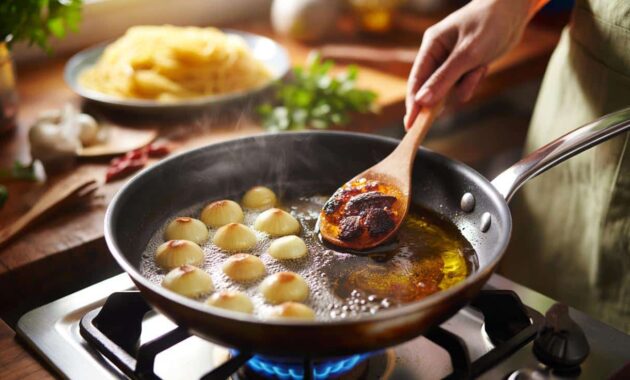
The pan is hot, the onions are just starting to turn soft, and you toss in a generous spoonful of chopped garlic with a little theatrical flair. It hits the oil, sizzles, smells heavenly for about ten seconds… and then, in a blink, the perfume shifts. The aroma goes from sweet and promising to sharp and slightly burnt, like somebody turned the flavor dial from “wow” to “why?” without asking you. You stir harder, you lower the heat, but it’s too late. That faint bitter edge has crept into the whole dish.
We don’t talk enough about how quickly garlic can turn on us.
And that tiny window is where most home cooks lose the battle.
When garlic turns from friend to flavor-killer
Garlic is one of those ingredients that feels forgiving. You chop, you throw it in, you walk away to check your phone. Then dinner comes out tasting a little harsh, a little flat, and you blame the recipe or the brand of pasta instead of the real culprit. Overcooked garlic doesn’t always scream “burnt.” Sometimes it just quietly mutes everything else on the plate.
That’s the sneaky part: the dish looks fine, but the taste is tired and slightly aggressive instead of bright and round.
Picture a simple pan of spaghetti aglio e olio. Olive oil, garlic, chili flakes, pasta water, parsley. Five ingredients, no hiding places. You slice the garlic, throw it into oil that’s already smoking, and by the time the pasta is ready, the cloves are dark brown at the edges. The final plate looks glossy, it smells deeply garlicky, yet the first bite hits the back of your throat like a scratchy cough.
Instead of that gentle garlic hum Italians rave about, you get a lingering bitterness that sticks around long after the last forkful.
What’s happening is brutally simple. Garlic is packed with sulfur compounds that smell incredible when lightly heated. Push them too far and they break down into harsher, bitter-tasting molecules. As the cloves move from pale to golden to brown, their sugars caramelize, then burn, and the texture shifts from soft and sweet to dry and acrid. *Those extra 30 seconds you weren’t watching the pan are often the whole story.* By the time you notice the color change, the damage is already traveling through the oil, and straight into every bite.
How to keep garlic in its delicious comfort zone
The easiest fix is almost embarrassingly simple: lower the heat and change the timing. Let the oil warm gently, then add garlic when the pan is no more than lightly shimmering, not spitting. You want the cloves to sigh into the fat, not scream. Stir often, keep them moving, and pull them off the heat as soon as they turn a soft, light gold. Not brown, not “almost there.” Pale gold.
If you’re cooking something for a long time, like a stew, add the garlic later in the process so it has no chance to burn on the bottom.
A small trick used by many restaurant cooks is to add the garlic after the onions. Onions can handle stronger heat and act like a little flavor shield, creating a moist, protective bed in the pan. Garlic on top of soft onions cooks slower and more evenly. Another handy move is to slice or smash instead of mincing when you know the dish will simmer for a while. Bigger pieces burn less quickly and can even be fished out if they start to darken.
Let’s be honest: nobody really does this every single day, but on nights when flavor truly matters, it changes everything.
Sometimes a chef will say, “I don’t want you to taste the garlic, I want you to feel it.” What they mean is that garlic should lift the whole dish, not dominate it or leave a bitter aftertaste.
- Start low and slow — Use medium-low heat when adding garlic and give it space in the pan.
- Add garlic later — Especially for long-cooked sauces, let other ingredients go first, then stir in garlic.
- Watch the color — Light gold is your signal to stop; anything darker starts stealing flavor.
- Use the right cut — Minced for quick sautés, sliced for gentler cooking, whole cloves for slow braises.
- Rescue move
- — If your garlic goes too dark, toss it and start again. The rest of the dish is not worth sacrificing.
Learning to listen to garlic instead of burning it
Once you start noticing what perfectly cooked garlic smells like, it’s hard to go back. The whole kitchen feels different: softer, rounder, like the promise of something comforting rather than a punch to the nose. You might catch yourself hovering over the pan a little more, stirring like a DJ keeping the track alive, ready to yank it off the heat at the first sign of deep gold. That small attention turns a random weeknight stir-fry or pan of veggies into something you actually remember later.
And the funny part is, you didn’t change the recipe at all. Just those few seconds around the garlic.
There’s also a kind of quiet confidence that comes with getting this right. You start trusting your nose and your eyes instead of clinging to rigid cooking times. One day you’ll realize you’re effortlessly doing what pros do: adjusting the flame, delaying the garlic, adding a splash of water when it threatens to catch. This is the plain truth: once you stop burning garlic, half your “mystery kitchen failures” simply disappear.
From there, you might even play. Slow-roasted whole cloves, quick-fragrant raw garlic rubbed on toast, or that barely warmed garlic in salad dressings that whispers instead of shouts.
Garlic will always be a bit wild. That’s part of the appeal. It asks for your attention, your timing, your willingness to stand by the stove for a minute instead of scrolling on the couch. Next time you cook, notice that tiny window where the smell turns from sharp to sweet, then threatens to tip into bitter. Catch that moment, keep it, and see what happens to your food.
You may find yourself talking about “that one perfect garlic pasta” the same way people talk about a memorable trip or a song they can’t stop replaying.
➡️ The financial lesson learned from reviewing spending during low-income months
➡️ Butchers say these little known cuts are actually more flavorful than the steaks most people buy
| Key point | Detail | Value for the reader |
|---|---|---|
| Timing is everything | Garlic goes from fragrant to bitter in seconds on high heat | Fewer ruined dishes and more consistent flavor |
| Heat control | Gentle, medium-low heat preserves sweetness and aroma | More refined, restaurant-like results at home |
| Cut and placement | Sliced or whole cloves burn slower and can be added later | Greater control over intensity and texture of garlic |
FAQ:
- Question 1How do I know if I’ve actually burned the garlic or if it’s still usable?
- Answer 1If the garlic is dark brown and smells sharp or almost like coffee grounds, it’s burned. A slight tan with a toasty, pleasant aroma is fine, but if you taste bitterness on the tip of your tongue, it’s safer to start over.
- Question 2Can I save a dish if I already used burned garlic?
- Answer 2You can try diluting the bitterness by adding more liquid, fat, or a touch of acidity, but the harsh note often lingers. When the garlic is badly burnt, tossing the oil or base and quickly redoing it is usually faster than trying to fix the whole pot.
- Question 3Is raw garlic better than cooked garlic for flavor?
- Answer 3Raw garlic is more pungent and spicy, while gently cooked garlic is softer and sweeter. Neither is “better,” they’re just different tools. Many great dishes actually use both: raw for a final kick, cooked for the base.
- Question 4Does pre-chopped garlic from a jar burn faster?
- Answer 4Yes, jarred garlic is usually very finely minced and sitting in liquid, so it can catch and burn more easily. If you use it, lower the heat even more and stir constantly, or add it later in the cooking process.
- Question 5Should I add garlic before or after onions?
- Answer 5For most sautés, add onions first, let them soften, then stir in garlic. The moisture from the onions helps protect the garlic from direct heat, giving you better control and a sweeter, rounder flavor.