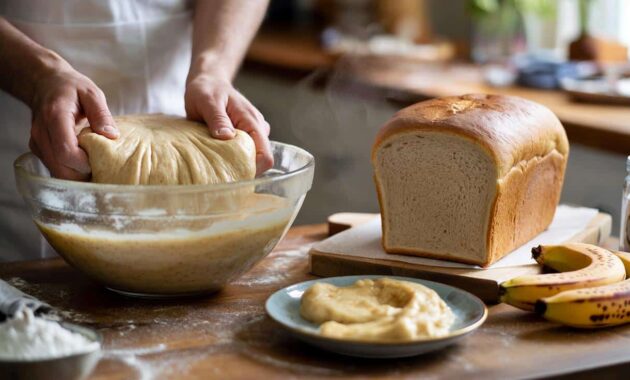
The first time I slipped a mashed banana into bread dough, it felt like cheating. The fruit bowl was full of freckled bananas no one wanted, and my last loaf had turned into a brick in less than 24 hours. So I did what any slightly desperate home baker does at 10 p.m.: I started experimenting.
The dough smelled faintly of banana milkshake while it rose. The crust baked up the same, but the inside? Tender, almost pillowy, even the next morning. My partner sliced a piece on day three, took a bite, and frowned. Not because it was bad. Because it was still soft.
Bread that refuses to go stale quite so fast feels like a small domestic miracle.
Why a mashed banana keeps bread softer for longer
If you’ve ever baked a beautiful loaf in the afternoon and met a dry, disappointing stranger the next day, you know how fast bread can turn on you. The culprit has a name that sounds oddly scientific for such a homey problem: starch retrogradation. Once the bread cools, the starches in the crumb slowly recrystallize, squeezing out moisture and turning that dreamy softness into a crumbly, sawdust vibe.
A mashed banana quietly sabotages that process. It brings natural sugars, pectins, and a surprising amount of water locked in soft fibers that hang on instead of evaporating. That means your crumb stays tender, your slices bend instead of snapping, and your toast tastes like bread, not cardboard.
There’s a small bakery in my neighborhood that started adding banana to their “breakfast loaf” during the pandemic, when waste suddenly mattered more than ever. They had crates of bananas ripening too fast and customers working from home, baking their own bread and complaining about how quickly it dried out.
So they tested a simple white sandwich bread with one overripe banana per loaf. The staff assumed it would taste like banana cake. It didn’t. The flavor was subtle, more of a gentle sweetness than a banana punch. Three days later, they sliced a forgotten heel from the back shelf. It was soft enough to fold. Customers began asking why this one loaf stayed fresher in their bread bins while the others didn’t. The answer was sitting right there in the fruit crate.
What’s actually happening is a quiet game of moisture and structure. Banana is packed with soluble fiber and natural gums that bind water like a sponge. Instead of the crumb giving up its moisture to the air, a chunk of that water ends up locked in these tiny fiber networks.
At the same time, the fruit’s sugars interfere with the starches’ tendency to recrystallize. That slows down staling and keeps the crumb flexible. *You’re essentially slipping a soft, edible humidifier into your dough.* The loaf doesn’t become banana bread, though. It becomes regular bread with a better memory of how soft it was on day one.
How to add banana to bread dough without ruining the loaf
The easiest rule: one small, very ripe banana per standard loaf. Think 350–500 g of flour, 1 medium banana, mashed into a smooth paste before touching the dough. Those heavily speckled, slightly collapsed bananas on the counter are perfect. Peel, mash with a fork, then weigh it if you’re the precise type: around 80–100 g is a good starting point.
➡️ This simple trick helps prevent spills when storing leftovers
➡️ Place this object near your orchid : blooming starts in just a few days
➡️ No vinegar and no baking soda: the half-glass trick that cleans the drain by itself
➡️ Legendary rock band retires after 50 years “the hit everyone knows”
Then cut back on the water or milk slightly. Banana is mostly water, so you don’t need as much liquid. Start by holding back 20–30% of the usual hydration, mix, and only add more if the dough feels dry. You’re aiming for a dough that’s a bit softer and stickier than your usual, but still workable with a light dusting of flour.
There’s one common fear with this trick: turning everyday bread into banana cake. That happens when the banana amount creeps too high or when there’s already sugar and fat in the recipe. If your dough already has butter, milk, and sugar, go easier on the banana the first time. You can always bump it up next round.
Another easy mistake is treating banana like a dry ingredient. It’s not. It’s a wet, sugary mash that can drown your gluten network if you pour in your normal water as if nothing changed. Then you’re stuck with a sticky, sluggish dough that spreads instead of rising. Let’s be honest: nobody really tests hydration with a notebook at home every single day. Start small, feel the dough, and adjust on instinct. That’s allowed.
Some bakers call banana “the gentle softener.” It doesn’t shout, it just nudges the texture in the right direction and slows down the bread’s aging.
- Use very ripe bananas
Brown-speckled or even fully brown skins mean more sugar, more softness, and a smoother texture in the crumb. - Add banana after the first mix
Combine flour, yeast, salt, and part of the liquid, then work in the mashed banana so it blends evenly. - Reduce sweeteners slightly
Banana already brings sugar. Cut your added sugar or honey by a tablespoon or two to avoid a cake-like result. - Watch the proofing time
Banana’s sugar can speed up yeast. Keep an eye on the rise so your dough doesn’t overproof and collapse. - Start with sandwich breads or buns
They’re more forgiving and actually benefit the most from that extra tenderness and shelf life.
When bread, fruit and real life quietly line up
There’s a quiet satisfaction in slicing into a loaf on day three and finding it still soft, still friendly. You’re not just winning some home-baking mini contest. You’re stretching the life of food you paid for, giving those neglected bananas a second chance, and sidestepping the sadness of hard crusts and stale middles.
This tiny trick sits at the crossroads of science and habit. A small fruit tweaks the chemistry of starch and water, and suddenly your weekday toast tastes like something from the first day of baking. And yet the gesture is so ordinary: grab the banana that was headed for the bin and fold it into the dough.
We’ve all been there, that moment when you slice into yesterday’s beautiful loaf and wonder how it aged ten years overnight. Next time, one mashed banana might quietly shift that story. If you try it, you might end up watching your bread a little more closely, noticing how it feels on day one, day two, day four. That’s how kitchen experiments become part of the way a home runs.
| Key point | Detail | Value for the reader |
|---|---|---|
| Banana slows staling | Natural sugars and fibers hold onto water and disrupt starch recrystallization | Softer bread for several days without additives |
| Simple ratio | Use one very ripe banana per standard loaf and reduce liquid | Easy to test at home with minimal recipe changes |
| Best for soft breads | Works especially well in sandwich loaves, buns, and breakfast bread | Improves everyday bread you actually eat most often |
FAQ:
- Question 1Will my bread taste strongly of banana if I add it to the dough?
- Question 2Can I use frozen bananas for this trick?
- Question 3Does banana replace eggs, milk, or butter in bread recipes?
- Question 4How long will banana-enriched bread stay soft?
- Question 5Is this safe for people who need low-sugar bread?