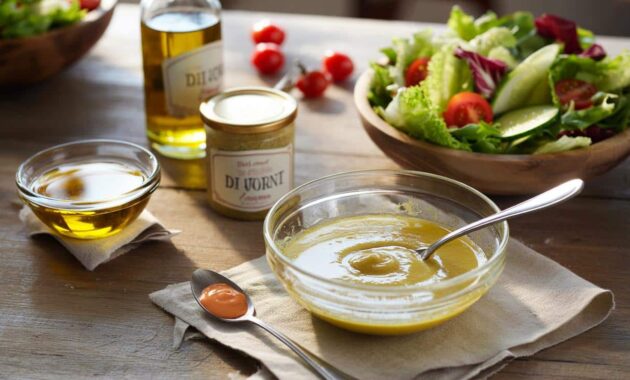
The first time I saw someone whisk mustard into a salad dressing, I thought they’d made a mistake. It was in a tiny Paris bistro, the kind with wobbling tables and handwritten menus. The chef, half hidden behind the counter, poured oil and vinegar into a bowl, added a pinch of salt… then a small spoonful of mustard. The whole thing came together in seconds, turning from separated streaks into a glossy, clinging sauce that wrapped every leaf.
At my table, the salad looked ordinary. Then I took a bite.
Something happened on that fork.
Why a tiny spoon of mustard changes everything
Salad dressings often start with good intentions and end in disappointment. You pour olive oil, a bit of vinegar, maybe some lemon, and somehow the flavor never quite lands. The oil slides off the lettuce. The acid hits too hard. It tastes fine, not great.
Add a small amount of mustard and the scene shifts. The dressing thickens slightly, the flavors marry, and each bite feels more complete. The salad suddenly tastes like something you’d get in a restaurant, not something you threw together between two emails. One little spoon, big difference.
Imagine two bowls on your kitchen counter. In the first, you whisk only oil and vinegar. No matter how hard you stir, they separate a few minutes later, lying on the plate in shiny puddles. You eat fast, before it all slides to the bottom.
In the second bowl, you add half a teaspoon of Dijon and stir. The mixture turns creamy, pale, almost velvety. Ten minutes later, it’s still holding together. Your lettuce leaves get coated instead of splashed. A 2022 French consumer survey even found that mustard appears in more than 70% of homemade vinaigrettes there. They know something.
The secret lies in what mustard seeds can do. They contain natural emulsifiers that help bind oil and water, two elements that usually refuse to mix. That tiny spoonful acts like a bridge, so the acidity of the vinegar and the roundness of the oil don’t fight each other, they collaborate.
That’s why mustard doesn’t just make dressing thicker. It makes the flavors feel more balanced, less sharp, more “together.” *A good vinaigrette isn’t about intensity, it’s about harmony staying on every leaf.*
How to use mustard in dressing without overdoing it
Start smaller than you think. For a classic vinaigrette using 3 tablespoons of oil and 1 tablespoon of vinegar, begin with just 1/4 to 1/2 teaspoon of mustard. Put the mustard in the bowl first with some salt and pepper, then add the vinegar and whisk until smooth. Only then pour in the oil slowly, whisking or shaking in a jar.
➡️ Why repeating advice too often makes it less effective
➡️ No more ice in the freezer: the failsafe trick for a clean, frost-free appliance
➡️ The reason certain reminders feel annoying and how to make them easier to follow
➡️ A hairdresser reveals: Why you should never put shampoo directly on the top of your head
This order helps everything blend gracefully. The dressing will turn slightly opaque, with a silky look. Taste it on a single lettuce leaf, not on a spoon. The mustard should lift the dressing, not shout over it. If you notice heat on the back of your nose, you’ve gone too far.
A common mistake is using mustard like a flavor bomb rather than a support act. You don’t need a full tablespoon in a tiny salad for two people. That’s when the dressing becomes harsh and your guests quietly push the lettuce to the side.
Another trap: picking a mustard that doesn’t match the salad. Strong English mustard with delicate spring greens will feel like a punch. For everyday salads, a gentle Dijon or smooth wholegrain works far better. We’ve all been there, that moment when one ingredient hijacks the entire meal and you nod politely while thinking, “This is… a lot.”
“Mustard in a dressing is like a good bass player in a band,” laughs Lina, a home cook who runs a tiny supper club from her apartment. “You don’t always notice it’s there, but take it out and suddenly everything feels flat.”
- Use Dijon for smooth creaminessPerfect with green salads, roasted vegetables and simple side dishes where you want a refined, restaurant-like texture.
- Try wholegrain mustard for textureThe little seeds add crunch and visual appeal, ideal for potato salads or hearty grain bowls.
- Balance strong mustards with a touch of sweetnessA drizzle of honey or a pinch of sugar can round off any aggressive edges without turning the dressing into dessert.
Mustard as the quiet hero of everyday salads
Once you start slipping a bit of mustard into your dressings, you notice how it quietly upgrades almost everything. Bitter leaves like rocket feel less aggressive. Simple tomatoes and cucumbers suddenly taste more vivid. Even leftover cold chicken tossed through a mustardy vinaigrette turns into something that could sit proudly in a café display.
There’s also a small psychological shift. When your salad dressing feels intentional, the whole meal feels intentional. You go from “I guess I’ll eat some greens” to “this is actually something I want to sit down and enjoy.” Let’s be honest: nobody really does this every single day. But on the days you do, that spoonful of mustard is a remarkably easy win.
| Key point | Detail | Value for the reader |
|---|---|---|
| Mustard helps emulsify | Binds oil and vinegar into a stable, creamy mixture | Dressings cling better to salad, no more oily puddles |
| Small amounts are enough | ¼–½ teaspoon per 3 tbsp oil is usually plenty | More control over flavor, less risk of overpowering heat |
| Different mustards, different moods | Dijon for smoothness, wholegrain for texture, mild for delicate greens | Easy way to customize salads without rethinking the whole recipe |
FAQ:
- Question 1Can I use sweet mustard in a salad dressing?
- Question 2How long does a mustard-based dressing keep in the fridge?
- Question 3Is there an alternative if I’m allergic to mustard?
- Question 4Why does my dressing still separate even with mustard?
- Question 5Should I use a whisk, a jar, or a blender for the best texture?