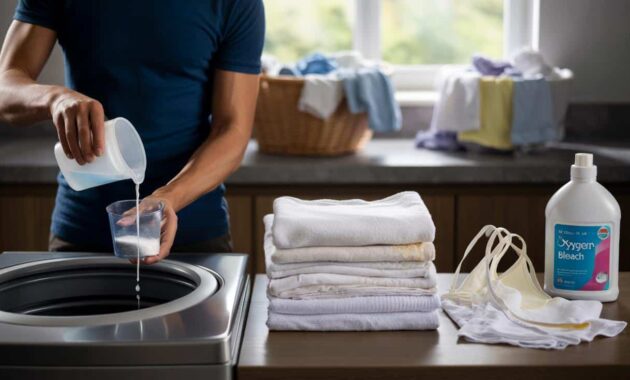
Between internet hacks, family tips and alarming warnings on labels, many people no longer know when bleach is a good idea for laundry — or when it quietly ruins fabrics for good.
What bleach actually does to your laundry
Household bleach, usually based on sodium hypochlorite, is a powerful oxidising agent. It breaks down pigments and many stains, which is why it makes fabrics look lighter and “cleaner”.
That same chemical punch also attacks fibres, trims and even some dyes. Used badly, it leaves yellow marks, weakens seams and shortens the life of your favourite clothes.
Bleach can make whites brighter, but every wash is a trade-off between stain removal and fabric damage.
Most standard chlorine bleach sold in supermarkets is designed for hard, non-porous surfaces and some cotton textiles. It is not a universal whitening solution. Different fabrics tolerate it very differently.
When bleach can safely whiten your clothes
Bleach has its place in laundry, particularly for specific, robust textiles.
- Thick cotton towels and sheets in plain white
- Simple cotton T‑shirts without prints, lace or elastic
- White cotton socks and undershirts
- Some workwear labelled “chlorine bleach safe”
Always check the care label first. A small triangle usually indicates whether chlorine bleach is allowed:
| Symbol | Meaning for bleach use |
|---|---|
| Empty triangle | Chlorine or oxygen bleach allowed if needed |
| Triangle with diagonal lines | Only oxygen bleach (non-chlorine) allowed |
| Triangle with a cross | No bleach, of any kind |
If the triangle is missing, manufacturers might not have tested the fabric with bleach. In that case, test on a hidden seam with a very diluted solution before treating the whole item.
Clothes you should never bleach
Some fabrics react badly to chlorine bleach from the first contact. They can yellow, thin out or even develop holes.
➡️ Three years ago I bought my first air fryer, I wish someone had said I also needed these accessories
➡️ If you feel unseen even when surrounded by others, psychology explains this internal disconnect
➡️ Three summers later, my patio still looks spotless: no sweeping required
➡️ France edges out UK to clinch €6.7 billion deal for India’s 6th?generation fighter engine
➡️ Decathlon promo: this full-suspension electric mountain bike just dropped by €400
Delicates and synthetic fibres
Delicate textiles like wool and silk do not tolerate household bleach. The same goes for many synthetic fibres, especially:
- Elastane and spandex blends (leggings, sportswear, underwear)
- Acetate and triacetate (lining, occasion dresses)
- Some polyester microfibres
On these fabrics, bleach can strip the outer layer, leave rough patches and cause sudden tears after just a few washes.
Coloured and printed fabrics
Bleach does not “respect” dyes. It breaks them down in irregular ways, leaving blotches and streaks rather than a uniform fade. Printed motifs, flocking, glitter details and logos can disappear or turn ghost-like after a single contact.
On coloured clothes, bleach behaves more like paint stripper than a gentle brightener.
If you want to keep a garment’s shade, stick to detergents designed for colours and avoid chlorine altogether.
How to use bleach on laundry without wrecking it
For textiles that tolerate bleach, preparation and dilution matter more than the product itself.
Respect dilution and contact time
Undiluted bleach should never touch fabric directly. A common home guideline is:
- About 10–15 ml of bleach for 1 litre of water for soaking
- Or follow the lowest dose recommended on the packaging
Soak whites for no more than 20 to 30 minutes. A longer soak does not automatically mean whiter fabric. After a certain point, stains have gone and the product mainly attacks the fibres.
For machine washing, use the dedicated bleach compartment if your appliance has one, and never pour bleach into the drum on top of dry clothes. Start the water flow first, then add bleach so it dilutes before reaching the textiles.
Rinse thoroughly and wash again
After soaking, rinse garments under cold water until they no longer smell strongly of bleach. Many people skip this step and send items straight into the machine, which leaves residue working on the fabric for hours.
Running a complete wash cycle with a regular detergent after bleaching removes leftovers and helps neutralise odours.
Real risks: from yellow stains to health issues
Bleach is aggressive, and the risks are not just cosmetic.
Yellowing and fibre weakness
Iron in tap water, traces of body oils or some whitening agents used in fabrics can react with chlorine. Instead of turning brighter, whites pick up a dull yellow or grey haze that no extra bleach will fix.
At the same time, fibres become less elastic. Towels feel rougher, pillowcases tear more easily at the seams, and T‑shirts develop tiny holes near the waistband or under the arms.
Fumes and dangerous mixtures
Bleach releases irritating fumes, especially in hot water or poorly ventilated rooms. Sensitive people can experience coughing, eye irritation or headaches.
The most serious risk is mixing bleach with other cleaners, especially those containing acids or ammonia.
Mixing bleach with a toilet descaler or vinegar creates chlorine gas, which is highly dangerous to breathe. With ammonia-based cleaners, it can generate chloramines, another family of toxic fumes. These mixtures should be avoided entirely, not just used “with care”.
Alternatives for whitening laundry without chlorine bleach
Many households now reserve chlorine bleach for rare, heavy-duty jobs and rely on gentler options for day-to-day whitening.
Oxygen bleach and laundry boosters
Oxygen bleach, often based on sodium percarbonate, releases oxygen when dissolved. It targets stains and dullness in a milder way and is usually marked “colour-safe” or “non-chlorine” on packets.
These products work particularly well on:
- Tea and coffee stains
- Mild sweat marks
- General grey build-up on cotton
They can be added with your usual detergent, following the instructions on the packaging, and they tend to respect elastic fibres better.
Everyday brightening habits
Sometimes the best whitening strategy is more about routine than chemistry. Washing whites together, rather than mixing with dark colours, slows down greying. Avoid overloading the drum; clothes clean and rinse better when they can move freely.
Line drying in daylight also has a natural bleaching effect. Sunlight acts as a mild oxidiser, especially on freshly washed cotton, and gradually lifts some stains that survived the wash.
Bleach, hygiene and when it actually makes sense
Many people reach for bleach not just for brightness but for hygiene. Certain situations genuinely call for disinfection. Think of reusable cleaning cloths used on toilet surfaces, cloth nappies or heavily soiled pet bedding.
In those cases, a carefully measured amount of bleach can help reduce bacteria and odours. The key is to use it occasionally, not as a default on every load. Repeated disinfection on slightly dirty items only stresses fabrics without offering much extra hygiene.
Laundry detergents already contain surfactants and, in some cases, bleaching agents designed for fabrics. For the majority of everyday clothes, a good quality detergent and the right temperature bring a very decent level of cleanliness without chlorine.
Practical scenarios: when to skip, when to risk it
Imagine a white cotton shirt with yellow sweat marks around the collar. If the label allows chlorine bleach, a short soak in a diluted solution can rescue it once or twice a year. For every routine wash, stick to oxygen bleach or a stain remover and avoid repeated chlorine use.
Now take a set of white hotel-style towels turning slightly grey after months of use. Before reaching for bleach, try a hot wash with oxygen bleach and a bit less detergent, plus an extra rinse. Residual soap is often the real culprit behind that dull tone.
Contrast that with a white sports bra with elastic straps. Even if it looks sturdy, bleach will likely shorten its life. A pre-treatment with a dedicated stain remover and a 40°C wash is much kinder to the fabric.
Key terms that matter on laundry labels
The phrase “non-chlorine bleach only” often confuses shoppers. It simply means that oxygen-based whiteners are permitted, while chlorine bleach is not. Using regular bleach on such items might not ruin them instantly, but it will speed up wear and risk patchy discolouration.
Another label phrase worth decoding is “do not wring”. Bleached fabrics are sometimes more fragile when wet. Twisting them hard can finish the damage started by chemicals, especially on collars, cuffs and elasticated areas.
Thinking of bleach as a specific stain-fighting tool rather than a default whitening shortcut gives you more control. Used thoughtfully, it can rescue a few stubborn items. Used casually, it quietly eats through the very fabrics you’re trying to keep bright.
Originally posted 2026-03-09 05:47:00.