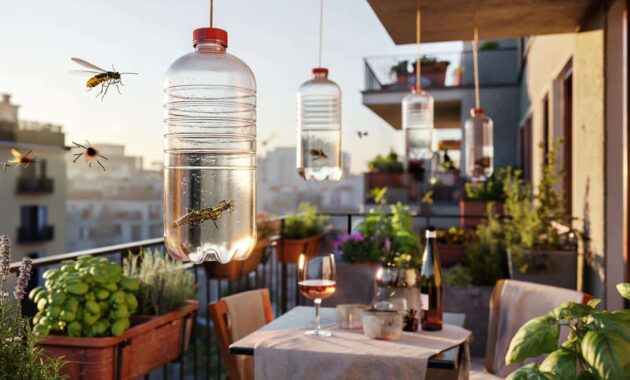
The first time I noticed them, it was late on a July evening. Transparent plastic bottles, half-filled with cloudy water and something that smelled sharply of vinegar, dangling from balconies like odd lanterns. On one side of the street, a neighbor’s geraniums. On the other, these swinging bottles catching the last bit of light.
I remember thinking: is this some kind of DIY weather station, or did I miss a new balcony trend on TikTok?
Since then I’ve started spotting them everywhere: in seaside towns, in busy city centers, even on the 6th floor of a modern building with glass railings.
People don’t hang bottles full of vinegar on their balconies for nothing.
There’s a very practical reason behind it.
Why bottles of water and vinegar suddenly appear on balconies
Once you’ve seen them, you can’t unsee them.
Those hanging bottles are often the discreet signature of someone who is tired of flies, mosquitoes or even wasps crashing their peaceful evenings outside.
From the street, it looks almost poetic. From the balcony, it’s pure strategy.
The mix of water and vinegar gives off a strong smell that many insects hate, or that distracts them from food and drinks on the table.
Behind this tiny urban ritual, you can almost hear the story: neighbors annoyed by buzzing, children stung during family dinners, and that quiet decision one day to “try something more natural”.
In a small town in southern Spain, a resident’s post about her balcony bottles quietly went viral in a local Facebook group.
She had hung three cut plastic bottles with water, vinegar and a few drops of dish soap.
She shared pictures: dozens of drowned flies and a few wasps trapped inside after just two days.
Her neighbors began copying the idea. Two weeks later, passing on her street, you could count the bottles like flags in a secret club.
That’s how these small tricks spread.
Not through official recommendations, but from balcony to balcony, through word of mouth, WhatsApp chats and those casual “What’s that you’ve got hanging there?” between two chairs and a half-empty glass of rosé.
➡️ “One in 200 million”: fisherman hauls dazzling electric-blue lobster from the Atlantic
➡️ France delivers a 500-tonne steel giant to power the UK’s new Hinkley Point C nuclear reactor
➡️ This profession pays well because expertise takes years to master
The logic is simple. Many flying insects are attracted by contrasts, smells and light.
A transparent bottle filled with a cloudy, acidic mixture can either repel them or lure them away from the area where you’re sitting.
The vinegar smell tends to bother some insects, especially if they were heading for sweeter scents.
If a bit of sugar or fruit is added, the bottle can turn into a trap: they go in and can’t get out.
For the person on the balcony, it’s a low-cost shield.
For the insects, it’s a confusing, and sometimes fatal, detour.
How people actually prepare and hang these bottles
The method that comes up most often is almost disarmingly simple.
Take an empty plastic bottle (1–1.5 liters), remove the label, and pour in about two thirds water and one third white vinegar.
Some people go further and add a teaspoon of sugar or a splash of wine to attract wasps and flies away from food.
Then they punch two small holes near the top, thread a piece of string through, and hang the bottle on the balcony railing, just off to the side of where they sit.
The bottle should sway lightly in the air, but not knock against the wall or glass when the wind picks up.
It’s a small, homemade device, but it feels oddly satisfying to prepare.
This is where a lot of people get frustrated.
They try the bottle-on-the-balcony trick once, expect zero mosquitoes the same evening, and decide it “doesn’t work”.
Yet these DIY repellents are rarely magical solutions.
They work better when combined with common sense: removing stagnant water where mosquitoes breed, not leaving fruit bowls open outside, picking up crumbs and soda cans.
Let’s be honest: nobody really does this every single day.
We get home tired from work, we just want to sit down with a drink, and then the buzzing begins.
So the bottle becomes a compromise.
Not perfect, not foolproof, but a small, visible gesture that says: “I’m doing something”.
“I started hanging bottles with water and vinegar because my grandmother did it in the countryside,” explains Marta, 37, who lives on the 5th floor of a building overlooking a busy avenue. “At first my friends laughed. Then they realized my balcony had fewer flies than theirs.”
Alongside this old-fashioned, passed-down trick, many people now combine it with other simple actions:
- Using light-colored tablecloths outside to attract fewer insects
- Bringing in ripe fruit and open trash before nightfall
- Turning off strong balcony lights that act like a magnet for flying bugs
- Planting herbs like basil, mint or lavender in pots near the sitting area
- Choosing fans or small air circulators that disturb insects in flight
*When you look closely, a quiet ecosystem of homemade defenses starts to emerge on balconies everywhere.*
What these bottles really say about how we live with nature
Beyond the recipe of water and vinegar, these hanging bottles say a lot about the way we negotiate our tiny piece of outdoor space.
The balcony is often our only slice of open air: a place for coffee, drying laundry, a cigarette break, or plants clinging to life in reused containers.
Into this fragile comfort zone comes the reality of summer: insects, heat, noise from the street.
The bottle is a way of drawing a small line, a border between “inside my world” and “what comes from outside”.
We’ve all been there, that moment when a single wasp can ruin an entire relaxed meal, or when you go back in with three mosquito bites and the vague irritation that your evening was cut short.
These little tricks are about taking back that hour of calm.
| Key point | Detail | Value for the reader |
|---|---|---|
| Simple insect deterrent | Mixture of water and vinegar, sometimes with sugar or wine, hung in a transparent bottle | Offers a low-cost, accessible way to reduce flies, wasps and some mosquitoes on balconies |
| Natural and DIY approach | Reuses plastic bottles, relies on household ingredients instead of chemical sprays | Limits chemical exposure, encourages more eco-conscious, homemade solutions |
| Part of a broader strategy | Works best with clean balcony habits, plants and light control | Helps the reader design their own, more comfortable outdoor space with small daily gestures |
FAQ:
- Does the water and vinegar bottle really repel mosquitoes?
It can help, but it’s not a miracle cure. The smell may bother some mosquitoes and attract others away if you add sweet elements, yet you’ll still need nets, long clothing or approved repellents in high-risk areas.- What exact mixture should I use in the bottle?
A common mix is two parts water to one part white vinegar. For a trap effect, people often add a teaspoon of sugar, some overripe fruit, or a splash of beer or wine.- Is it safe for pets and children?
The mixture itself is not highly dangerous, but it’s acidic and unpleasant to drink. Hang the bottles out of reach, and always close balcony doors if small children are playing unsupervised.- Will my balcony smell like vinegar?
Usually, the smell is noticeable only when you get very close to the bottle. Outdoors, the odor disperses quickly, especially if there is a bit of wind.- How often should I change the mixture?
Most people change it every 5 to 7 days, or sooner if lots of insects have fallen in or if the liquid looks dirty. In very hot weather, you might need to refill more often as the water evaporates.
Originally posted 2026-03-09 04:12:00.