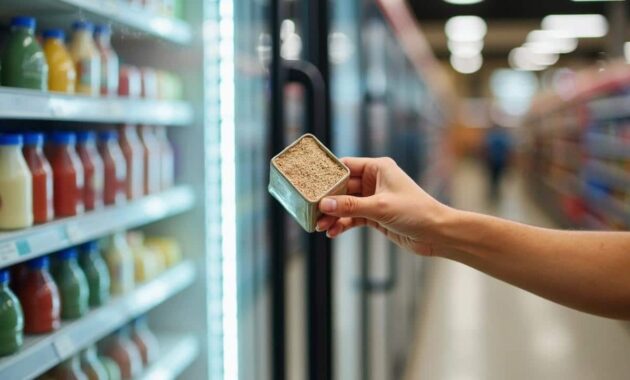
Something has quietly shifted.
Across Europe and beyond, shoppers are noticing lighter cereal boxes, slimmer chocolate bars and smaller packs of washing pods, while the price on the shelf barely moves. Economists have a word for this discreet strategy, and regulators in France have just tried to clamp down on it.
What shrinkflation actually is
The French call it “réduflation”, a mash-up of “reduction” and “inflation”. In English, the term shrinkflation has stuck. The idea is simple: brands cut the quantity you get, yet keep the sticker price the same – or let the price per kilo or per litre rise.
Shrinkflation means you pay the same, or more, for less product, often without noticing the change at first glance.
This can involve fewer biscuits in a packet, a yoghurt that loses 10 grams, or a family-sized bag of crisps that quietly stops being family-sized. Packaging usually stays very similar. The logo, colours and general look are preserved so shoppers feel they are buying the same thing.
For manufacturers, it is a way of dealing with rising costs of raw materials, energy or transport. Instead of slapping a visible price increase on the shelf, they squeeze the content while hoping customers stay loyal. The tactic remains legal across most markets, including France, but it is often criticised as confusing at best and misleading at worst.
Why brands resort to it
Food and household goods producers work with tight margins. When wheat, sugar, cocoa or palm oil become more expensive, their profits are hit quickly. Passing those increases fully onto shoppers is risky in a fiercely competitive supermarket aisle.
Shrinkflation offers a compromise from their point of view. The price printed on the label looks stable, which reassures budget-conscious consumers glancing at the shelf. The real rise happens in the hidden metric: the price per unit of measure.
- A 1-litre bottle of juice slips to 900 ml.
- A 500 g pasta bag becomes 450 g.
- A pack of 12 dishwasher tablets is cut to 10 tablets.
The change is perfectly visible for anyone who reads carefully, yet in practice many people shop by habit. They recognise the brand, grab the same package shape and move on. Loyalty and routine do much of the work.
The French 2024 law: trying to make hidden inflation visible
France has now decided this quiet erosion of quantity should at least be clearly signposted. A new legal framework has applied since 1 July 2024, following an order dated 16 April and updated on 28 June. It targets large food-focused stores: supermarkets and hypermarkets bigger than 400 square metres.
➡️ Half a glass and a toilet bowl like new: surprising ways to revive tired bathroom fixtures
➡️ How boiling orange peels instantly freshens the whole house and leaves a long-lasting natural scent
➡️ Why adding a pinch of baking soda to onions can transform your caramelized onions in minutes
➡️ Forget “short strolls”: study reveals how you really should walk for a healthier heart
The rules cover both food and non-food products that are pre-packaged in fixed quantities. Loose goods such as fruit and veg sold by weight, deli counters, butchers and fishmongers are not included. Online shopping and drive-through collection points sit outside the new system as well.
Whenever the pack gets smaller while the price per kilo, per litre or per unit rises, the French law requires a visible notice on the shelf for two months.
The required sign must state clearly:
| Information | What the notice must show |
|---|---|
| Old quantity | The previous weight, volume, or number of units |
| New quantity | The reduced weight, volume, or number of units |
| Unit price change | The fact that the price per kilo, litre, or unit has increased |
| Duration | Display on or near the product for two months |
French consumer watchdogs, particularly the DGCCRF (the body in charge of competition, consumer affairs and fraud control), check whether retailers follow the rules. Shops that ignore them risk fines up to €3,000 for individuals and €15,000 for companies, as well as formal orders to comply and the naming of offenders.
What this changes for your weekly shop
For shoppers in France, the main change is visibility. Shrinkflation has not been banned. Brands can still reduce pack sizes if they want, but supermarkets must flag it when the unit price climbs at the same time.
In practice, that means you could spot an extra label under your favourite biscuits explaining that their weight has dropped, and that you are effectively paying more per kilo. This extra cue can encourage people to switch brands or formats, or to compare products that previously looked similar.
The French move is being watched closely across Europe and in the UK, where similar concerns keep rising. Regulators in several countries are debating whether shoppers get clear enough information on unit prices and product downsizing.
How to spot shrinkflation on your own
Train your eye on the unit price
The most reliable tool available to consumers everywhere is already on the shelf label: the unit price. This shows the cost per kilo, per litre or per 100 units, depending on the product.
If you compare two similar items, the cheapest pack is not always the cheapest per kilo. A “family size” box of cereal, for instance, can be more expensive per 100 g than a regular one if its content has quietly shrunk.
Compare against your memory
Shrinkflation plays on the fact that most of us only vaguely remember the exact weight of everyday goods. Rebuilding that memory helps.
- Look at how many portions are mentioned on the front of the pack.
- Note standard sizes you buy often: 500 g pasta, 1 kg sugar, 1 L oil.
- When something feels “off”, check the weight and number of units.
Taking photos of your regular items at home can also help you keep track. A quick glance at an old picture on your phone can reveal that the “new” biscuit packet has lost two rows.
Why consumers feel cheated
Public anger around shrinkflation has less to do with the exact number of grams lost and more to do with a sense of trust being stretched. People feel they are being nudged into paying more without an honest conversation about prices.
Shelf promotions and “special offers” add another layer of confusion. A product can be cheaper this week than last week, yet still more expensive per kilo than a year ago. When packaging changes at the same time, many shoppers give up trying to follow the real costs.
Consumer groups argue that transparency is the real issue. They accept that companies face higher costs, but they want clear explanations instead of quiet downsizing. Regulators, on their side, are trying to balance business flexibility with fair information.
Stretchflation and other related tricks
Alongside shrinkflation, analysts have started talking about “stretchflation”. This describes situations where prices keep climbing while quality does not, or even slips slightly, without any cut in quantity. A ready meal might keep the same weight yet use cheaper ingredients, different oils or fewer vegetables.
Both strategies can appear in the same aisle. One brand shrinks its pack, another stretches its price, and a third keeps both stable for now. For a shopper in a hurry, making sense of this mix is challenging.
Running the numbers: what a small cut really costs
The amounts involved can look trivial at first glance. Losing 25 g on a 500 g packet of coffee may not sound like much. Yet repeated across the whole trolley, the impact builds quietly over a year.
Imagine a household that buys, each week:
- 1 box of cereal shrinking from 500 g to 450 g
- 1 pack of pasta from 500 g to 450 g
- 1 tub of spread from 250 g to 225 g
The family has lost 125 g of food that week for the same overall spend, assuming the price per pack stayed constant. Over 52 weeks, that is 6.5 kg of groceries gone, with no obvious price hike to point at. If the unit price rose as well, which often happens, the hidden cost grows further.
Practical ways to protect your budget
There is no perfect shield against shrinkflation, but a few habits can soften the blow.
- Check unit prices: treat them as your main comparison tool.
- Switch formats: bigger is not always cheaper; sometimes two small packs beat a large one per kilo.
- Be brand-flexible: if one cereal brand trims its box, look at competitors on the same shelf.
- Limit single-serve packaging: individual portions often carry a heavy premium per unit.
- Use basic staples: cooking from rice, lentils or oats bought in bulk can offset rising costs elsewhere.
For those with time and storage space, buying larger bags of dry goods when prices are fair can offer a hedge against both plain inflation and shrinkflation.
Key terms worth knowing
Several expressions now circulate in conversations about supermarket prices. Understanding them helps decode your receipt:
- Inflation: a general rise in prices across the economy.
- Shrinkflation: a drop in quantity at stable or rising prices per unit.
- Skimpflation: a decline in service quality, such as slower customer support or shorter opening hours, at the same price.
- Stretchflation: continuing price increases while quantity and visible quality appear unchanged.
These tactics can overlap. A shopper might face shrinkflation on food, skimpflation with their broadband provider and regular inflation on rent, all at once. The combined pressure explains why so many households feel squeezed even when official inflation figures start to cool.
As governments refine rules, and watchdogs increase checks on labels, one thing remains constant: the best defence is paying attention to what you actually get for each pound or euro you spend, not just the big number printed on the front of the pack.